First unit of China’s first gigawatt-scale “dual integrated” demonstration project enters commercial operation
According to China Energy Investment Corporation, on 30 October, Unit 1 of the Liupanshan Power Plant, Ningxia Power Branch of China Energy Investment Corporation, completed its 168‑hour full‑load trial run and entered formal commercial operation. The facility forms the first gigawatt‑scale demonstration project for the dual integration of coal power with coal mining, and coal power with new energy, in China.
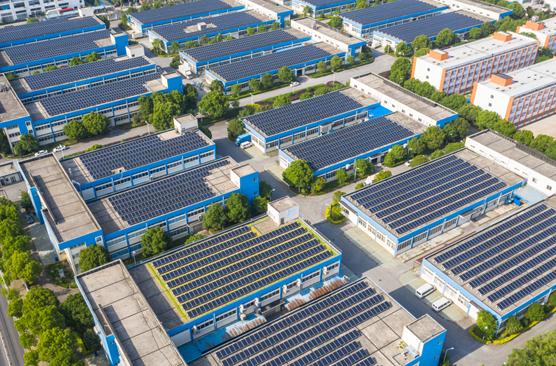
The project lies in the Liupanshan old revolutionary base in southern Ningxia. Its master plan covers two 1,000‑megawatt high‑efficiency ultra‑supercritical indirect air‑cooled units, paired with new‑energy developments on a one‑to‑two capacity ratio. A Nanwan Coal Mine with an approved annual output of four million tonnes and a dedicated railway line are constructed alongside the power complex.
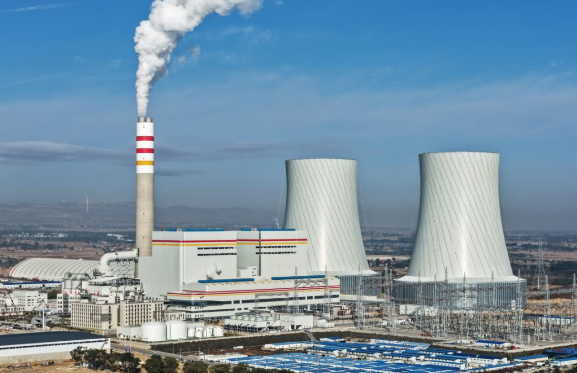
The site hosts a new generation of flexible ultra‑supercritical coal‑fired units. It marks the first deployment across a gigawatt‑class unit of full‑range adaptive intelligent cruise control, which operates between 20 per cent and 100 per cent load. The hardware supports deep load reduction and fast ramp rates to accommodate large‑scale grid integration of local renewable generation. The development also contains the country’s first single‑shell hyperboloid steel indirect air‑cooling tower for a gigawatt unit, alongside advanced plasma ignition hardware suited to high‑moisture, low‑calorific coal. It adopts a single‑row frame combined side coal bunker layout, which cuts the footprint of the main powerhouse through compact design.
Intelligent monitoring, maintenance, safety and operational management modules are built into the digital plant architecture. Internet‑of‑things equipment, smart meters and automated devices deliver dynamic sensing, predictive assessment and closed‑loop control, enabling safe, low‑intervention, environmentally compliant and economical running with reduced routine inspection.
Measures for emission abatement, green site construction and solid‑waste recycling run throughout the build and operational phases. Water resources are cascaded, and all wastewater is treated for zero liquid discharge. Nearly 8,000 concrete pile heads produced during construction were crushed and reused for site car parks and temporary railway access tracks. Treated effluent from urban wastewater treatment plants supplies the bulk of the station’s process water, with 4.1 million cubic metres of reclaimed water consumed each year.
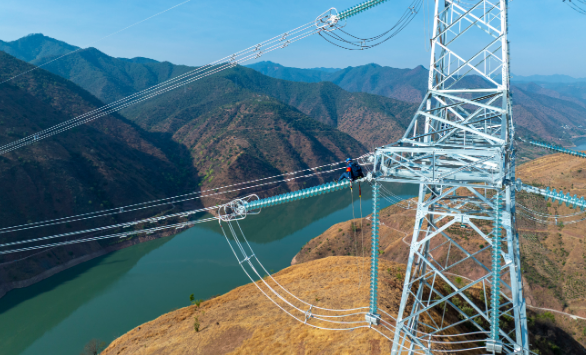
The project adopts an integrated model combining coal‑power integration, multi‑energy supply and digital operation. It delivers peak regulation, summer power security and stable energy supply for local industry. Once fully operational, the installation will balance the uneven distribution of energy assets across Ningxia, forming a core power source for the southern part of the region. It enables local conversion of coal reserves, while the attached railway line opens freight links for the Guyuan New Materials Industrial Park. The facility also supplies process steam for industrial users and central heating for residential communities.
热门内容推荐