CNOOC expands global energy partnerships at China International Import Expo
According to China National Offshore Oil Corporation, published on 5 November 2026, the ninth China International Import Expo opens alongside the Huangpu River. The corporation has maintained its participation across all nine editions of the event.
Over the preceding eight expos, CNOOC has signed import contracts worth more than 89 billion US dollars with hundreds of suppliers from over 30 countries and regions. Contracts secured at the eighth expo alone exceeded 13 billion US dollars, marking an all‑time high. Its international cooperation scope has grown beyond upstream exploration, covering technical services, refining and marketing, natural gas and new energy sectors.
CNOOC carries out projects across the Persian Gulf, the Caspian Sea, the Santos Basin and the Stabroek Block. At its Qingdao international high‑end offshore fabrication base in Haixiwan, a 58‑metre, 30,000‑tonne core module for the North Field East project in Qatar has been loaded onto a barge. The facility hosts two heavy slipways rated for 50,000 tonnes, a 300,000‑tonne dry dock and an 800‑tonne gantry crane, supporting coordinated work for around 4,000 staff across thousands of procedures.
Its integrated supply chains support overseas engineering work. The PTTEP BUN4 turnkey project in the Gulf of Thailand draws supplies from more than 70 domestic vendors, which deliver roughly 90 per cent of the materials required. The SHWE Phase Four development in the Bay of Bengal, the first Chinese deepwater turnkey project operating at water depths exceeding 1,000 metres, follows a combined front‑end engineering, procurement, construction and installation model. On Curtis Island in Australia, coalbed methane travels along a 540‑kilometre pipeline to liquefaction facilities under long‑term sales agreements, many running for ten years or longer.
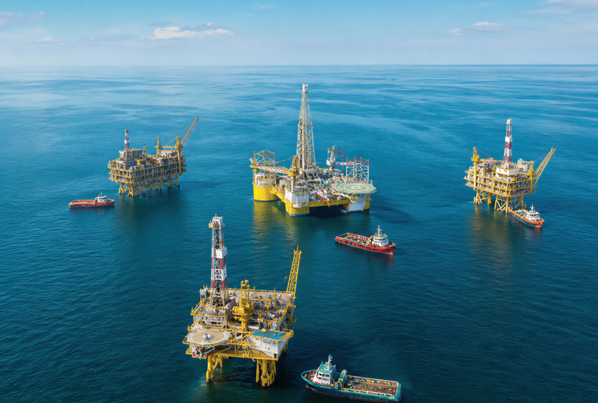
New collaborative projects were finalised in 2025. CNOOC partnered again with bp and ENEOS on the Gaea and Gaea II blocks in Indonesia. The Buzios Phase Seven development in Brazil came on stream in the same year. Operational progress has continued at the Stabroek Block in Guyana.
Production capacity at the Missan oilfield complex in Iraq has risen from fewer than 90,000 barrels per day to 300,000 barrels per day through upgraded degassing stations and refined operational workflows. A mobile well stimulation platform has been deployed in deep waters, and domestically manufactured 1,500‑metre deepwater risers have entered service. An extended‑reach well reaching 8,038 metres at Wenchang set a global drilling cycle record for 8,000‑metre offshore wells, completed in 27.82 days. The Daxie Petrochemical integrated refining and chemical project received the 2025 IPMA Global Project Excellence Award.
CNOOC’s technical solutions are offered to international partners. The independently developed orbital rotary steering system, known as Xuanji, integrates logging‑while‑drilling, near‑bit geosteering and real‑time trajectory control. In January this year, the system drilled to a depth of 6,185 metres beneath Lake Albert in Uganda, the deepest run for the tool and a national drilling record for Uganda. In December 2025, Xuanji won a tender to deliver directional drilling services for 143 onshore wells for PTTEP in Thailand. It has also completed complex three‑dimensional horizontal well operations in Sumatra, Indonesia. The system has been deployed 152 times overseas, accumulating more than 120,000 metres of drilled footage across Indonesia, Uganda, Iraq and Thailand.
Alongside Xuanji, the Xuan Yue, Hai Jing, Hai Long and Qing Hai product lines were presented together at the Asia Pacific Drilling Technology Conference in Bali in August. Xuan Yue, a cable logging and cutting‑and‑recovery system, carried out precision downhole intervention at the Tilenga oilfield in Uganda. The Hai Jing streamer seismic system surveys subsurface reservoirs off Sulawesi in Indonesia. The Hai Long coating system achieved a first‑pass acceptance rate of 99.6 per cent on the RUYA project in Qatar, while Qing Hai subsea valve assemblies have been installed at mature fields in Qatar.
CNOOC has led the formation of a deepwater oil and gas equipment industrial alliance and technical innovation consortium at the import expo, for joint research with international operators.
Environmental protection measures are embedded within field operations. At the Kingfisher oilfield beside Lake Albert in Uganda, an 8,000‑metre silent drilling rig has been adapted to cut noise from 70 decibels to below 45 decibels, with directional drilling from land avoiding disturbance to the lake surface. Work was suspended within a 25‑metre radius around a robin nest at the Long Lake site in Canada, and dedicated wildlife corridors 30 metres wide have been established near Murchison Falls National Park.
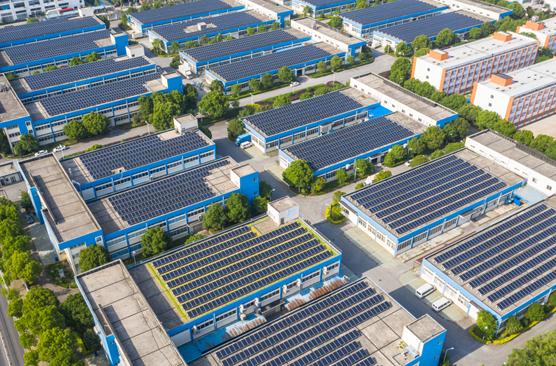
More than 15,000 photovoltaic panels at Missan in Iraq generate around 19.26 million kilowatt‑hours of clean electricity each year, cutting carbon dioxide emissions by approximately 16,000 tonnes annually. A reforestation scheme in Saudi Arabia covers 5.8 hectares with 10,000 trees, projected to absorb 2,400 tonnes of carbon dioxide over ten years. Rainwater harvesting tanks and solar lighting have been provided for Indigenous communities near mangrove zones in Guyana, and 28 local women run greenhouse farms.
Green co‑operation agreements have been signed at previous editions of the expo. CNOOC and ConocoPhillips China launched an offshore wind demonstration project at the Penglai oilfield during the fifth expo. At the sixth expo, CNOOC and BASF agreed to develop China’s first large‑scale facility for converting carbon dioxide into syngas.
Community programmes form part of project delivery. Over 15 years, CNOOC and local teams have located and disposed of more than 66,000 mines and unexploded ordnance across 261.7 square kilometres at the Missan oilfield complex in Iraq. The demining work reaches six metres below ground, beyond the international standard depth of 13 centimetres.
Local infrastructure delivered in Iraq includes a full‑time fire station, renovated schools and 15 kilometres of surfaced road alongside upgraded power and sewer networks. Surplus construction materials from the Kingfisher project in Uganda have been used to build access routes for schools. Hybrid rice introduced at Buhuka village has reached a yield of 700 kilograms per mu, with free seed, fertiliser and technical training supplied to local growers.
A training centre at Missan has run 48 sessions for more than 2,000 local participants, and the local staffing proportion at the oilfield exceeds 87 per cent. Iraqi operators carry out independent monitoring at degassing stations in the region. A China‑Brazil science and innovation centre in Rio de Janeiro supports education and skills exchange on pre‑salt deepwater development, and a youth development scheme operates on Curtis Island in Australia.
The current expo session provides a platform for dialogue and partnership. CNOOC will continue to work with international energy partners to share progress in resource development, low‑carbon transition and technological advancement.
热门内容推荐