Power project rises along the westernmost route of the Long March
According to Guoxin Xiaoxin, a clean energy complex known as the Jinsha River upper reaches water-solar-wind integration base takes shape on the westernmost trail of the Red Army’s Long March, where the 2,894-metre-high “cloud power station” stands amid mountain ridges.
Ninety years ago, troops led by He Long crossed the Zangbala Mountain Pass on the upper Jinsha River, marking the highest snow mountain crossing completed during the Long March. In 1936, the Second Red Army Group entered Batang and Baiyu, fought a series of battles and stayed in Baiyu for 17 days between 14 and 30 June. After crossing a 4,903-metre mountain pass, the unit regrouped, replenished supplies and marched onwards to join forces with the Fourth Red Army in Garzê. Local residents donated grain and livestock to treat wounded soldiers, and a hat decorated with a five-pointed star left by the troops inspired local families to make their own red star emblems. Paths and bridges built or used by the Red Army remain remembered by local communities.
The Jinsha River upper reaches water-solar-wind integration base is listed as a major national project under the 14th and 15th Five-Year Plans and serves as a pioneering facility for the west-to-east power transmission programme. Its installed capacity already in operation totals 6.77 gigawatts, with a further 7.383 gigawatts under construction.
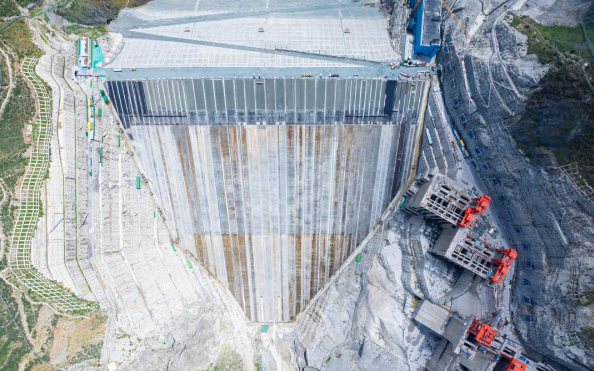
Yebatan Hydropower Station forms the largest single component of the base. Situated in Gaiyu Township, Baiyu County, the site once hosted the passage of the Second Red Army Group. The facility holds a total installed capacity of 2.24 gigawatts and features a 217-metre-high dam. It is the tallest operational concrete double-curvature arch dam project built at high altitude across the country, earning the “cloud power station” title for its average elevation of 2,894 metres. The site presents extreme engineering challenges, including cold highland conditions, an extra-high arch dam, high in-situ stress, deeply buried structures and a large underground powerhouse. Approved in 2016, the scheme saw river closure in March 2019 and delivered its first generating units in December 2025 after nearly a decade of construction.
Engineering teams moved research laboratories directly to the high-altitude site to tackle temperature control and cracking risks for mass concrete under sharp temperature swings. The work enabled year-round continuous dam concreting in a cold highland setting for the first time nationwide, with no thermal cracks detected. A 38.1-metre concrete core sample retrieved at the site set a global record and demonstrated leading domestic standards for dam concrete technology.
Further downstream at Lawa Hydropower Station, engineers fitted 85 pieces of heavy machinery with Beidou positioning modules and deployed unmanned compactors working in coordinated clusters. Every batch of rockfill material carries a digital identifier, supporting the first large-scale, full-process collaborative intelligent compaction operation of its kind in China. Relevant research won a second-class National Science and Technology Progress Award.
Batang Hydropower Station, known locally as the garden power station, sits alongside National Highway 318 with an installed capacity of 750 megawatts. All its generating units entered commercial operation in July 2025 within a single construction season. The design was adjusted to preserve spawning grounds for rare native fish species, alongside the launch of the country’s first intelligent fish passage combining tributary channels and tunnels. Engineers developed a flexible gallery structure using high-ductility hydraulic concrete and rapid construction methods for fractured rock masses to address seepage risks, while slope restoration work blended the infrastructure into the surrounding forested landscape.
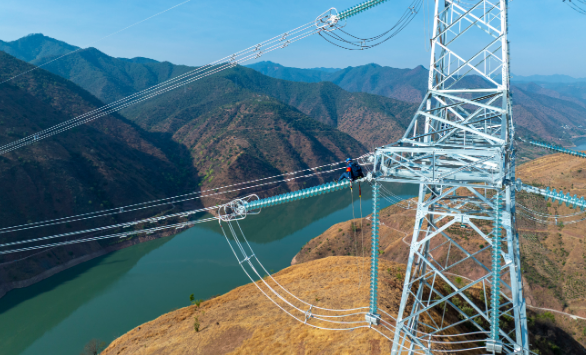
On mountain ridges between 4,000 and 4,400 metres above sea level, the Batang Zhongzan photovoltaic project spreads across alpine grassland with a total installed capacity of 1.2 gigawatts. The solar array forms a water-solar complementary system alongside cascading hydropower stations along the Jinsha River. Its 220-kilovolt transmission line crosses the Zangbala Mountain Pass. The power corridor includes 97 steel towers reaching up to 77 metres and 29 kilometres of conductors laid across rugged terrain. According to the same outlet, the line can transmit 2.1 billion kilowatt-hours of clean electricity each year.
China Huadian integrates energy development with ecological protection, livelihood improvement and rural revitalisation across the region. The firm has built or restored seven river-crossing bridges and 258 kilometres of roads. The upgraded Ba-Bai Highway cuts travel time between Gaiyu Township and Batang County from more than five hours to roughly two hours by removing the need to cross a 4,500-metre mountain pass. Road access enables local producers to deliver forest products to county markets within around one hour.
Power supply infrastructure has been expanded across the area, ending periods of limited, rationed electricity. Work-for-labour arrangements linked to the major projects have raised local output by more than 500 million yuan. The company has delivered the first national green hydropower planning framework, protecting more than 800 kilometres of fish habitats during construction. Multiple specialised fish passage facilities and fish breeding stations have been completed, and the group’s environmental projects have been presented twice at United Nations Biodiversity Conferences.
The construction programme has created more than 2,000 local jobs at its peak. A targeted recruitment, training and placement scheme supports students from the region to gain technical qualifications and return to work at local power facilities. Local workers have developed skills including welding, vehicle operation and mechanical maintenance.
The development carries forward the spirit forged on the Long March route, delivering clean power infrastructure and sustained social and ecological benefits across the upper Jinsha River valley.
热门内容推荐