Yunnan’s State‑owned Enterprises Roll Out Intelligent Manufacturing Upgrade from Isolated Trials to Sector‑wide Enablement
According to the Yunnan Provincial State‑owned Assets Supervision and Administration Commission on 2 November 2026, state‑owned enterprises across Yunnan are accelerating the digital and intelligent transformation of manufacturing operations.
Live readings for furnace temperature and slag layer thickness scroll across screens in the central control room of Yuntianhua Group’s coal gasification plant, where the Pangu large model independently forecasts and adjusts gasifier performance. Operators previously monitored gauges and intervened manually; they now mostly validate optimised outputs generated by the system.
The Implementation Plan for Yunnan Province’s “Artificial Intelligence Plus Manufacturing” Special Action came into force in July 2026. The province’s computing capacity has grown by 120 per cent since the start of the year. Industrial large models have been deployed across non‑ferrous metals, rare and precious metals, phosphorus chemicals and biomedicine, while fifty‑five enterprises have been accredited as provincial advanced smart factories. A national advanced manufacturing conference held in Beijing on 16 and 17 September set out priorities for intelligent, green and integrated development of advanced manufacturing, with next‑generation smart manufacturing and expanded “artificial intelligence plus manufacturing” initiatives identified as core lines of work.
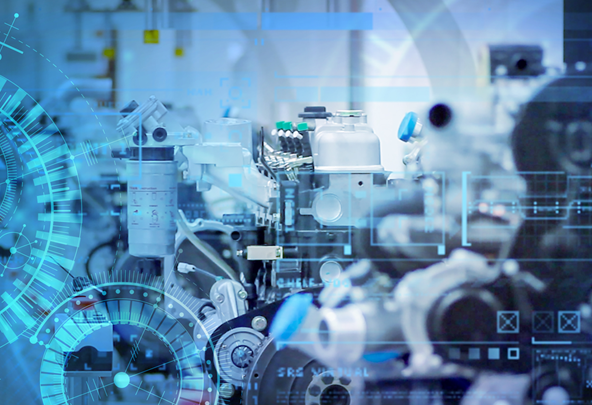
At Yunnan Aluminium’s Yangzonghai aluminium electrolysis division, banks of electrolysis cells run with minimal on‑site staff. A digital backbone and intelligent compressed‑air station regulate air systems automatically. The station cuts electricity use by 3.21 million kilowatt‑hours each year. AI tuning has lifted electrolysis current efficiency from 93 per cent to 94.06 per cent, yielding an extra 2,100 tonnes of primary aluminium annually and around 50 million yuan in additional income. Automated guided vehicles carry aluminium ingots, each tagged with a digital identifier that tracks the whole production chain from alumina to finished product. Workers have been reassigned from repetitive manual tasks to higher‑skilled roles.
Yunxi Tin Industry’s site holds accreditation as a provincial advanced smart factory for 2026. Its “one network, one data platform, one central control hub plus multiple custom applications” architecture merges 5G, industrial internet and artificial intelligence, allowing oversight of all production and operational functions from a single interface. The revamp has reduced overall operating costs by 18 per cent, lifted management efficiency by nearly 20 per cent, cut labour input by roughly 40 per cent and raised tin ingot warehousing efficiency by 80 per cent, with numerically controlled equipment deployed for 97 per cent of key processes.
Beyond single‑site upgrades, industrial large models support cross‑sector transformation. Yuntianhua Group and Huawei have jointly built the world’s first Pangu mechanism‑driven real‑time optimisation model for coal gasification. It combines artificial intelligence algorithms and advanced process control to simulate and forecast core gasifier parameters, pushing automation within the gasification unit to 96.88 per cent and cutting manual intervention frequency by 95.58 per cent. Yuntianhua operates seventeen digital factories, widely deploying integrated control and real‑time optimisation systems alongside a unified “6+4+X” business and management platform.
Yunnan Yunjuneng New Materials has built a “one unified data base plus three business platforms plus multiple applications” intelligent neural network, drawing on local phosphate reserves and green power supplies. Its key equipment auto‑control rate exceeds 95 per cent, overall equipment effectiveness has risen by 19.51 per cent, and comprehensive energy use per unit of product has fallen by 33.63 per cent, generating multi‑million‑yuan annual gains.
Yunnan Baiyao has rolled out its proprietary Leigong large model for traditional Chinese medicine to power the Zhishui Yaowang industrial artificial intelligence platform. The system covers standardised cultivation, smart processing and traceable distribution of medicinal crops. It serves growing areas across the province, supporting transactions worth more than 4 billion yuan, covering 2.152 million mu of planting land and raising incomes for more than 750,000 growers. Its smart factory splits production workflows into fifty‑six modular functional units, shortening parameter adjustment cycles and lowering raw material reject rates by 40 per cent. The facility joined the World Economic Forum’s Global Lighthouse Network in September 2025, the first such site worldwide for traditional Chinese medicine and health products.
Yunnan’s state‑owned enterprises follow a framework that nurtures benchmark operators, carries out value‑chain retrofits and builds shared service platforms. Deployment runs from individual sensors and automated carriers through to cross‑industry large models, embedding artificial intelligence across manufacturing workflows. The enterprises will continue to align with the national direction set by the national advanced manufacturing conference, integrating artificial intelligence and manufacturing and fostering new productive forces.
热门内容推荐