China Huadian Corporation Steps up Winter Energy Supply Security
According to China Huadian Corporation, published on 20 November 2026, heating supplies began in Beijing, Tianjin, Shandong and other regions on 15 November, marking the start of the northern heating season. Cold surges, sharp temperature falls, snow and ice are forecast to occur frequently during the winter period.
The group held a working meeting on 18 November to arrange equipment maintenance, heating hazard inspections and coal stock management for the winter peak supply period. A full autumn safety inspection was carried out ahead of the season.
Maintenance work was completed on 189 heating units, covering nearly all heating generators and heat networks. Teams in cold regions reinforced pipe tracing, anti‑freezing measures and de‑icing work for power lines.
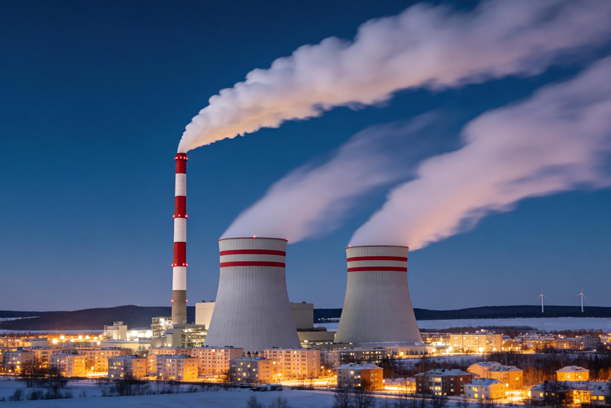
Local subsidiaries carried out network upgrades; the Xinjiang branch replaced 17.52 kilometres of ageing pipelines and 23 expansion joints, while Huadian Energy renewed 98 kilometres of primary and secondary pipework, renovated 350,000 square metres of household heating systems and changed 6,587 valves to remove 987 leakage points. The Hebei branch upgraded 11.4 kilometres of primary pipelines and 34 heat exchange stations.
Coal stock controls are maintained dynamically. Plants with coal reserves covering less than 15 days of operation are prioritised for replenishment to avoid shutdowns. Thermal power facilities operated by the Hebei branch hold coal stocks for 30 days of use. The Xinjiang branch holds 2.093 million tonnes of coal, sufficient for 20.2 days, with multi‑modal transport links supporting supply across southern Xinjiang. Huadian Energy has built winter coal reserves during summer, holding 2.3459 million tonnes, enough for more than 20 days of operation.
Contingency plans for power and heat supply are drawn up for extreme cold weather and overlapping operational risks. The group has secured additional gas supplies to meet residential and peak generation needs.
The Xinjiang branch operates a dual‑source system combining base heat supply and standby peak boilers, alongside cross‑regional mutual support arrangements, to keep indoor temperatures above 20 degrees Celsius for residents. The Hebei branch set up a regional heating dispatch centre, completed inspections on seven thermal power units, kept standby hot water boilers ready and arranged emergency crews on round‑the‑clock duty.
热门内容推荐