State Grid rolls out multi-pronged measures for winter heating and power security
According to State Grid Corporation of China, published on 25 November 2026, cold winds and temperature falls have swept across China, with the National Meteorological Centre issuing repeated cold wave alerts and the first snow arriving in northern regions. Northern China launched winter heating supplies nationwide on 15 November, marking the approach of the seasonal energy consumption peak.
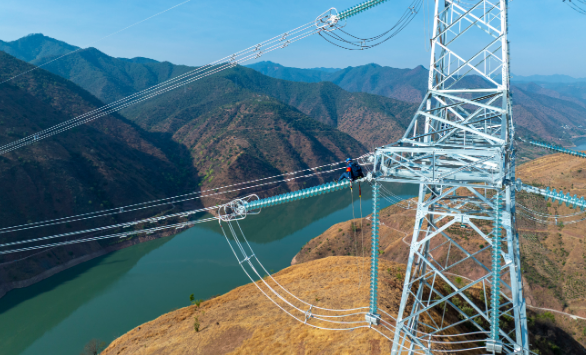
The country’s peak electricity load during this heating season is projected to hit roughly 1.52 billion kilowatts, an increase of about 90 million kilowatts from the peak recorded in the previous heating season. State Grid held a teleconference in early November to arrange winter power security work. Supply pressures mount from the overlapping winter electricity peak, low-water dry season and heating period. Fifty-four priority winter-supply projects are being built and commissioned, reinforcing the backbone transmission networks for west-to-east and north-to-south power transfers. The 1000kV Datong substation 500kV outgoing project in Shanxi has entered operation, while six key schemes move forward in Zhejiang and the Dongcheng 220kV power transmission and transformation project has been completed in Xizang.
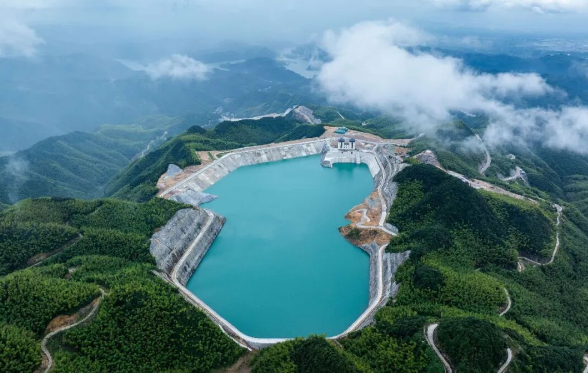
The Northwest Power Grid, the country’s largest regional grid for outward transmission, relies on fifteen ultra-high-voltage direct current lines to support national power supply. Between 8 November and 10 November, short-term power trading delivered 457 million kilowatt-hours across around 11,000 transactions to back external supply during the cold spell. On the generation side, Unit 2 of the Qujiang pumped storage station operated by State Grid Xinyuan in Zhejiang began commercial operation on 31 October, alongside Unit 1 to deliver peak and frequency regulation services. On the demand side, a virtual power plant based on thermal storage electric boilers operated by State Grid Jibei Integrated Energy came online again, aggregating 12 facilities across Zhangjiakou and Tangshan to deliver flexible regulation capacity of 374,000 kilowatts.
Technological upgrades strengthen grid resilience against ice and wind risks. The China Meteorological Administration noted at its regular November briefing that October saw the strongest El Niño event on record. State Grid has finished a three-year programme to boost ice and galloping resistance on transmission lines before the heating season, set up an enterprise meteorological data hub, and pre-positioned repair teams and materials. Robotic inspection equipment monitors facilities at the Hezhou converter station for the Shaanxi-Anhui ultra-high-voltage direct current project. Grid operators in Liaoning have installed extra ice, galloping and meteorological monitoring devices, while Hunan’s disaster prevention centre has deployed self-developed ice-melting technology for ultra-high-voltage conductors, rolled out more than 1,000 monitoring units and brought 21 new ice-melting projects into service.
Service arrangements focus on residential heating demand. Smart energy units have been trialled in eastern Inner Mongolia’s pastoral areas to deliver adjustable electric heating loads without disrupting household use. State Grid serves more than 36 million “coal-to-electricity” heating customers across its service areas. In Shijiazhuang, 313,000 such customers are connected via 1,229 dedicated lines, monitored in real time through power service and data collection platforms. The State Grid Online app hosts a dedicated zone for electric heating services, while digital early-warning tools and service teams deliver fast response for vulnerable groups. State Grid continues equipment inspection and maintenance to sustain stable grid operation through the winter period.
热门内容推荐