SPIC rolls out full winter energy security arrangements
According to State Power Investment Corporation Limited, published on 24 November 2026, the group held a deployment meeting in Beijing for the 2026–2027 winter heating season. Twenty-five key work streams were arranged, covering fuel volume and price control, coal output expansion and unit maintenance.
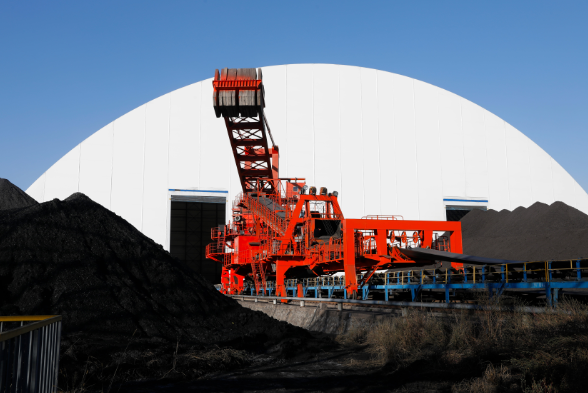
Coal stock management forms a core part of the supply framework. Coal mines run by SPIC’s Inner Mongolia subsidiary maintain high inventory levels, covering three to four days of railway dispatch and local power plant consumption. Its five open-pit mines had produced 68.8 million tonnes by 15 November, an increase of 670,000 tonnes year on year. The group’s Northeast branch completed seasonal coal storage in advance, with 100 per cent coverage of annual long-term supply contracts. Its total coal stock reached 1.401 million tonnes by 16 November, sufficient for 23.6 days of operation at 80 per cent unit load. Storage bases at Xinchang in Jiangxi and Zhun’gadabuch in Inner Mongolia operate as buffer hubs. Across SPIC’s power plants, the aggregate coal inventory stood at 10.978 million tonnes on 15 November, supporting 21.8 days of generation and heating demand at current consumption rates.
Thermal power facilities have undergone pre-winter maintenance and targeted upgrades. Units operated by SPIC Green Energy Changchun Thermal Power have finished annual inspections, with revamps on burners and feeders lifting combined output by 95 megawatts. The share of unplanned outages and constrained output for SPIC’s supply units sits below national assessment benchmarks, with several secondary subsidiaries recording zero unplanned outages.
Clean heating capacity is expanding across multiple regions. The Haiyang Nuclear Power Base, the world’s largest nuclear combined heat and power site, launched its eighth heating season on 15 November. Its heating coverage has risen from 13.5 million square metres to 14 million square metres, serving 400,000 residents in Haiyang and Rushan. The Nuanhe No.1 project, China’s first commercial nuclear heating demonstration, has delivered 19.73 million gigajoules of heat over seven heating seasons, saving roughly 1.78 million tonnes of raw coal and cutting carbon dioxide emissions by about 3.25 million tonnes. Construction work for the Nuanhe No.1 extension linked to Haiyang Units 3 and 4 is advancing, with main heating equipment and heat pipelines nearly installed. The extension is scheduled to open in 2027 and will deliver heat to Qingdao, more than 100 kilometres away. Once all six units are operational, the site’s total heating capacity will exceed 150 million square metres, covering 25 county-level areas. The comprehensive thermal efficiency of a single unit can reach 55.9 per cent during heating cycles.
In Hebei, SPIC uses shallow geothermal and air-source heat pumps for integrated smart energy systems. The scheme supplies clean heating to 22,000 square metres of office and hospital space at Xiongan Country Park, and has been extended to 53,000 square metres at Dongying Shengli Airport and the COMAC Dongying flight test base.
热门内容推荐