Spain’s Renewable Energy Development Hits a Bottleneck: Insufficient Grid Capacity Constrains Transition Progress
Comprehensive Report Recently, Spain’s substantial investment in the renewable energy sector has placed it at the forefront of the global industrial revolution wave known as the "Energy Era," making it an important participant in the global green transition.
Through its continuous layout of clean energy, the country has attracted a large number of data centers, electric vehicle charging networks, efficient factories and urban development projects, with a strong momentum in green economic development.
However, an unexpected challenge has emerged quietly: the insufficient capacity of the power grid, which is difficult to carry the surging renewable energy generation and various electricity demands, has become a key bottleneck restricting its energy transition, leaving the seemingly steady green process stagnant at the "cable" link.
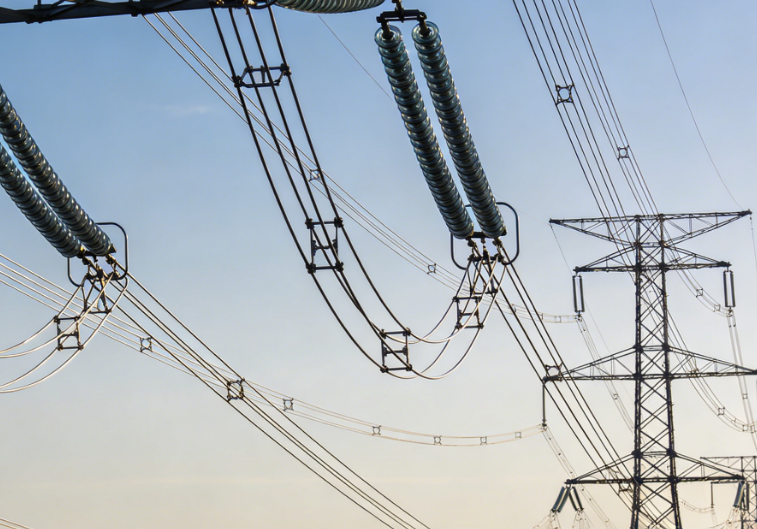
The rapid development of renewable energy and the explosive growth of electricity demand are the core reasons for the grid’s pressure.
Data shows that since 2020, the number of grid connection requests in Spain has increased by nearly 900%, with 38 gigawatts (GW) in 2020 and nearly 40 GW in 2025. The peak request volume in 2024 even exceeded 69 GW, of which nearly half were reluctantly rejected.
As a crucial year for issuing public warnings in Spain’s energy sector, 2025 saw a total of 40 GW of grid access and connection service applications received, according to data released by Aelec, an organization that brings together major power companies.
Only 12% (about 4.5 GW) were approved, 66% (about 25 GW) of the demands were not met, and the remaining 22% (about 8.5 GW) were still in the approval process.
The situation of grid saturation is becoming increasingly severe.
The Industrial and Energy Forum (FIE) and research institute Opina 360 recently analyzed the power generation capacity data of 6,108 substations across Spain (covering 97% of users), and the results showed that 85.7% of distribution substations were fully overloaded.
Only in regions such as Asturias, Galicia, the Balearic Islands and Segovia were there a small number of nodes with certain power generation margins.
According to Aelec, as of the end of January this year, the overloading degree of Spain’s power grid had reached 90%, among which the load rate of the distribution network was 90% and that of the transmission network was 75%, leaving almost no room for the grid to accommodate new users.
More notably, there is also a problem of "geographical mismatch" in grid capacity in some regions, where the distribution of theoretically available capacity is disconnected from the actual industrial electricity demand, further exacerbating the power supply dilemma.
This bottleneck has had a significant impact on the development of various industries in Spain.
The Ministry for Ecological Transition pointed out that traditional high-energy-consuming industries (steel, metallurgy, chemical industry, papermaking, cement, glass, ceramics, etc.), logistics, housing development projects, and new industries with electricity as the core raw material are all greatly affected.
Especially for emerging projects such as battery factories, renewable energy hydrogen production, large data centers, electric vehicle-related manufacturing, and synthetic fuel production, stable and sufficient power supply is a prerequisite for project landing. "All these projects require a large amount of electricity from the very beginning, and more importantly, a clear connection schedule.
If there is no clear access route, it cannot be ‘delayed a little bit’; instead, they will move to other countries that can provide these megawatt-level electricity," warned Albert Concepción, President of the Industrial and Energy Forum. Grid access has transformed from a basic service to a key factor restricting investment, and if not resolved, it may lead to the loss of a large number of future investments.
Tracing the root cause, this problem has been brewing for many years and is closely related to a regulation introduced in 2013.
Against the background of the financial crisis and government expenditure cuts, the regulation linked power grid investment to investment returns, clearly stipulating that the investment ratio of the grid distribution business (owned by power companies) should be 0.13% of the gross domestic product (GDP), and that of the high-voltage transmission network (owned by the national grid) should be 0.065%, with strict restrictions on non-essential investments. "Over the past more than a decade, Spain’s energy industry has been constrained by outdated restrictions, during which the industry has undergone profound changes and the influence of renewable energy has been continuously increasing.
It is long overdue to revise these restrictions. When it comes to infrastructure, it is already too late to talk about this issue," analyzed Manuel Velázquez, Senior Partner of energy consulting firm ERA Group.
In fact, Spain’s renewable energy industry itself has achieved remarkable results. In 2024, the proportion of renewable energy in the country’s power structure reached 56%, with power generation hitting a record high of 149 terawatt-hours (TWh).
Among them, solar photovoltaic power generation accounted for 17%, surpassing combined cycle power generation to rank third, and wind power accounted for 23%, ranking first. The proportion of fossil energy dropped significantly, with coal-fired power accounting for only 1.1%.
The country has set a target of 81% renewable energy in national power supply by 2030, and to achieve this goal as well as full coverage of national power supply, the Ministry for Ecological Transition estimates that 13.6 billion euros need to be invested in grid construction.
At present, Spain has begun to take response measures. REE has tripled its grid investment since 2020, and the European Union has also allocated 180 million euros in special funds to Spain through the Connecting Europe Facility to promote the construction of grid-related projects.
Ernst & Young (EY) analyzed that to completely reverse the grid bottleneck, it is not only necessary to increase investment in new network construction, but also to carry out digital transformation and optimization of the existing network, while improving the energy storage system and enhancing cross-border power interconnection capacity to address the additional pressure brought by the volatility of renewable energy.
Industry insiders said that Spain’s exploration and achievements in the field of renewable energy are worthy of recognition, and the grid bottleneck it faces also provides an important revelation for the global energy transition — green transition needs to balance the development of clean energy and the upgrading of infrastructure.
Only by realizing the coordinated advancement of the two can we ensure that the road of energy transition is more stable and farther.
At present, the specific promotion plan for Spain’s grid upgrading is still being improved, and its subsequent progress is worthy of continuous attention.