China’s Energy Storage Industry Enters Structured Upgrade in 14th Five-Year Plan
As the 14th Five-Year Plan gets underway, China’s energy storage industry is undergoing a structured leap forward. Recent investigations into leading enterprises including Trina Storage, GoodWe and Shuangdeng Group have revealed a distinct pattern driven by improved policies, technological iteration and market dynamics: grid-side storage taking the lead, power generation-side storage maintaining steady growth, and user-side storage achieving new breakthroughs. AI empowerment and the rise of the AIDC (Artificial Intelligence Data Center) track have become new highlights, pushing the industry to shift from scale expansion to quality and efficiency improvement.
Policy support has laid a solid foundation for commercialization. “The full implementation of the Notice on Improving the Capacity Pricing Mechanism for the Power Generation Side has given independent grid-side energy storage a much-needed boost,” admitted a person in charge of the Energy Storage Department at a regional power grid company under the State Grid. Independent grid-side energy storage now enjoys a guaranteed annual income of 165 to 330 yuan per kilowatt, ending its previous over-reliance on peak-valley price differences for profits.
Backed by such policies, independent energy storage projects are being rolled out at an accelerated pace. The official disclosed that more than 10 independent energy storage projects, with a total scale exceeding 2 gigawatts, have been registered in his region this year, focusing on essential scenarios such as grid peak shaving, frequency modulation and emergency backup. “These projects not only ensure grid safety but also generate additional revenue through the auxiliary service market, with a stable IRR (Internal Rate of Return) of 6% to 8% and predictable investment returns,” he added.
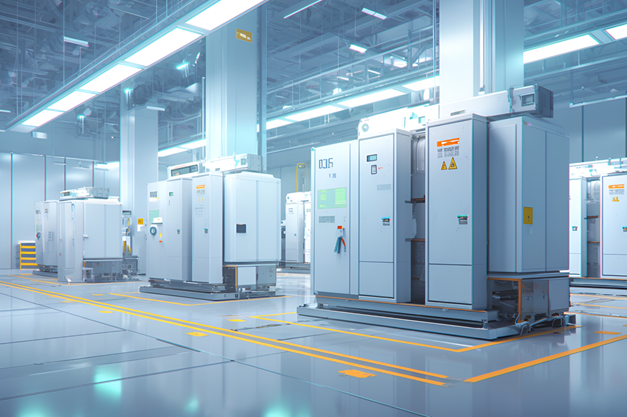
Power generation enterprises have also changed their perception of energy storage as the impact of the “cancellation of mandatory energy storage allocation” policy fades. “Energy storage allocation for wind and solar projects is no longer a mandatory task but a key means to enhance asset value,” said Deng Wei, Director of Product Management Center at Trina Storage. He noted that supporting energy storage helps optimize power generation curves, realize peak-valley arbitrage and solve absorption problems, increasing the annual power generation income of a single power station by over 50%.
User-side energy storage demand is shifting from “cost optimization” to “value increment,” becoming a new growth engine. Wang Yingge, Vice President of GoodWe, stated in an interview that their park’s energy storage system not only reduces electricity costs through peak clipping and valley filling but also participates in power market transactions via virtual power plants. “With multiple benefits combined, the investment payback period for user-side energy storage has shortened to 4 to 6 years, much lower than the traditional model,” he said.
AI and digitalization are deeply penetrating the industry. Tian Qingjun, Senior Vice President of Envision Energy, emphasized that AI is restructuring the industry ecology by shortening battery formula R&D time and optimizing power trading strategies. Over 50 domestic energy storage enterprises have laid out AI digital technologies, covering intelligent operation and maintenance, energy management and transaction decision-making.
AIDC has emerged as a core growth track. “Orders for AIDC have surged year-on-year since the fourth quarter of last year,” said Yang Rui, Chairman of Shuangdeng Group. He noted that AIDC will evolve into a highly integrated “computing power + energy” system, with energy storage becoming a standard configuration to ensure stable computing power operation.
The industry is now fully shifting from “policy dependence” to “market-driven growth.” A person in charge of a leading energy storage enterprise said market reforms have opened up value channels, increasing the annual comprehensive income of a single station by over 30% compared with three years ago. Relevant authorities are also strengthening supervision and improving safety standards to ensure high-quality development. New integration scenarios such as “energy storage + data center” and “energy storage + zero-carbon park” are constantly emerging, expanding the industry’s boundaries.
热门内容推荐