South Korean Researchers Break Perovskite Solar Cell Dilemma with Modified 2D Passivation Layer
Perovskite solar cells have long grappled with a core dilemma: boosting efficiency often comes at the cost of lifespan, while extending durability typically drags down performance. A team of scientists from the Korea Advanced Institute of Science and Technology (KAIST) has now found an innovative solution, achieving both ultra-high efficiency exceeding 25 percent and excellent long-term stability through a modified "2D passivation layer design," according to Xinhua News Agency citing the latest issue of Joule magazine.
Against the backdrop of global efforts to address the climate crisis and accelerate energy transition, developing solar cells that are both efficient and durable has become a crucial task for the renewable energy sector.
Regarded as the next-generation high-efficiency photovoltaic technology, perovskite solar cells have seen rapid improvements in efficiency. However, their fatal flaw lies in poor durability—their performance tends to degrade under high temperature, high humidity and intense light, hindering their path to commercialization.
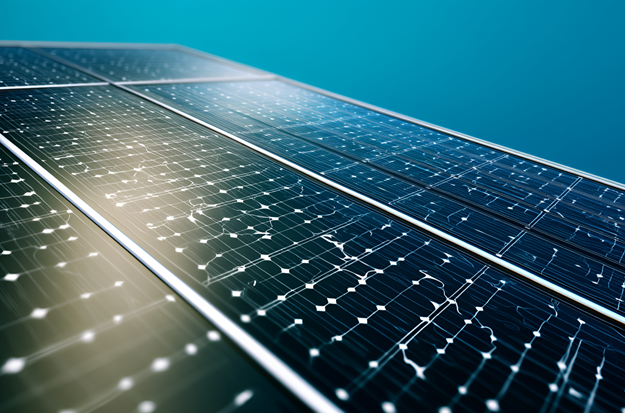
Previously, scientists commonly adopted the "3D/2D structure" strategy, covering a three-dimensional perovskite layer with a two-dimensional layer to repair surface defects and enhance stability. Yet the two-dimensional layer featured a fragile structure prone to deformation, which in turn led to performance deterioration.
In the latest research, the KAIST team took a different approach, using the more stable "DJ-type 2D perovskite" as the passivation layer. By adjusting heat treatment conditions, they achieved precise control over the number and mode of perovskite stacks within the layer—similar to controlling curing temperature and time during bricklaying to make the "adhesive" tighter and more orderly.
This optimization resulted in smoother charge transfer, a sharp leap in photoelectric conversion efficiency, and a much tougher passivation layer with significantly improved durability. Perovskite solar cells applying this design strategy achieved a photoelectric conversion efficiency of 25.56 percent (certified efficiency 25.59 percent), and maintained excellent performance under conditions of 85℃, 85 percent relative humidity and continuous light, demonstrating outstanding long-term stability.
The team also extended the technology to large-area modules, verifying its good consistency. Professor Park Jae-hyun, who led the research at KAIST, explained that the achievement proved perovskite solar cells could balance efficiency and lifespan through the structural design of surface passivation layers.
Even with fluctuations in the production process, the technology remains stable, laying a solid foundation for large-scale manufacturing. The research, published in Joule, offers a new path to overcoming the long-standing bottleneck in perovskite solar cell development and advancing the commercialization of next-generation photovoltaic technology.
热门内容推荐