CNOOC Launches Large-Scale Drone Operation at Western South China Sea Oilfield, Pioneering Marine-Low-Altitude Economy Integration
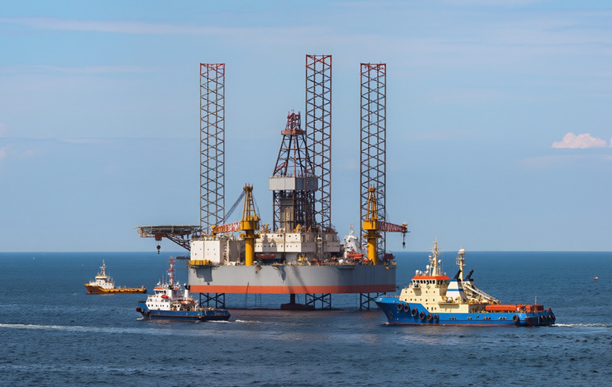
CNOOC’s drone system operation project at the Western South China Sea Oilfield was officially launched on February 28, marking the first large-scale drone application in China’s offshore oilfields and providing a practical model for the integration of marine energy development and the low-altitude economy.
Drones deployed at the oilfield are capable of conducting rapid high-altitude inspections of more than 500 kilometers of subsea pipelines, efficiently identifying abnormal conditions and triggering emergency responses. They also assist in search and rescue operations for out-of-control ships and people overboard, while enabling quick delivery of spare parts and other supplies to offshore platforms and engineering vessels.
To date, the industrial application of the low-altitude economy at the Western South China Sea Oilfield has completed over 3,600 kilometers of operations, including drone pipeline inspections and small-item logistics. This has effectively replaced some traditional operation modes relying on ships and helicopters, boosting work efficiency by more than 30%. The initiative has also achieved significant cost savings in ship rental and fuel expenses, reduced carbon emissions, and realized a “win-win” outcome of cost reduction, efficiency improvement, energy conservation and environmental protection.
Meanwhile, an independently developed intelligent dispatching platform integrating drones and helicopters, part of the low-altitude economy industrial application system, has been connected to local low-altitude flight service platforms. This connection enables closed-loop management of the entire task process. An integrated communication and navigation network linking offshore platforms and onshore terminals has also been established, featuring high-precision positioning, real-time data transmission, and the capability of collaborative operation between helicopters and drones.
In response to the characteristics of the marine industrial environment, CNOOC has collaborated with relevant enterprises to carry out customized R&D of drones, promoting the upgrading of autonomous drones in the high-end manufacturing field. On this basis, China’s first operational management standard for marine oil drones has been initially established, complementing the practical application scenarios under the general supervision framework of the Civil Aviation Administration of China and jointly building a standard ecological system of “general supervision and industry adaptation.”
This pioneering project not only demonstrates CNOOC’s commitment to technological innovation in marine energy development but also reflects the vigorous development of China’s low-altitude economy in industrial applications. It sets a valuable example for the integration of emerging economic formats and traditional industries, contributing to the high-quality development of the marine energy sector.