China Advances Processing Trade Upgrading with National Industrial Parks
Processing trade serves as a vital carrier for China’s opening-up, deep integration into the global industrial chain, and connection of domestic and international markets and resources. Building national processing trade industrial parks is a key measure to support the steady development of processing trade, guide central, western and northeastern regions to participate in the international cycle, enhance the level of open economy, and promote coordinated regional economic development.
In recent years, profound changes have taken place in the domestic and international environment, leading to a slight decline in the scale and proportion of traditional processing trade. Nevertheless, processing trade, once accounting for half of China’s foreign trade, remains an important trade method linking the domestic and international dual cycles, playing a crucial role in stabilizing foreign trade, foreign investment, and the industrial and supply chains.
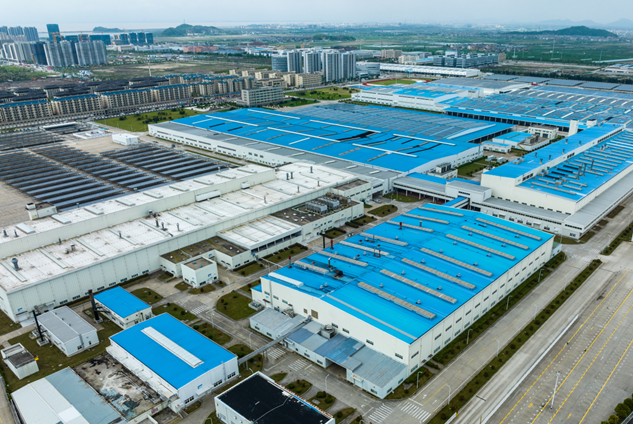
Guangdong Province, a major hub for processing trade, witnessed a key turning point in 2025. Despite the pressure of a complex international situation, the province’s processing trade import and export achieved positive growth for the first time in nearly four years. Statistics show that Guangdong’s processing trade import and export reached 1.95 trillion yuan in 2025, a year-on-year increase of 1.1%, accounting for 20.58% of the province’s total foreign trade value. Its market layout became more diversified, with emerging markets growing faster than the overall level; the proportion of processing trade import and export with Hong Kong, China and Latin America rose by 11% and 6.3% respectively.
The outline of the 15th Five-Year Plan proposes to "promote the upgrading of processing trade", a deployment that serves as both a strategic measure to address the challenges of global industrial chain restructuring and a key path to advance the high-quality development of China’s open economy and achieve coordinated regional development.
To guide the gradient transfer of processing trade to central, western and northeastern regions, the Ministry of Commerce recently issued a notice on publicizing the list of the second batch of national processing trade industrial parks. Based on local applications and expert reviews, 13 parks are to be recognized, including 4 in central China, 7 in western China and 2 in northeastern China.
Taking Kunming National Processing Trade Industrial Park as an example, it is planned as "one park with three zones" covering a total area of 37.6 square kilometers, focusing on three leading industries: non-ferrous metal deep processing, electronic information manufacturing, and light industry processing. It leverages advantages to connect resources and build an international industrial division of labor.
National processing trade industrial parks, as core carriers of policy integration and industrial agglomeration, provide policy support for settled enterprises, reduce their operating costs, and attract the gradient transfer of processing trade enterprises. Central, western and northeastern regions have unique advantages in undertaking such transfer, with improved transportation and location advantages complementing maritime transportation.
Promoting the steady and healthy development and upgrading of processing trade requires strengthening carrier construction, advancing industrial upgrading, optimizing policy services, and enhancing talent guarantee, so as to push processing trade to expand towards both ends of the "smile curve" and promote the stable upgrading of industrial and supply chains.