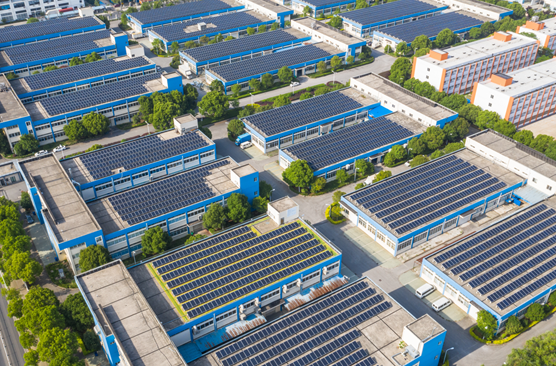
Tibet’s Low-Altitude Economy Industrial Park Takes Off, Boosting High-Quality Development in Lhasa
Stepping into Tibet’s Low-Altitude Economy Industrial Park, located in Tuanjie Community, Dazi District of Lhasa, exhibition halls are filled with drones of various sizes and functions. These drones have long flown out of the exhibition halls and been put into extensive application scenarios across Dazi, according to Shan Zeng Wangmu, a staff member of Lhasa Dazi District East Wing Technology Co., Ltd., which operates the park. They are now used for urban livestock control, garbage inspection, seedling transportation for the afforestation project of Lhasa’s North and South Mountains, and fire prevention monitoring, with more application scenarios expanding day by day.
When talking about the motivation behind establishing the park, Cao Rui, Chairman of East Wing Technology Co., Ltd. and Secretary of the General Party Branch of Tuanjie Community, said it was a decision based on the actual conditions of the plateau. “The plateau features complex terrain, making material transportation and ecological monitoring in remote areas challenging,” Cao said, pointing at the park’s planning map marked with clear low-altitude routes. “Low-altitude economy can precisely address these pain points.” China Tibet News reports that Tibet has built a “1+N” policy system for low-altitude economy, covering general aviation development plans and special fund support, to fully support the industrial framework.
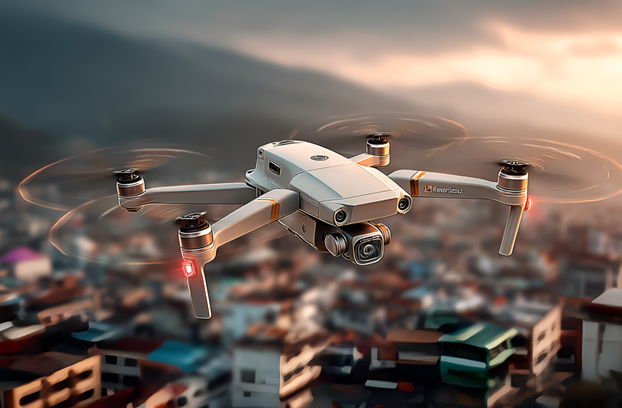
Known as the “Eastern Gateway” of Lhasa, Dazi District has identified low-altitude economy as a new track for industrial development, relying on its unique location advantages, high-quality resources and solid development foundation. Cao recalled that in the early stage of entrepreneurship, relevant government departments led the team to inspect and learn from advanced provinces and invited experts to provide on-site guidance. It took only three months to complete the adaptability test of plateau drones and half a year to finish the approval and planning of core airspace, establishing an industrial ecology of “government guidance, market operation and multi-party participation”.
From the end of 2024 to the beginning of 2026, a number of enterprises moved into the park, attracted by its high-quality business environment. At present, the park has 29 settled enterprises, covering upstream and downstream links such as drone R&D and manufacturing, flight services, training and certification, data application and supporting supply chains, forming a complete industrial ecology integrating technology R&D, equipment display, production and manufacturing and supporting services.
Li Xiaodong, founder of Tibet Yihang Technology Co., Ltd., has been the Tibet general agent of DJI agricultural drones since 2018. With years of experience in the plateau market, he believes low-altitude economy has broad prospects in Tibet and thus founded Yihang Technology, expanding from agent to R&D. He moved the company into the park in early 2026, drawn by its industrial agglomeration effect and policy support. “The park provides free office space for enterprises, allowing us to develop with light burdens,” Li said. “Every policy support in the early stage is transformed into momentum for development.”
Tibet Shengshi Huatang Technology Co., Ltd. experienced another kind of “speed” from the park. As soon as it settled in, the company won the bid for the urban livestock supervision project in Dazi District. “Yaks are detected by drones before they enter national highways, allowing timely prevention of road intrusions,” said Wang Peng, general manager of the company. By fully cooperating with the park’s drones, the company carries out 24-hour monitoring and patrol, addressing potential problems at an early stage.
Talent shortage is an undeniable fact in plateau areas due to objective conditions, but Wang Xiaoguang, general manager of Tibet Cangqiong Zhihui Technology Co., Ltd., sees a positive side. “The park has carried out a series of systematic training, cultivating a number of pilots and professional technicians to support enterprises,” Wang said. This model of “park cultivating talents and enterprises employing talents” reduces operational costs and ensures a stable talent supply. “I was once uncertain about plateau low-altitude economy, but the park’s industrial cluster and government support have filled me with confidence,” he added.
Up to now, East Wing Technology Co., Ltd. has planned 1,700 various operation routes in the approved airspace, with 1,120 completed and put into use. China Daily notes that Tibet’s low-altitude economy is an important part of the region’s high-quality development, and the park in Dazi District has set a successful example for leveraging characteristic industries to promote regional progress. The company will further deepen government-enterprise cooperation, strengthen the route network, expand application scenarios and expand the industrial ecology in line with Dazi District’s low-altitude economy layout.
热门内容推荐