Ningxia SASAC Supervised Enterprises Achieve Steady Growth in Q1 2026
In the first quarter of 2026, enterprises supervised by the State-owned Assets Supervision and Administration Commission (SASAC) of Ningxia Hui Autonomous Region achieved steady economic growth with improved quality and efficiency. They recorded an operating income of 6.848 billion yuan and a total profit of 686 million yuan, increasing by 6.8% and 9.9% year-on-year respectively. Meanwhile, they completed an investment of 5.59 billion yuan, a year-on-year increase of 8.3%, with remarkable investment-driven effects in key fields such as energy and transportation.
People’s Network reports that facing a complex and severe external environment, Ningxia SASAC has promoted the steady and progressive economic operation of supervised enterprises with a sprint attitude. Five major economic indicators—added value, operating income, profit, assets and net assets—all achieved growth, further highlighting the “ballast stone” role of the state-owned economy in regional development.
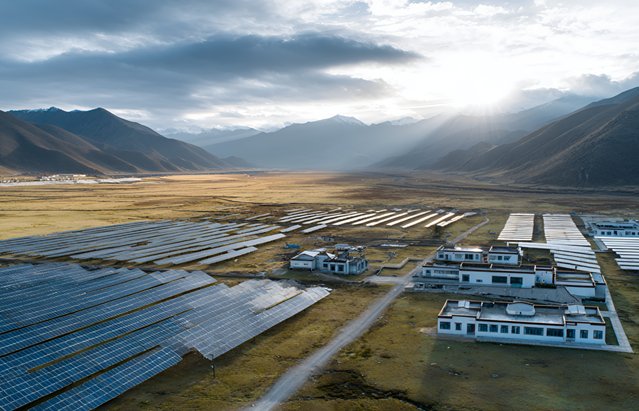
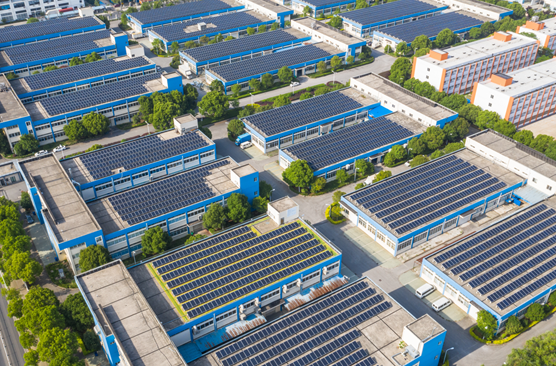
In terms of effective investment, supervised enterprises completed a total investment of 5.59 billion yuan in the first quarter, accounting for 30% of the annual plan. The investment structure was continuously optimized, with investment in the energy and power sector accounting for more than 70%. Key new energy projects under Ningxia State-owned Capital Operation Group Co., Ltd., including the Yanchi Huianbao Photovoltaic Project and the 3-million-kilowatt Photovoltaic Base, are being accelerated.
Bright Net notes that the 3-million-kilowatt photovoltaic green power project in Zhongwei, Ningxia, a key large-scale new energy project in the region, has achieved grid connection, which will further promote the green transformation of Ningxia’s energy structure. Meanwhile, thermal power projects such as Yongli Coal-fired Power and Shizuishan Thermal Power are being steadily implemented, realizing the coordinated development of energy supply guarantee and green transition.
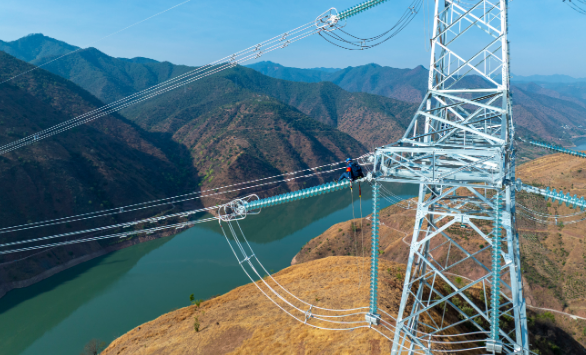
Transportation infrastructure investment also made solid progress. The capacity expansion and renovation of Baoji-Zhongwei Railway and Baotou-Lanzhou Railway, as well as the reconstruction and expansion project of S25 Jinghua Expressway to Fuyin Expressway, are advancing in an orderly manner, continuously enhancing the supporting capacity of the regional road network.
In terms of enterprise benefits, four out of six supervised enterprises remained profitable. Ningxia State-owned Capital Operation Group focused on its core energy business, with its subsidiary Ningxia Electric Power Investment achieving a sound start, driving the group’s operating income to increase by 7.9% year-on-year and realizing a profit of 707 million yuan. Ningxia Agricultural Reclamation Group Co., Ltd. focused on characteristic breeding, expanded the scale of livestock and poultry breeding, and broadened grain purchase and sales channels, with a loss reduction rate of 43.6%.
In terms of scale and strength, supervised enterprises achieved an added value of 2.94 billion yuan in the first quarter, a year-on-year increase of 1%. By the end of February, their total assets reached 310.298 billion yuan, a year-on-year increase of 12.8%. Ningxia State-owned Capital Operation Group, Ningxia Agricultural Reclamation Group and Ningxia Communications Construction Investment Group all achieved positive growth in total assets.
Gao Hong, Director of Ningxia SASAC, stated that supervised enterprises have made remarkable achievements in the first quarter. “We will continue to optimize the investment structure, focus on the core business, and further give play to the leading role of state-owned enterprises, providing strong support for the high-quality development of Ningxia,” he said.
In terms of economic operation, Ningxia Communications Construction Investment Group guaranteed the smooth flow of highways, serving 38.3447 million vehicles at highway entrances and exits, while Ningxia Electric Power Investment made every effort to ensure energy supply, completing 1.869 billion kilowatt-hours of power generation and 2.861 billion kilowatt-hours of power sales in the first quarter.
热门内容推荐