Futures Tools Act as Buffer for China’s Chemical SMEs Amid Global Oil Price Volatility
Since late February 2026, persistent geopolitical conflicts in the Middle East and prolonged navigation disruptions in the Strait of Hormuz have roiled the global oil market, with international crude oil futures prices once surging above $100 per barrel. This turbulence has sent shockwaves through the global chemical industry chain, triggering sharp price fluctuations in core chemical products such as polyolefins and aromatics, and leaving small and medium-sized chemical enterprises trapped in dilemmas of soaring costs and squeezed profits, China News Network reported.
Against this backdrop, the risk management value of futures tools has become increasingly prominent. To mitigate the risks of raw material price volatility, many leading enterprises have empowered downstream SMEs through futures hedging, basis trading and price-point trading, turning futures into a “buffer” and “stabilizer” in the volatile market that helps enterprises stand firm amid geopolitical-driven market swings.
The Strait of Hormuz, a key waterway for global oil transportation, has been under “dual strangulation” by the US and Iran, with Iranian gunboats attacking vessels and US military intercepting oil tankers on the high seas, while fraudsters also impersonate authorities to extort “passage fees”, China News Network noted. This has disrupted global oil supply, with the International Energy Agency estimating that about 10% of global oil supply has been disrupted by the Middle East conflict.
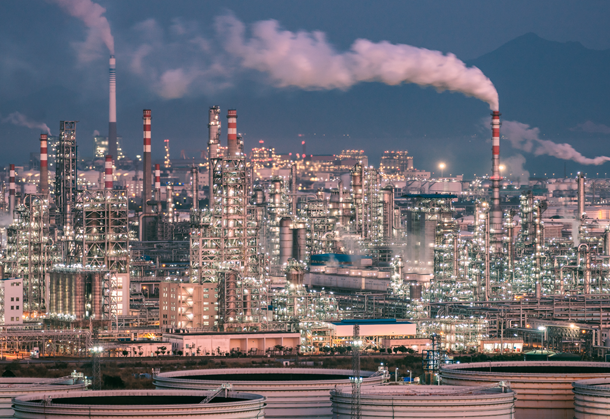
As a core raw material for the chemical industry, skyrocketing crude oil prices have transmitted along the industrial chain, leading to sharp fluctuations in prices of ethylene glycol, styrene, PP (polypropylene) and PE (polyethylene). Gong Jiawei, Business Manager of Xiaoding Energy Co., Ltd., analyzed that Chinese chemical enterprises enjoy strong competitiveness in cost and output. “Since the Middle East conflict in late February, favorable supply conditions and China’s resilient supply chain have opened the paper export window for chemicals such as ethylene glycol and styrene,” he said.
However, challenges remain. Ye Yanjun, Business Director of Zhongzhe Energy Chemical Co., Ltd., pointed out that China’s polyolefin market was oversupplied before the strait’s disruption, but soaring oil prices have reversed supply-demand dynamics and intensified price volatility. Aromatics, though in better supply-demand balance, still fluctuate with crude oil prices due to single upstream raw materials. Logistics costs have also risen, adding burdens to agricultural chemical enterprises, according to Yan Yanhua, General Manager of Yuntu Holdings’ Futures and Spot Center.
SMEs, lacking professional risk management capabilities, are the most vulnerable. Ye Yanjun cited Xingyuan New Materials, a downstream SME using 300 tons of PP monthly, which once faced soaring costs and disrupted production plans. “Many SMEs are unfamiliar with futures tools and can only bear losses from inventory depreciation passively,” Yan added.
To address this, leading enterprises have stepped up to help. Xiaoding Energy has provided forward price-locking services for a PS factory by buying styrene futures contracts to stabilize raw material costs. Zhongzhe Energy Chemical customized a hedging plan for Xingyuan New Materials, signing long-term supply agreements to lock delivery prices. Yuntu Holdings has held futures training courses to help agricultural chemical SMEs master risk management skills.
These efforts have yielded tangible results. By the end of 2025, Zhongzhe Energy Chemical helped Shouyi New Materials lock PP prices through price-point trading, enabling it to purchase raw materials at a stable price amid the March 2026 oil price surge. Futures tools have also promoted industrial synergy, with Xiaoding Energy shifting to a more stable profit model and Zhongzhe Energy Chemical achieving 3.4 million tons of sales and 19 billion yuan in revenue in 2025.
Industry insiders agree that futures tools are optimizing the chemical industry ecosystem, with enterprises from state-owned petrochemicals to downstream processors widely using them for risk management. This not only helps SMEs weather market storms but also safeguards the stability of the chemical industrial chain, playing an important role in supporting national development strategies.
热门内容推荐