Chinese Carmakers Accelerate Overseas Local Production via Existing Foreign Capacity
Chinese automotive manufacturers are advancing their global expansion into a new phase by leveraging idle overseas production capacity, shifting from simple finished vehicle exports to in-depth localised manufacturing embedded in regional industrial chains.
A latest cross-border cooperation case emerged on May 20, as Stellantis and Dongfeng Motor Group unveiled plans to set up a Europe-based joint venture. With Stellantis holding a 51 percent stake and Dongfeng securing the remaining 49 percent, the partnership will cover sales, distribution, manufacturing, procurement and engineering research. The two sides intend to launch local production of Dongfeng’s new energy vehicles at Stellantis’ Rennes plant in France.
The deal follows a string of similar collaborations. Stellantis has also pushed forward projects with Leapmotor at its factories in Zaragoza and Madrid in Spain, involving vehicle introduction and joint model development. Such frequent cooperation moves signal a clear industry shift in Chinese automakers’ global layout.
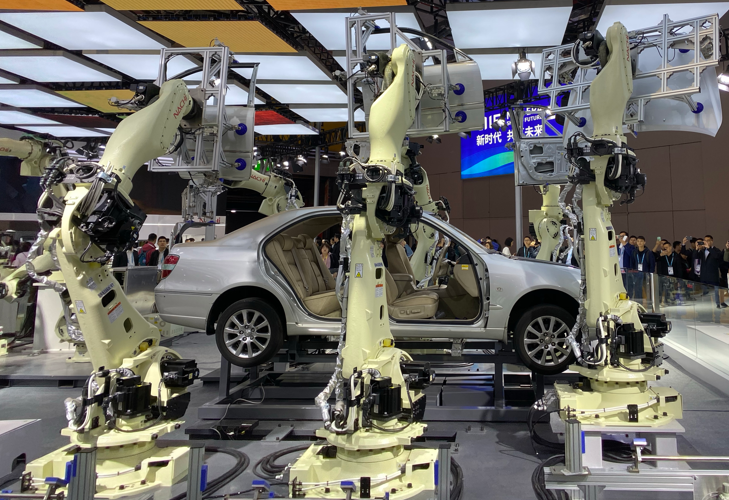
According to data from the China Association of Automobile Manufacturers, China exported 3.127 million complete vehicles in the first four months of this year, representing a year-on-year increase of 61.5 percent. New energy vehicle exports reached 1.384 million units, surging 120 percent year on year. The rapid expansion of export volume has raised higher requirements for stable overseas production and service systems.
Evolving trade policies in major overseas markets drive the strategic transformation. Additional countervailing duties imposed by the European Union on Chinese electric vehicles have substantially lifted the comprehensive cost of exported Chinese EVs. Localised manufacturing has become a practical solution to mitigate trade barriers, stabilise pricing systems and improve market response efficiency.
Compared with building new factories from scratch, acquiring or utilising existing overseas facilities shortens project cycles and accelerates capacity implementation. Major Chinese automakers including BYD, Geely, Chery and Great Wall Motor have rolled out overseas capacity layouts through acquisitions, joint ventures and commissioned production across Europe, South America and Southeast Asia. Great Wall Motor has taken over General Motors’ Rayong plant in Thailand and a former Mercedes-Benz factory in Brazil, while BYD has acquired Ford’s Camacari plant in Brazil.
The trend aligns with global automotive industrial restructuring. Traditional Western vehicle manufacturers are optimising underutilised production assets amid ongoing pressures from electrification transition and cost control. Cooperating with Chinese carmakers helps them revitalise idle capacity, cut maintenance and depreciation costs, stabilise local employment and sustain regional supply chain operations.
The shifting value of overseas manufacturing facilities mirrors the industry’s evolving competition focus, which now centres on new energy technology, supply chain efficiency and global operational capabilities rather than traditional fuel vehicle scale advantages. Chinese manufacturers will continue improving local compliance, supply chain matching and after-sales service systems to achieve long-term, benign development in global markets.
热门内容推荐