Bangladesh’s 1320MW Ultra-Supercritical Coal-Fired Power Plant Officially Enters Commercial Operation
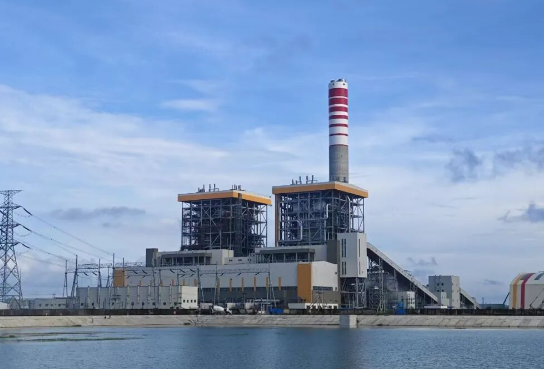
DHAKA, May 28 — The 1320MW ultra-supercritical coal-fired power plant in Patuakhali, Bangladesh, fully invested and constructed by China North Industries Group Corporation Limited, has officially commenced commercial operation. The landmark achievement was secured after the project’s two generating units successfully passed the mandatory 168-hour reliability test, marking a pivotal milestone in high-quality energy cooperation between China and Bangladesh under the Belt and Road Initiative.
The continuous reliability test ran precisely from 2:00 a.m. on May 21 to 2:00 a.m. on May 28. Throughout the entire assessment period, both units operated stably and smoothly without major faults or operational abnormalities. The project delivered excellent performance in the core dual-unit net output reliability test, fully meeting stringent operational standards and strictly complying with local power grid dispatching requirements, laying a solid technical foundation for long-term stable commercial power supply.
As a benchmark overseas investment project of China North Industries Group under the Belt and Road framework, the new power plant targets and effectively addresses Bangladesh’s long-standing energy shortages. For years, Bangladesh has struggled with inadequate power infrastructure, depleting domestic natural gas reserves and unstable power supply. Frequent energy supply disruptions have forced local power plants to suspend operation intermittently, severely constraining the development of core industries including textiles and chemical fertilizers, and undermining residents’ daily electricity access. Industry analysis from Wood Mackenzie also indicates that Bangladesh’s national energy demand will surge by 27% in the next decade, highlighting the urgent need for upgraded power supply capacity.
Adopting advanced ultra-supercritical power generation technology, the plant boasts far higher energy efficiency and lower resource consumption compared with conventional coal-fired power facilities. Operating under elevated temperature and pressure parameters, the technology cuts coal consumption to approximately 265 grams per kilowatt-hour — well below the mainstream global level of 300 to 330 grams per kilowatt-hour. This significant efficiency improvement not only optimizes the regional power grid structure and elevates overall energy utilization efficiency but also strongly supports local industrial expansion and consistent livelihood power guarantees.
The project is highly compatible with Bangladesh’s national development strategies, supporting the country’s efforts to resolve energy bottlenecks and advance its sustainable development goals, including its target of lifting the proportion of renewable energy in its energy mix to 20% by 2030. China has long been a key partner in Bangladesh’s energy sector development, with diversified investments covering coal-fired, solar and wind power projects. These collaborative initiatives have continuously optimized Bangladesh’s energy structure and boosted its independent energy supply capacity.
Following the official commissioning of the Patuakhali power plant, it will work in tandem with other Chinese-backed energy projects in Bangladesh, including the under-construction Rooppur Nuclear Power Plant. The synergy of these projects will form a more diversified, stable and reliable national energy supply system, effectively alleviate long-term power shortages, and fuel steady national economic growth. Meanwhile, the project will further consolidate the long-term strategic energy cooperation between China and Bangladesh, serving as an exemplary model for high-quality cross-border energy cooperation under the Belt and Road Initiative worldwide.
热门内容推荐