World’s Largest Direct-Drive Floating Offshore Wind Turbine Pilot Project Launched in Yangjiang
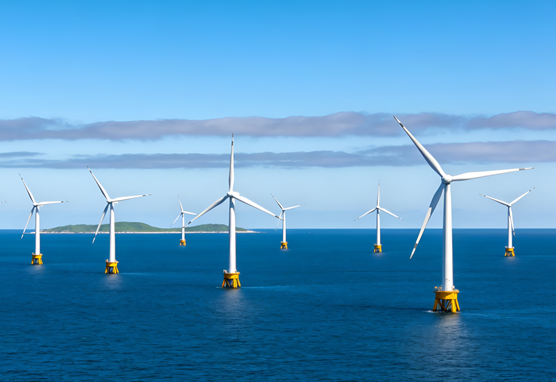
A pilot project for the world’s largest floating offshore wind turbine officially commenced construction in Yangjiang, Guangdong Province, on 4 June, according to multiple industry sources. The 17 MW direct-drive turbine, named “Ruifeng”, marks a significant step forward in deep-sea wind power technology development and engineering deployment.
The turbine is specifically designed for China’s deep-sea regions, where typhoons and complex sea conditions present formidable engineering challenges. All key components have been fully domestically sourced, and the turbine is built to withstand Category 17 typhoons and waves reaching up to 24 metres.
Data obtained from the project launch conference indicates three major technological innovations incorporated into the Ruifeng design. A streamlined integrated design has reduced steel consumption to less than 370 tonnes per megawatt, bringing unit kilowatt costs down by more than 25 per cent compared with existing projects. An intelligent control system, combining active ballast and passive stabilisation mechanisms, continuously senses wind, wave and current loads while dynamically regulating ballast water levels to suppress platform motion, thereby boosting power generation by more than 3 per cent. The project has also pioneered an integrated simulation and hybrid model basin testing technique, enabling accurate modelling of the fully coupled dynamic interaction between the turbine’s 262-metre-diameter rotor, floating platform and mooring system under real oceanic conditions. This has led to the drafting of a national industry standard for floating wind system scale model basin testing, filling a previously existing gap.
According to sources familiar with the project, Ruifeng forms part of a national key research initiative under the Renewable Energy Technology programme. The development has been led by the Southern Branch of China Huaneng Group in collaboration with the Huaneng Clean Energy Research Institute, bringing together Dongfang Electric Corporation, North China Electric Power University and other research institutions and enterprises.
The demonstration project is being carried out at the Yangjiang Sanshando I offshore wind farm, located approximately 90 kilometres from land in waters ranging from 51 to 56 metres in depth. The site currently plans to install 29 fixed-bottom turbines of 16.7 MW each alongside the single 17 MW floating unit.
Looking ahead, the project team intends to systematically validate key technologies across the entire value chain under extreme operating conditions, from integrated design and mooring systems to dynamic cabling. The engineering data and operational experience accumulated during this pilot phase are expected to lay the groundwork for large-scale, commercial deep-sea wind power development.
热门内容推荐