Residential Rental Market in China Shows Clear Signs of Stabilisation
According to Securities Daily, monitored data from China Index Academy covering residential rental prices across 50 major cities has revealed tangible stabilising trends emerging in the national housing rental sector.
The average monthly residential rent across these 50 cities stood at 33.94 yuan per square metre in May, edging down by 0.11% month-on-month and 3.17% year-on-year. Marginal rental declines in May match typical seasonal patterns, as traditional peak rental demand failed to materialise in the month. The market demonstrates far greater stability than the corresponding periods in the previous two years; month-on-month rental drops exceeded 0.3% in May 2024 and May 2025, while the contraction narrowed sharply this year.
The prolonged deep adjustment phase of the rental market is drawing to a close, with limited room left for further overall rental declines. Divergent trends have grown more noticeable across cities of different tiers. First-tier cities registered a 0.16% month-on-month rise in average residential rents and keep recovering steadily. Rents in second-tier cities dipped by 0.27% month-on-month, a marginal widening of the decline by 0.05 percentage points compared with April, while representative third and fourth-tier cities recorded a 0.20% month-on-month fall in rents.
On a cumulative basis from January to May, average residential rents in first-tier cities have climbed by 0.21%, marking an early shift from contraction to expansion. Over the identical timeframe, second-tier cities saw rents slip by 1.13% cumulatively, and third and fourth-tier cities posted a 0.68% cumulative drop, yet both groups have seen their downward losses shrink against the same stretches in prior years.
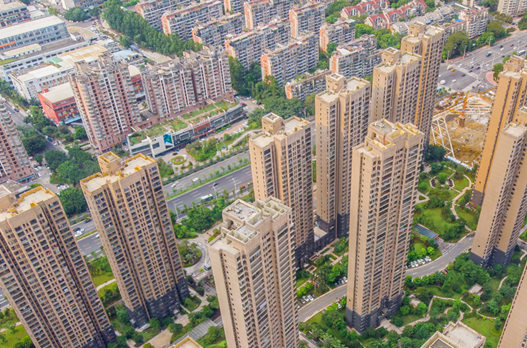
Two consecutive years of price corrections have rebalanced supply and demand dynamics within the rental market. Government-subsidised rental housing has set a stable benchmark for market rents and curbed sharp price swings. Concentrated industrial clusters and sustained population inflows have put first-tier cities in a position to stabilise their rental fundamentals ahead of other city groups.
Core cities are acting as the primary driving force behind the current market recovery. Eleven out of the 50 monitored major cities reported month-on-month rental increases in May, including Beijing, Shanghai, Shenzhen, Tianjin, Suzhou, Dalian and Fuzhou. Rents in Beijing, Shanghai and Shenzhen have climbed for three straight months since March. Shanghai delivers an especially robust performance, with monthly rental growth topping 0.5% in both April and May, ranking among the strongest performers among key monitored cities.
The current rental recovery is led predominantly by core metropolitan areas. Beyond first-tier cities, regional hubs with solid industrial foundations and steady population inflows also exhibit strong market resilience.
June brings the annual graduation season for university students, opening the year’s largest window for rental demand expansion. The domestic residential rental market is set to maintain structural recovery in the near term.
Core cities with robust industrial bases and abundant job openings, including Beijing, Shanghai, Shenzhen, Hangzhou, Chengdu and Tianjin, will keep drawing graduate cohorts and new working residents. Rental demand will pick up notably around industrial parks, mass transit routes and concentrated employment zones, lifting local rents steadily. The housing rental sector will develop in closer alignment with the commodity residential housing market, supporting steady and sound progression across the broader real estate sector.
热门内容推荐