Construction Begins on World’s Largest 271,000 cbm QC-MAX LNG Carrier Vessel
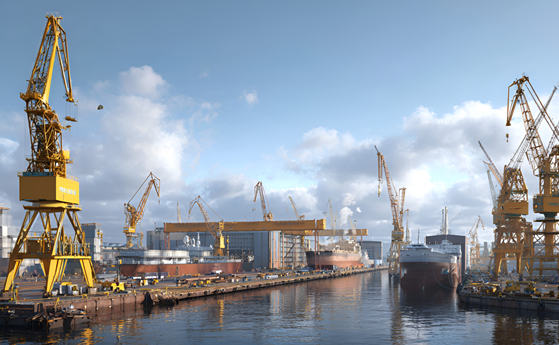
According to Science and Technology Daily, work formally started on the world’s largest liquefied natural gas carrier, the 271,000 cubic metre QC-MAX design, on 9 June under the shipbuilding arm of China State Shipbuilding Corporation. Delivery of the lead hull is scheduled to take place in 2028.
Stretching 344 metres in overall length, the QC-MAX class vessel integrates the upgraded NO96 Super+ membrane cargo containment system, delivering comprehensive leaps in cargo capacity, energy conservation, carbon performance and navigational safety compared with established market vessel models. When measured against mainstream 174,000 cbm LNG carriers widely deployed across global trade lanes, its total cargo carrying capacity rises by 57 per cent. Daily boil-off loss is restricted to just 0.087 per cent, cutting waste of liquefied gas during long-distance maritime transit.
A high-efficiency dual-fuel propulsion suite is fitted as standard across the series, which delivers marked reductions in energy consumption and carbon emissions per unit of transported LNG. The design combines ultra-large loading volume, low operational fuel burn, low-carbon operation and robust onboard safety architecture. Its dimensional layout and cargo handling infrastructure align with technical specifications accepted at nearly all major LNG import and export terminals worldwide, granting extensive operational flexibility across international deep-sea shipping routes.
The newbuild scheme forms a core segment of the large-scale LNG vessel construction programme commissioned by QatarEnergy. Hudong-Zhonghua Shipbuilding, a wholly owned subsidiary of China State Shipbuilding Corporation, has secured orders for a total of thirty-six new carriers under this framework. The order portfolio comprises twenty-four units of the groundbreaking 271,000 cbm QC-MAX ultra-large LNG vessel alongside twelve standard 174,000 cbm LNG carriers, establishing the yard as the single largest contractor for the whole programme.
All vessels in the contract sequence will follow unified production and quality assurance frameworks laid out for ultra-low temperature marine cargo craft. Subsequent hulls will enter construction phases on staggered timelines through to the early 2030s, to match phased expansion of Qatar’s natural gas liquefaction export capacity. Shipping operators across Europe and Asia will integrate these high-capacity low-emission carriers into long-term LNG supply chains once vessels complete sea trials and formal handover.
热门内容推荐