Shandong Port Group Advances Three Core Transformations to Build World-class Integrated Maritime Hub
Per China Transport News dispatches, Shandong Port Group has pressed ahead with three parallel development drives over the past two years: constructing a world-class cluster of marine ports, building a comprehensive supply chain service ecosystem, and establishing an internationally competitive enterprise. Three pivotal industrial transitions run through all operational upgrades: advancing from digitalisation to full intelligentisation, evolving from a pure port operator to an end-to-end supply chain service provider, and shifting traditional port operations towards integrated high-end low-carbon industries. Tangible operational milestones underpin sustained expansion of port capacity, global logistics connectivity and green intelligent infrastructure along the coastal Bohai and Yellow Sea zones of Shandong Province.
Expanded Global Shipping Routes Streamline International Logistics Corridors
Maersk’s MV Irene recently berthed at berth U3 of QQCTU terminal in Qingdao Port, marking the maiden voyage of PH1, a newly launched Southeast Asian liner service operated by the shipping giant. The launch lifts the total number of Southeast Asia-focused shipping routes run by Shandong Port Group above 50, the highest tally among all northern Chinese port complexes.
The group now operates more than 370 container routes and over 80 general cargo lines, connecting over 700 terminals spread across 180 countries and territories, with full coverage of Belt and Road economies, RCEP member states and emerging global trade markets. Total cargo throughput and container volumes registered year-on-year growth of 4.1 per cent and 8.7 per cent respectively during the first quarter of the current year.
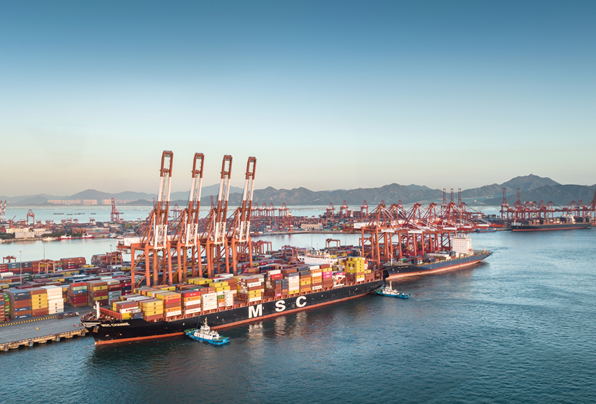
Large-scale infrastructure upgrades form the backbone of expanded throughput capacity. Major landmark projects delivered across the port cluster include a second 400,000-tonne iron ore berth at Dongjiakou Port Area in Qingdao, a fully open automated container terminal at Rizhao Port, and upgraded liquid chemical and container berths at Yantai Port. The completed network forms China’s largest, most structurally balanced cluster of deep-water specialised berths, with infrastructure benchmarks matching top global maritime hubs.
Network expansion combines long-distance ocean trunk lines, regional feeder services and domestic coastal shipping routes. Over two years the total route portfolio has grown to 370 services, of which more than 270 cater to foreign trade. This network layout delivers dense, far-reaching global coverage with coordinated trunk and feeder shipping links.
Sustained hub capacity growth lifts overall throughput metrics year on year. Total cargo tonnage climbed from 1.8 billion tonnes in 2024 to 1.96 billion tonnes in 2025, while container throughput rose from 44.77 million TEUs to 48.53 million TEUs, surpassing all targets laid out under the 14th Five-Year Plan framework. Individual port rankings continue to climb worldwide: Qingdao Port sits fourth, Rizhao sixth and Yantai tenth among global coastal terminals, alongside steady volume expansion at Bohai Bay Port. The consolidated port cluster strengthens national strategic support capacity through reinforced international logistics connectivity.
Integrated Supply Chain Services Boost Domestic and Foreign Trade Quality
Intermodal rail containers loaded with truck component parts from Sinotruk were transferred directly onto seagoing vessels at Phase Three of Qianwan Terminal in Qingdao Port. Components are pre-stuffed at dedicated inland warehousing facilities in Jinan before rail transit to the port, with 30 full containers scheduled for shipment to Tanzania via COSCO Shipping’s Africa liner services.
Customised warehousing covering over 60,000 square metres has been built close to Sinotruk’s manufacturing premises in Dongjia Town, Jinan. The facility offers container packing, storage and ocean freight booking alongside bespoke export logistics packages incorporating China-Europe rail and sea-rail intermodal transport links. The integrated arrangement cuts overall logistics overheads and accelerates cargo dispatch cycles for industrial manufacturers.
Policy guidance set out in central government guidelines on expanding and upgrading service industries prioritises deepening professional producer services embedded within industrial value chains. Shandong Port Group delivers on its mandate as the province’s leading supply chain enterprise, breaking traditional operational boundaries to integrate internal and external logistics resources while embedding service workflows within 19 signature manufacturing industrial chains across Shandong.
A full spectrum of modular and end-to-end supply chain provisions is available to commercial clients. Fifty-six inland dry ports and 109 intermodal rail lines extend service reach deep into inland hinterlands, alongside eighty specialist offerings covering ship agency, customs inspection and quarantine procedures. The group holds or manages 15 categories of financial licences and oversees 30 controlled financial subsidiaries, while operating a fleet of over 70 vessels with a combined deadweight tonnage of 1.1 million tonnes. Clients select either complete all-in-one logistics packages or tailored modular services aligned with individual shipment requirements to balance cost control and transit efficiency.
Intelligent and Low-carbon Infrastructure Cultivates New Quality Productive Forces
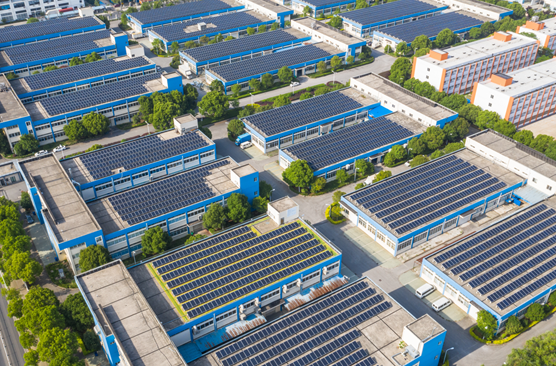
Fully unmanned terminal zones feature autonomous gantry cranes handling containers, hydrogen-powered container trucks circulating across yards, full 5G signal coverage, photovoltaic arrays generating on-site power and fully enclosed transfer corridors containing dust emissions. Formerly labour-intensive industrial dock zones have transformed into technology-driven, eco-friendly intelligent port precincts.
All operational divisions have prioritised automation and intelligent transformation upgrades over the past two years, overhauling end-to-end cargo handling workflows to deliver home-grown innovation and low-carbon operational transitions. The third phase of the fully automated container terminal at Qingdao Port has entered full commercial operation, ending reliance on proprietary foreign control systems. The independently developed A-TOS intelligent terminal operating system achieves fully unmanned coordination of quay cranes, container trucks and stackers, setting 13 new world records for single-unit handling efficiency.
Rizhao Port’s globally pioneering open-layout automated container terminal delivers a further 9.5 per cent lift in overall operational efficiency alongside a 10 per cent reduction in equipment failure rates. The site also hosts the world’s first intelligent green demonstration terminal for bulk dry cargo, enabling fully enclosed cargo transit and minimal on-site labour presence. Yantai Port has delivered a national transport pilot project focused on intelligent ro-ro terminals and integrated source-grid-load-storage low-carbon energy optimisation, opening the country’s first green intelligent vehicle ro-ro dock. Bohai Bay Port has commissioned China’s first ice-class all-electric intelligent tugboat, certified under three international smart shipping standards covering intelligent engine rooms, energy efficiency management and integrated vessel monitoring platforms.
The group has also constructed one of China’s first national pilot bases for artificial intelligence applications within the port and shipping sector. R&D teams have mapped over 80 full-chain AI operational scenarios to create a complete catalogue of port-focused artificial intelligence use cases. The industry’s first port-specific large language model and supporting intelligent agents debuted at the World Artificial Intelligence Conference, alongside vertical domain models for port trade-as-a-service and autonomous driving, plus China’s first dedicated port AI chip to steer wider digital transformation across maritime logistics.
Intelligent upgrades run parallel to accelerated green port construction, with low-carbon planning embedded within every stage of port design, construction and daily operation. Qingdao Port hosts Asia’s first integrated hydrogen and 5G intelligent green terminal fitted with hydrogen-powered container trucks and quay cranes, cutting annual carbon emissions by more than 1,000 tonnes through zero-emission on-site handling and fully renewable energy supply. Yantai Port’s vehicle terminal holds national carbon neutrality certification as the country’s first ro-ro facility to attain the standard, delivering an annual carbon dioxide reduction of 23,000 tonnes through optimised energy mixes and eco-friendly handling protocols.
Low-carbon operational practices have been rolled out across all terminals. The first ship-to-ship green methanol bunkering operation has been completed, while wind and photovoltaic power generation capacity expands rapidly at Qingdao and Rizhao Ports to raise the proportion of clean energy consumed on-site. Landscaped park-style port precincts replace former industrial shorelines with ecological corridors and public recreational spaces. Bohai Bay Port has secured official carbon neutrality certification as a fully zero-carbon terminal, establishing replicable operational frameworks for sustainable port development nationwide.
With the launch of planning cycles under the 15th Five-Year framework, the port sector enters a phase of accelerated expansion. Shandong Port Group will sustain long-term investment in integrated port infrastructure and supply chain services, aligning all operations with national and provincial economic development priorities while advancing milestones outlined in national ocean and transport development strategies.
热门内容推荐