China’s May Industrial Energy Output: Renewables Power Uptick in National Electricity Generation
Per official releases from China Economic Net, the National Bureau of Statistics has published full industrial energy production data covering May 2026, laying out monthly and cumulative output figures for coal, crude oil, natural gas and all power generation categories from large-scale industrial facilities nationwide.
Coal output from industrial enterprises above designated size maintained robust monthly run rates despite a mild year-on-year pullback in May. Total raw coal output hit 400 million tonnes for the month, marking a 1.7 per cent year-on-year fall, with a daily average production volume standing at 12.81 million tonnes. Cumulative output across the first five months of 2026 reached 1.98 billion tonnes, recording a marginal 0.3 per cent year-on-year decline.
Domestic crude oil extraction kept delivering steady year-on-year expansion, though momentum softened slightly month-on-month. May crude production registered 18.57 million tonnes, up 0.5 per cent against the same period last year, a growth rate 0.7 percentage points lower than April’s reading. Daily crude output averaged 599,000 tonnes over the month. Aggregate extraction between January and May totalled 91.31 million tonnes, representing a 1.1 per cent year-on-year rise.
Refining throughput posted a sharper contraction in May compared with preceding months. Large industrial refineries processed 53.72 million tonnes of crude oil in the month, a year-on-year drop of 9.1 per cent; the scale of decline widened by 3.3 percentage points versus April. Daily processing volumes averaged 1.733 million tonnes, while the January–May cumulative refining figure stood at 292.8 million tonnes, down 2.2 per cent year on year.
Domestic natural gas production edged into negative year-on-year territory in May after positive growth in April. Industrial gas output for the month came to 21.7 billion cubic metres, falling 2.2 per cent year on year, contrasting with a 1.9 per cent uptick recorded the previous month. Daily gas production averaged 700 million cubic metres. Cumulative extraction for the opening five months of the year hit 111.7 billion cubic metres, delivering a 1.7 per cent year-on-year increase.
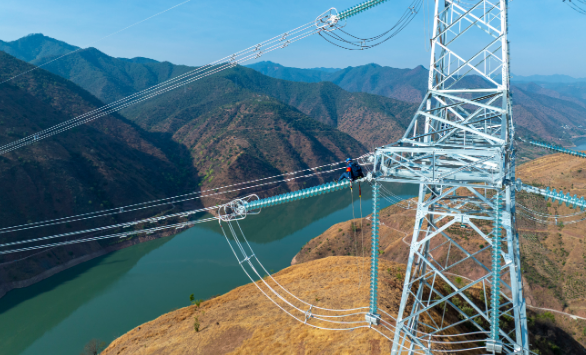
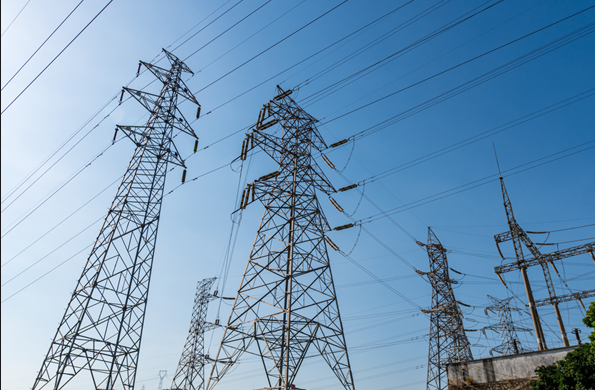
Overall power generation from large industrial facilities picked up pace notably in May. Total electricity output reached 784.3 billion kilowatt-hours, rising 4.2 per cent year on year, with growth accelerating 1.6 percentage points from April’s level. Daily power production averaged 25.3 billion kilowatt-hours, and cumulative generation from January to May hit 3.9129 trillion kilowatt-hours, up 3.6 per cent year on year.
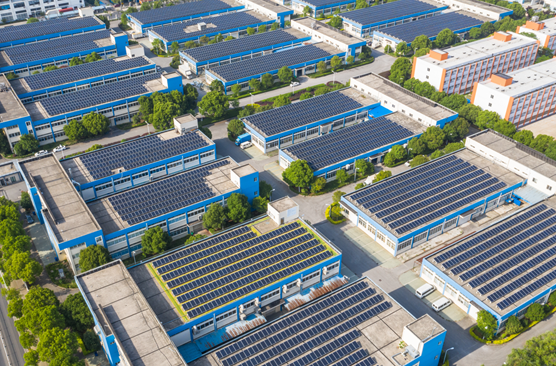
Breakdowns across power sources reveal clear structural shifts toward low-carbon generation in the latest monthly data. Thermal power growth moderated in May, climbing 2.1 per cent year on year with its expansion rate down 1.0 percentage point from April. Hydropower and solar photovoltaic generation both saw faster growth momentum; hydropower output rose 13.0 per cent year on year, an acceleration of 0.8 percentage points, while solar generation expanded 12.1 per cent with its growth rate lifting by 5.0 percentage points. Nuclear and wind power output reversed earlier monthly declines to post positive year-on-year readings in May. Nuclear power generation grew 5.0 per cent, following an 8.7 per cent year-on-year drop in April, and wind power registered a 0.5 per cent uptick after falling 5.0 per cent the prior month.
Industry bodies track the evolving energy mix as a marker of domestic low-carbon transition progress. Ongoing expansion of renewable energy installations across provincial grids is set to sustain stronger output growth for hydro, wind and solar assets through subsequent months. Domestic oil and gas extraction operations will continue stable development to underpin national energy supply capacity, while refining plant throughput schedules will adjust in line with downstream industrial consumption trends over the second half of the year. Coal production lines will sustain stable daily output volumes to secure baseline energy supply for industrial and residential demand nationwide.
热门内容推荐