Exploring Pathways for Brands to Reach Further, Go Deeper, and Achieve Greater Integration: The 2025 Global Brand Economy Conference Held in Beijing
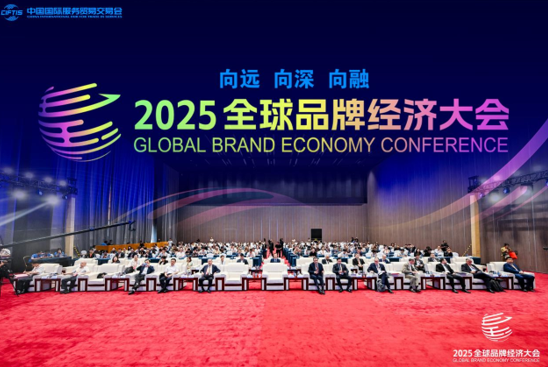
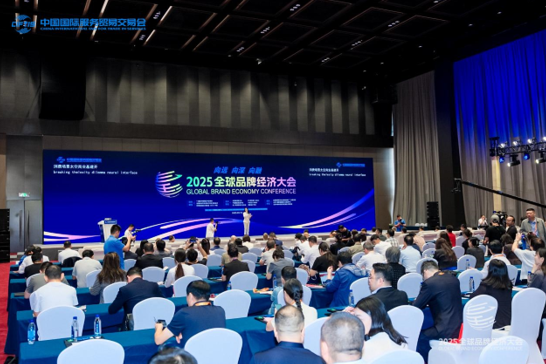
On September 13, the 4th CIFITS 2025 Global Brand Economy Conference, themed Reach Further, Go Deeper, and Achieve Greater Integration,was held at the Shougang International Exhibition and Convention Center in Beijing. As a key component of the China International Fair for Trade in Services (CIFTIS), the conference was jointly organized by the China Federation of Economic Media, the China Association for International Trade, the editorial office of China Top Brands, the International Society for Design Science, the Italian Chamber of Commerce in China, and the Italian Luxury Goods Association. Approximately 600 participants—including leaders from relevant ministries and commissions, ambassadors and diplomatic envoys from 11 countries, industry experts, and corporate representatives—engaged in discussions to promote the development of the brand economy and explore new pathways for growth.
Charting the Course for Cooperation: Global New Economy Think Tank Launches to Empower
Currently, the global brand economy is undergoing a critical period of restructuring. At the conference, several guests delivered speeches on topics such as the globalization of brands, international cooperation, and pathways to innovation.
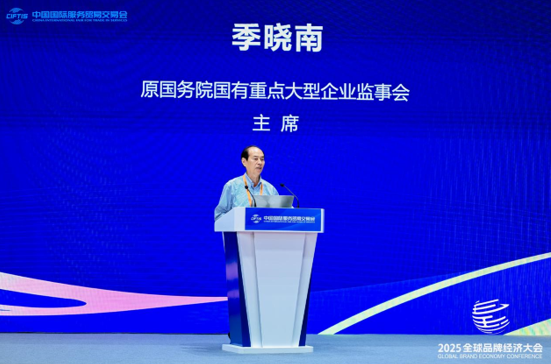
Ji Xiaonan, former Chairman of the State Council's Supervisory Board for Key State-Owned Enterprises, stated in his speech that while the world is undergoing unprecedented changes unseen in a century, multilateralism remains the consensus among the vast majority of countries, and international cooperation remains an irreversible trend of the times. Brands are not only important vehicles for economic globalization but also key drivers of trade in services. As a core component of trade in services and high-value-added industries, the brand economy is playing an increasingly prominent role in driving global economic growth and promoting cultural exchange.
Ji Xiaonan noted that in recent years, China's brand development has achieved remarkable results driven by the dual engines of innovation and opening-up, realizing a transition from Made in China to Created in China. This achievement stems not only from enterprises' commitment to quality, technology, and integrity but also from deepened international cooperation. At the same time, he called on governments, enterprises, think tanks, and media around the world to further broaden the scope of cooperation, promote the deep integration of digital technology, the green economy, and branding, and jointly build open markets--so that brands may serve as a shining card for economic growth, cultural exchange, and sustainable development.
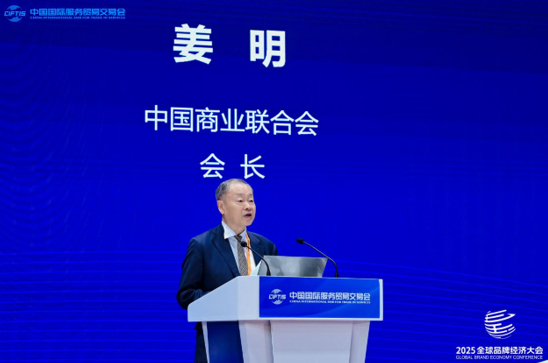
Jiang Ming, President of the China General Chamber of Commerce, stated in his address that brands are not only a symbol of corporate strength but also a epitome of a nation's image and a vital link connecting the world. As the global economy becomes increasingly integrated, the power of brands is becoming ever more prominent. Chinese commerce is undergoing a profound transformation from scale-driven growth to value-driven advancement, and brand building has become a key force driving industrial upgrading and economic transformation. Jiang Ming noted that, driven by both policy and practice, Chinese brands are rapidly taking center spot on the world stage, and their competitiveness and influence are achieving new breakthroughs. Taking this conference as an opportunity, Jiang Ming expressed his hope that all parties would translate the outcomes of their dialogue into practical cooperation, enabling brands to serve not only as platforms for economic and trade exchanges but also as ambassadors for mutual learning among civilizations and drivers of sustainable development.
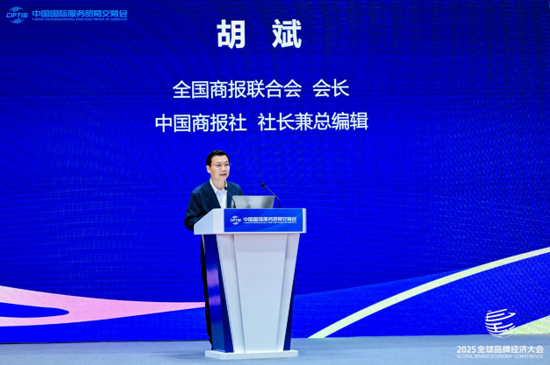
Hu Bin, President of the China Federation of Economic Media and President and Editor-in-Chief of China Business Herald, stated that brands are the core platform for global market competition and a vital force driving high-quality economic development. Currently, China is deeply advancing the construction of a quality-driven nation, and brands—as the concentrated embodiment of quality, innovation, and credibility—have become a key lever for implementing national strategies. In recent years, China's efforts in building brands have achieved major leaps: from piecemeal advancement to systematic planning, from quantitative growth to improvements in both quantity and quality, and from a domestic focus to a global footprint. This market landscape not only reflects the deep integration of domestic and international markets but also demonstrates China's commitment to expanding openness and sharing development opportunities. As a national-level news association, Hu Bin expressed his hope that the China Federation of Economic Media would serve as a bridge and link, helping Chinese brands go global while facilitating the entry of global brands into China.
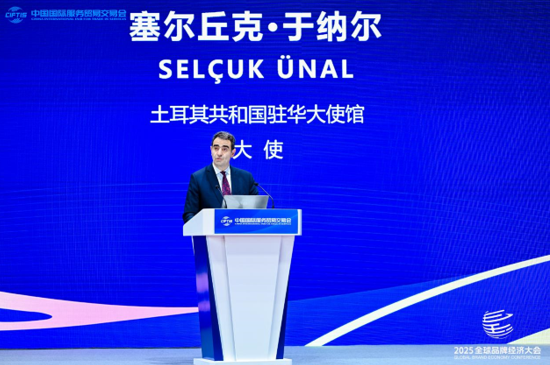
Selçuk Ünal, Ambassador of the Republic of Turkey to China, stated that the world today is undergoing a challenging period, and no single country or international organization can tackle these complex challenges alone. As a bridge connecting East and West, Turkey has always been committed to promoting regional and even global peace and stability. He noted that the synergistic alignment of Turkey's Middle Corridor initiative with China's Belt and Road Initiative will deepen multilateral cooperation and serve as an important platform for advancing global collaboration. China has made positive contributions to global and regional development through numerous major projects, and Turkey and China are engaged in ongoing negotiations to further integrate their development strategies.
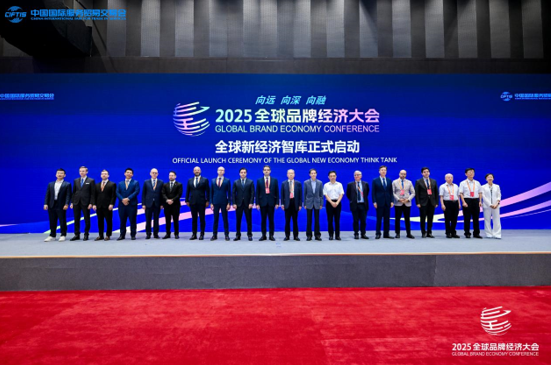
It is worth noting that during the conference, the Global New Economy Think Tank (GNE) was officially launched.
It is understood that the Global New Economy Think Tank was jointly established by the China Federation of Economic Media and China Business. With the purpose of addressing the nation's urgent needs and building a distinctive, institutionally innovative think tank platform and the vision of promoting the building of a community with a shared future for mankind through global wisdom, the think tank will focus on key areas such as the digital economy, industrial upgrading, and regional coordination to conduct strategic, forward-looking, and systematic research, providing high-quality decision-making support to government departments and solutions for corporate innovation and upgrading.
Decoding Brand Growth: Corporate Practices Demonstrate Resilience and Vitality
During the keynote speeches and the special session titled Resilient Brand Growth: 'Reaching Further, Going Deep, and Embracing Integration,' experts and corporate representatives shared practical case studies and insights on brand development in areas such as digital and intelligent transformation, globalization, and green development.
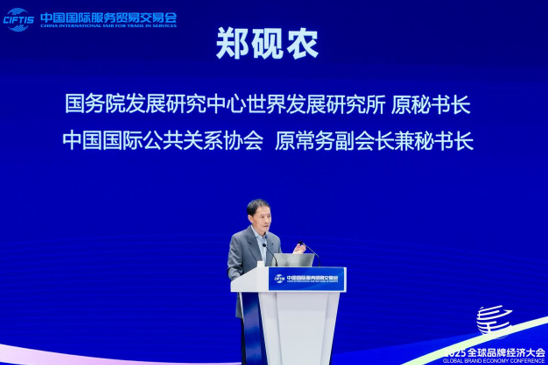
Zheng Yannong, former Secretary-General of the Institute of World Development at the Development Research Center of the State Council and former Executive Vice President and Secretary-General of the China International Public Relations Association, delivered a keynote speech on brand globalization in the context of high-quality development. In his view, Chinese enterprises have moved beyond the stage of commodity exports and entered a new phase of brand globalization. To this end, companies should adopt the mindset of check the waters before setting sail, comprehensively analyzing the current international political and economic environment, and conducting thorough research on the political systems of target countries as well as the relevant laws and regulations, media landscape, and cultural differences of target markets.
Zheng Yannong believes that brand building should be grounded in product experience, corporate culture, and the reputation of entrepreneurs. Brands should clarify their positioning through differentiation, digital and intelligent transformation, and localization strategies, while leveraging new technologies such as AI and block chain to enhance communication and operational efficiency. Today, the global expansion of Chinese brands is evolving from going out and entering to integrating. Companies must address global challenges through ecosystem-based expansion and compliant operations to ultimately achieve the leap from a brand-rich nation to a brand-strong nation.
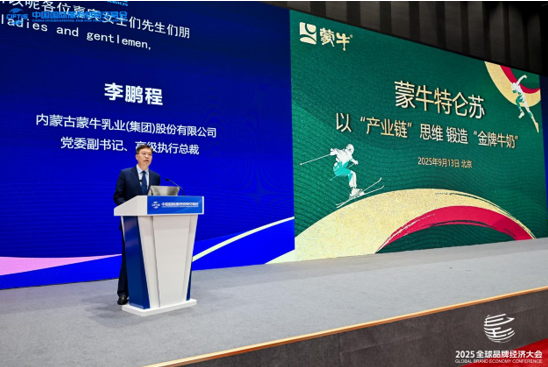
Li Pengcheng, Deputy Secretary of the Party Committee and Senior Executive President of Inner Mongolia Mengniu Dairy (Group) Co., Ltd., used the Deluxe Milk brand as an example to share how Mengniu has built the Deluxe Milk brand by using an industrial chain approach. He stated that the success of the Deluxe Milk brand stems from a commitment to high quality and the systematic integration of the entire industrial chain. Deluxe Milk adheres to a long-term vision and a premium positioning, while Mengniu will continue to promote this symbol of Chinese milk, world-class quality on the global stage, showcasing the sustainable development capabilities of Chinese brands.
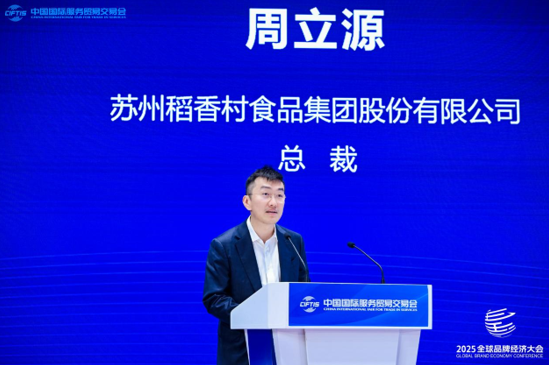
Zhou Liyuan, President of Suzhou Daoxiangcun Food Group Co., Ltd., noted that helping time-honored brands expand beyond their places of origin into broader domestic and even international markets is a common challenge facing the industry. As a benchmark for the innovative development of time-honored brands, Suzhou Daoxiangcun balances Chinese-style cultural trends with health-conscious concepts, driving the innovation and global expansion of Suzhou-style, Guangdong-style, and other traditional mooncakes and pastries. These products are not only deeply loved by overseas Chinese but are also gradually integrating into local mainstream markets. Zhou Liyuan noted that Suzhou Daoxiangcun is committed to achieving co-creation, sharing, and mutual benefit with global partners in trade in services, so that an increasing number of overseas consumers will fall in love with Chinese pastries.
Promotions Unlock Opportunities, Multilateral Cooperation Charts a Blueprint for Development
During the global national brand promotion session, representatives from diplomatic missions of various countries and regions in China highlighted their local industrial strengths, building bridges to facilitate connections between Chinese and foreign enterprises.
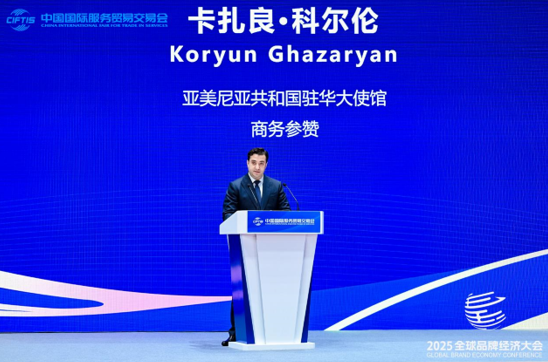
Koryun Ghazaryan, Commercial Counselor at the Embassy of the Republic of Armenia in China, explained that since the establishment of diplomatic relations between Armenia and China in 1992, bilateral relations have developed steadily across multiple fields. Recently, the Prime Minister of Armenia paid an important visit to China, and during their meeting, the leaders of both countries announced the establishment of a strategic partnership between the two nations. This not only elevated political relations between Armenia and China to a new level but also opened up broader prospects for economic cooperation between the two sides. In the economic field, the two sides have reached a series of important agreements aimed at streamlining trade procedures, reducing market access barriers, and actively exploring emerging areas of cooperation such as e-commerce and cross-border logistics, thereby creating more business opportunities for enterprises in both countries. In addition, the two sides have also engaged in in-depth discussions on potential cooperation in infrastructure development, agricultural modernization, information technology, and green energy. Koryun Ghazaryan expressed his hope that this conference would serve as a platform to showcase Armenia's unique charm to the world and attract more international capital and industrial cooperation.
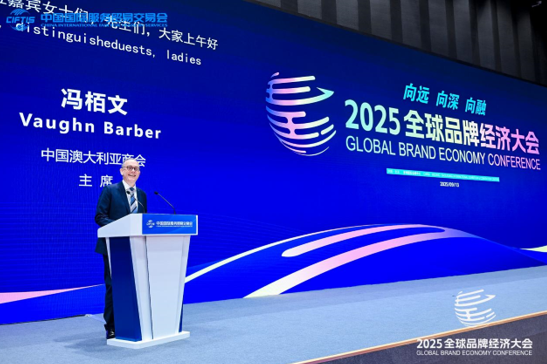
Vaughn Barber, Chairman of the China-Australia Chamber of Commerce, noted that Australia's designation as the Guest of Honor at the 2025 China International Fair for Trade in Services marks a significant milestone in Australia-China relations and reflects a renewed commitment by both sides to economic cooperation, shared prosperity, and innovation. Australia's national brand, centered on excellence, innovation, and sustainability, enjoys a global reputation in sectors such as agriculture, education, financial services, and clean technology. Today, Australia and China are actively expanding trade in services, knowledge exchange, and technological collaboration, and have already made tangible progress in areas including steel decarbonization, medical cooperation, and high-efficiency solar technology. Looking ahead, he expressed hope that the two countries would further tap into the potential for cooperation in digital transformation, the green economy, the commercialization of scientific research, and the cultural and creative industries, working together to achieve mutual benefit and sustainable growth.
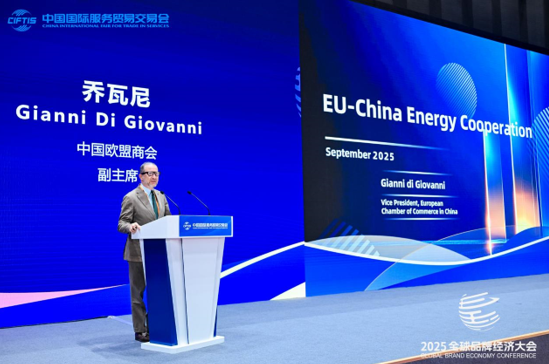
Gianni Di Giovanni, Vice Chairman of the European Chamber of Commerce in China, noted in his presentation that over the 50 years since the EU and China established diplomatic relations, bilateral trade has grown from $2.4 billion to $785.8 billion--an increase of more than 300-fold. Among these sectors, energy has consistently been one of the areas with the greatest potential for synergistic development. The EU and China share highly aligned goals for energy transition, which lays a solid foundation for long-term cooperation between the two sides. Europe excels in institutional design and cutting-edge innovation, while China excels in large-scale manufacturing and system integration. These complementary strengths help make China-EU cooperation a stabilizer and accelerator for the global energy transition. Di Giovanni expressed his hope that both sides will continue to deepen practical cooperation in areas such as green technology and carbon market integration, jointly opening a new chapter in energy cooperation.
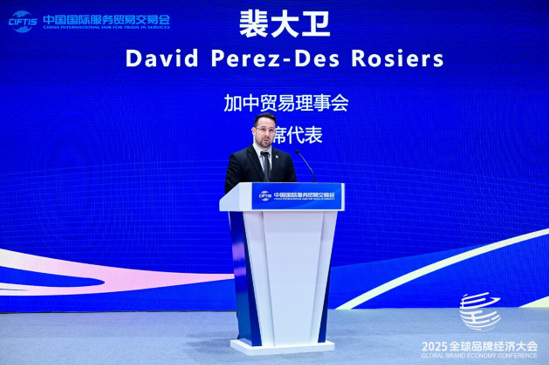
David Perez-Des Rosiers, Chief Representative of the Canada-China Business Council, highlighted the high quality, authenticity, and reliability embodied by the Canadian national brand. He noted that Canada and China have long-standing economic and trade relations, with China being Canada's second-largest trading partner. Although Canadian exports to China account for less than 5% of total exports, there is enormous potential for cooperation in sectors such as agricultural products and food, services, and consumer goods. Currently, Canadian brands enjoy high recognition in the Chinese market across sectors such as food and beverages, winter apparel, lifestyle products, and health products. He suggested that Canadian companies should deepen their localization efforts in China through cross-border e-commerce. At the same time, he welcomed Chinese companies to explore development opportunities in Canada.
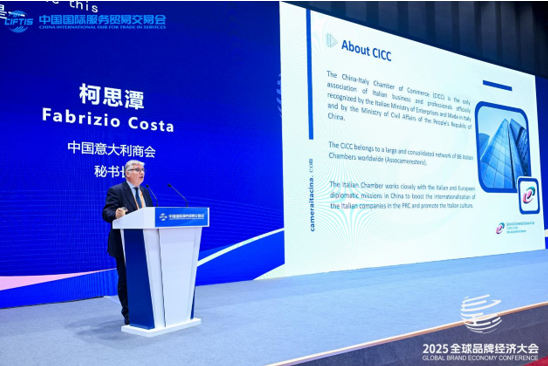
Fabrizio Costa, Secretary-General of the Italian Chamber of Commerce in China, noted that both Italy and China are nations with long histories and rich cultures. Since its establishment in 1991, the Italian Chamber of Commerce in China has been committed to building a solid bridge for economic and trade cooperation between the two countries. Italy is not only renowned for its design and food sectors but also possesses cutting-edge innovation capabilities in advanced manufacturing, life sciences, and sustainable technologies. Serving as a bridge connecting enterprises from both sides, the Italian Chamber of Commerce in China will provide support for in-depth cooperation between Chinese and Italian companies in areas such as technology R&D and market expansion through its four pillars: Voice and Advocacy, Knowledge and Insight, Connections and Community, and Opportunities and Growth, thereby promoting the joint development of brands from both countries.
Discussing Pathways to Globalization, Exploring New Directions for Brand Development
At the round table forum themed Brands and Globalization, Chinese and international guests engaged in in-depth discussions on topics such as the challenges of globalization, digital and intelligent empowerment, and localization strategies. The forum was presided by Alkhalloufi Toumert, an advisor to the China Think Tank in Morocco.
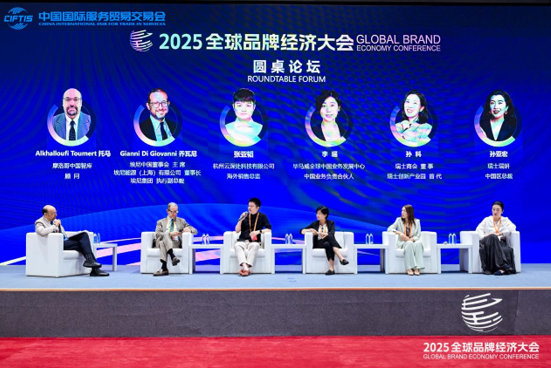
Gianni Di Giovanni, Chairman of Eni China's Board of Directors, Chairman of Eni Energy (Shanghai) Co., Ltd., and Executive Vice President of the Eni Group, explained that Eni is committed to combining technology with social responsibility, using digitalization as a core driver to continuously advance the green energy transition. As the world's largest market for fuel transportation and the largest producer of waste cooking oil, China is a crucial partner for Eni, and the two sides have broad prospects for cooperation in scaling up biofuels and achieving carbon neutrality goals. Eni also looks forward to building a sustainable future together with partners in China and around the world by providing low-carbon biofuels and verifiable digital supply chains.
Sun Ke, Director of the Swiss Chamber of Commerce and Chief Representative of the Swiss Innovation Park, noted that Switzerland ranks among the world's leaders in innovation, and the Swiss Innovation Park has long been committed to creating world-class R&D and technology collaboration opportunities for enterprises. Since the establishment of the Swiss Innovation Park's China office in Beijing in 2019, it has not only collaborated with departments such as the Ministry of Science and Technology and the Ministry of Industry and Information Technology but has also actively explored R&D partnerships with Chinese companies expanding overseas in fields including health and life sciences, high-end smart manufacturing, mobility, clean energy, and environmental protection. Through this conference, the Swiss Innovation Park hopes to further expand multi-level international cooperation, helping enterprises enhance their international operational capabilities, global brand influence, and technological innovation levels, thereby providing sustained momentum for their development in global markets.
Zhang Yatao, Director of Overseas Sales at Hangzhou Deep Robotics Co., Ltd., shared insights on the globalization of Chinese technology brands. He explained that the company specializes in the R&D of humanoid robots, quadruped robots, and core components. Its independently developed products have not only been deployed in sectors such as energy, emergency response, and industry but have also successfully entered overseas markets like Singapore, where they provide inspection services for the local national power grid. Throughout its brand globalization journey, the company has placed great emphasis on technological innovation and localized partnerships, offering valuable insights for the global expansion of Chinese technology brands.
Li Yao, Partner in Charge of China Operations at KPMG's Global China Business Development Center, shared her insights on brand globalization from the perspective of a professional services firm. In her view, the essence of a global brand lies not merely in company size, but more importantly in trust and reputation. KPMG remains committed to delivering high-quality services in more than 140 countries and regions worldwide, thereby strengthening its brand image. She emphasized that achieving this goal requires actively integrating into diverse cultures and building specialized teams locally that are well-versed in client needs while deeply understanding global standards. Li Yao believes that corporate sustainability requires combining top-down strategic resolve with bottom-up employee initiatives, and deeply embedding these into daily brand-building and operational practices.
Sun Yahong, President of Swiss Cellcosmet in China, drew on the brand's practical experience to explore in depth the significance of sustainability for the luxury industry. She explained that after continuously advancing environmental initiatives and earnestly fulfilling its environmental commitments, Cellcosmet has seen steady growth in its performance. This outcome challenges the industry's entrenched perception that luxury and sustainability are difficult to reconcile, and demonstrates that upholding brand values and proactively implementing environmental commitments not only strengthens brand image but also earns broad market recognition, ultimately achieving a win-win situation where commercial value and sustainable development reinforce one another.
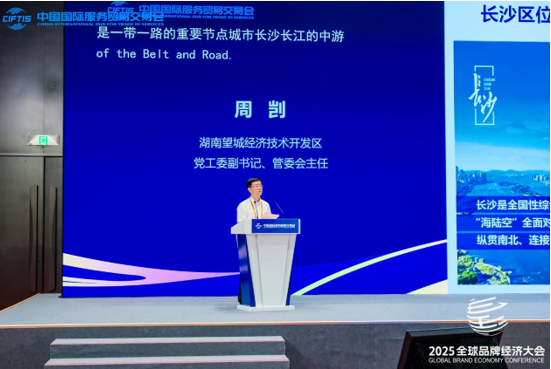
During the session on regional economies and China's globalization, Zhou Ke, Deputy Secretary of the Party Working Committee and Director of the Management Committee of the Hunan Wangcheng Economic and Technological Development Zone, shared the zone's achievements in regional brand building and opportunities for cooperation. He noted that the brand economy holds far-reaching significance for enhancing regional economic competitiveness, promoting industrial development, and elevating the regional brand image. As a dynamic city in central China, Changsha boasts a stable economy, abundant cultural and tourism resources, and has demonstrated strong capabilities in industrial and technological innovation. As a national-level development zone, the Wangcheng Economic and Technological Development Zone has leveraged its superior location, well-developed transportation network, and open platform to form industrial clusters in smart devices, green food, and new materials. Through a business environment that is convenient, time-saving, and cost-effective and a comprehensive service mechanism, it provides enterprises with efficient support and opportunities for collaboration. He expressed his hope that more entrepreneurs would invest in Changsha and Wangcheng in the future to jointly seize development opportunities and achieve mutually beneficial cooperation.
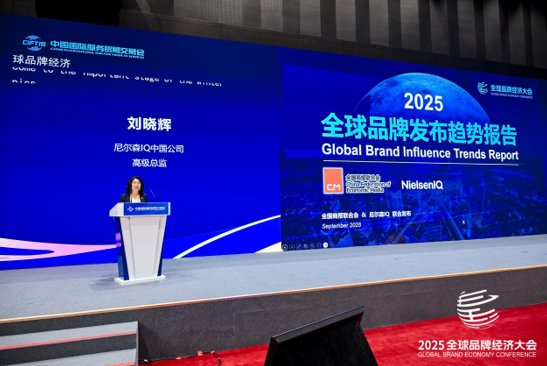
Toward the end of the conference, NielsenIQ and the China Federation of Ecnomic Media jointly released the 2025 Global Brand Development Trends Report, providing forward-looking guidance for the industry. Liu Xiaohui, Senior Director at NielsenIQ China, explained that the report primarily put forward three key perspectives: Brand influence is composed of credibility, connection, and capability; A multi-polar world is already becoming the new underlying landscape; and Rules and data determine the efficiency of market entry. These perspectives can be further broken down into five major trends: polycentric globalization becoming the norm; soft power and local relevance jointly driving brand trust; AI significantly enhancing marketing efficiency and transparency; policy compliance and data mutual recognition determining market entry efficiency; and sustainability and trust governance shifting from bonus factors to hard standards for market access. Liu Xiaohui emphasized that brands must use trust as a bridge, rules as a central axis, and sustainability as a goal in order to achieve long-term value in an uncertain environment.
From digital and intelligent empowerment to green transformation, and from unilateral competition to multilateral win-win outcomes, the 2025 Global Brand Economy Conference, anchored by the themes of Reaching Further, Going Deeper, and Promoting Integration, has injected new momentum into global brand development. In the future, as Chinese and international brands undergo deeper integration in the realms of technology, markets, and culture, the global brand economy will move toward a new future that is more open, inclusive, and sustainable. (Image courtesy of the event organizer)
热门内容推荐