Three Gorges Group Advances Low-carbon River Governance With Smart Water Management and Circular Energy Models
According to Chinese state environmental media reports, China Three Gorges Corporation is rolling out integrated low-carbon and pollution-reduction solutions across the Yangtze River basin to support national river ecological protection strategies. The group has embedded long-term energy-saving and low-carbon thinking throughout the construction and operation of its ecological projects, driving systematic green transformation along regional water systems.
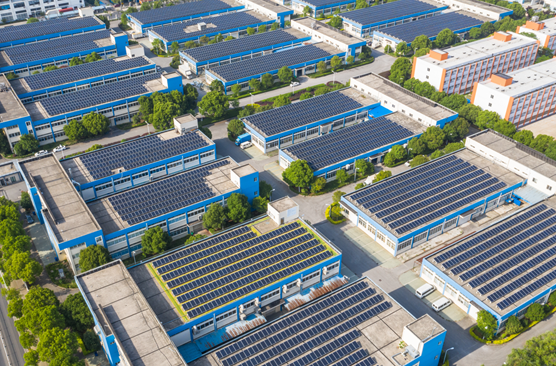
In Wuhu, Anhui province, an innovative dual-function operational model has been established at the Zhujiaqiao Water Purification Plant. Large-scale distributed photovoltaic arrays are installed on biochemical tank surfaces and factory rooftops, converting previously idle spaces into productive clean energy facilities. The plant, once a high-energy-consumption water treatment site, now operates as a distributed green power station, generating renewable electricity for on-site use and feeding surplus power into the public grid to cut operational carbon emissions.
As the flagship “Yangtze River protection plus clean energy” demonstration project of China Three Gorges Corporation, the photovoltaic system covers multiple local water treatment plants with a total installed capacity of 18.10 megawatts. The facility produces over 17 million kilowatt-hours of green power annually, equivalent to saving 6,500 tonnes of standard coal and cutting 15,900 tonnes of carbon dioxide emissions each year.
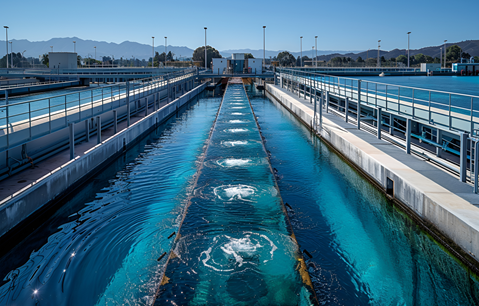
This integrated development model has been replicated in multiple Yangtze River coastal cities including Jiujiang in Jiangxi, Yueyang in Hunan and Lu’an in Anhui. To date, the corporation has commissioned 26 photovoltaic projects at water purification plants across the basin. These distributed installations collectively generate approximately 39 million kilowatt-hours of green electricity per year, saving 15,800 tonnes of standard coal and reducing carbon dioxide output by 39,000 tonnes annually.
Beyond clean energy adoption, digital and intelligent upgrades are reshaping traditional water treatment workflows. At the Fenghuangqiao Water Purification Plant in Lu’an, artificial intelligence systems replace conventional experience-based manual operation for water quality regulation. Real-time water condition data analysis enables precise and on-demand chemical dosing, driving tangible operational improvements. The plant has recorded a 33.14 percent year-on-year reduction in phosphorus removal reagent consumption throughout 2025.
A centralised smart water management command centre in Lu’an oversees the city’s entire water infrastructure network. The digital platform integrates real-time operational data from 47 pumping stations, five regulation reservoirs, eight water purification plants, four water supply facilities, one sludge treatment centre, one reclaimed water plant, one water conservancy hub and more than 4,000 kilometres of urban water pipelines. Previously fragmented water infrastructure systems are unified under one digital management framework, enabling full-chain intelligent supervision.
Data-driven scheduling supports accurate early warning and dynamic regulation of pipeline blockages and waterlogging risks during extreme rainfall. Continuous system optimisation has allowed 47 pumping stations and five regulation reservoirs in Lu’an to operate entirely unattended. Remote control and video inspection mechanisms have replaced routine on-site duty, improving the operational efficiency and ecological resilience of urban water networks.
The corporation has also built a closed-loop resource utilisation system to address residual pollution risks from water treatment processes. In Maanshan, Anhui, urban sludge generated from local water purification facilities undergoes steam rotary drying treatment, which lowers its moisture content from 80 percent to below 40 percent. Processed sludge with stable organic composition and calorific value is used as auxiliary fuel in local thermal power plants.
High-temperature combustion ranging from 850 to 950 degrees Celsius eliminates pathogens and decomposes organic pollutants completely, while releasing thermal energy for power generation. Residual ash from combustion is further recycled as construction raw materials, achieving full resource recycling of sludge waste. Reliance on existing thermal power infrastructure avoids redundant construction and land occupation compared with independent sludge disposal facilities.
By the end of 2025, the Maanshan sludge drying and co-combustion project has processed 190,000 tonnes of urban sludge. The circular operation has saved more than 5,800 tonnes of standard coal and generated an additional 44 million kilowatt-hours of electricity, effectively resolving the hidden pollution risks caused by traditional sludge landfill disposal.
Synergising energy conservation, intelligent management and waste recycling, the multi-dimensional ecological governance model will continue to advance low-carbon, efficient and sustainable water environment governance across the Yangtze River basin.
热门内容推荐