Chongqing Hosts Field Forum on Integrated Green Pest Control to Secure Rice Harvests
A city-wide field forum integrating eco-friendly crop protection with unified large-scale pest management was held in Dianjiang County on 30 June, timed to coincide with the critical panicle development window for rice pest intervention. The event carries the core theme of mitigating yield losses, implementing low-hazard pest suppression and lifting overall grain productivity, assembling officials from agricultural and plant protection departments across all districts and counties, large-scale rice growers and representatives of professional crop protection service providers to launch coordinated field action to safeguard grain output from pest damage.
Sex pheromone traps form the first line of physical pest suppression across a thousand-mu contiguous demonstration zone in Tangheba Village, Xinmin Town, with uniform rows of trapping devices targeting striped rice borers and rice leaf rollers deployed throughout the paddy fields. Local agricultural authorities operate a subsidy framework of post-implementation reimbursement with full actual expenditure settlement, granting financial support of 145 yuan per mu to cover biopesticides, aerial crop spraying and trapping equipment. Eligibility is restricted to new agricultural operators managing contiguous plots of no less than 300 mu. Two operators in Yong’an Town oversee the thousand-mu demonstration fields, conducting two rounds of drone-based unified pest treatment during the tillering stage on 20 May and the panicle stage on 27 June, with low-dose green pesticides applied throughout all operations.
Field monitoring data collected on 24 June records sheath blight infecting only 5 per cent of rice clumps, while striped rice borer damage affects a mere 0.03 per cent of stalks within the demonstration zone. Persistent overcast, humid weather has since sharply elevated outbreak risks for rice blast, false smut and rice planthoppers. All growing areas seize brief spells of clear weather to carry out concentrated panicle-stage pest treatment, with continuous monitoring set to run until rice harvesting. Mechanical harvesting yield measurements will be carried out between late July and early August to quantify output gains delivered by green pest management regimes.
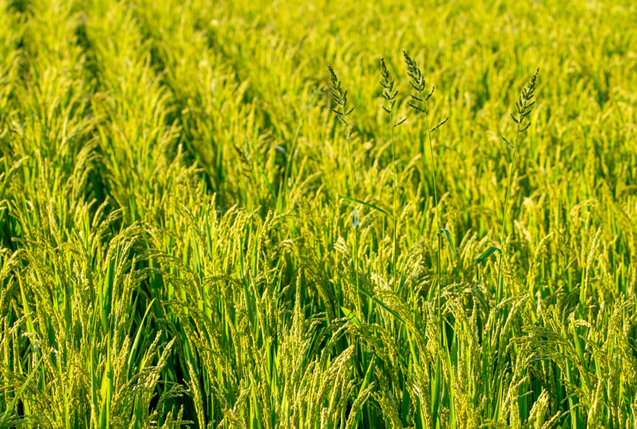
Adjacent trial plots designed to measure plant protection contribution rates generate empirical data on treatment efficacy. Five distinct management regimes are trialled across isolated, partitioned plots each covering more than one mu: complete absence of pest intervention, weeding without disease control, conventional farmer-led pesticide application, outsourced unified professional treatment and standardised integrated green protection. All regimes except the blank control group are replicated three times to ensure reliable comparison. The disease-resistant rice cultivar Yongyou 4949 is planted across the trial site alongside standardised water and fertiliser management, with calibrated pesticide mixtures deployed at two key application windows and graded chemical programmes assigned to separate zones. Post-harvest yield weighing will calculate the exact yield preservation contribution of systematic plant protection work, supplying quantitative evidence to roll out the most efficient intervention models citywide.
Seven complete crop protection packages have been selected to drive yield improvements through consolidated technical integration. Senior officials from Chongqing Municipal Agriculture and Rural Affairs Commission confirmed that the municipal plant protection station collected 11 full-cycle rice pest control technical packages last year, all delivering minimum yield uplifts of 10 per cent per mu during cross-field competitive trials. Seven solutions with robust adaptability, safe chemical profiles and consistent productivity gains were shortlisted for expanded large-scale demonstration. Deputy heads from the municipal seed and plant protection authority explain that each package balances precise pesticide application with regulated plant growth regulators to deliver simultaneous pest suppression and crop stimulation, generating per-mu yield rises ranging from six to ten per cent.
Four core operational measures are outlined to counter pest threats amid unstable seasonal weather patterns. Migratory rice pest populations have arrived in higher volumes this year, with outbreak risks matching the severe pest season recorded in 2023, creating heightened pressure across the Youyang-Xiushan-Qianjiang-Pengshui and Changshou-Dianjiang-Liangping growing belts. Intensified field patrols will be arranged after rainfall and within high-risk wind corridors to reinforce a fully connected intelligent early warning network, distributing pest outbreak alerts without delay. Coordinated green pest suppression and unified large-scale treatment will be expanded to sustain a city-wide green protection coverage ratio above 59 per cent, drawing on central special funding of 17.1 million yuan allocated for pest control to accelerate subsidy disbursement and back continuous large-area operations run by professional agricultural service bodies. The seven validated integrated yield-boosting technical packages will be widely promoted to leverage agricultural technology for productivity gains. Local governance accountability will be enforced through full staffing of grassroots plant protection teams, stockpiles of emergency pesticides and machinery, and rigorous performance oversight to eliminate yield losses stemming from insufficient intervention.
All pest surveillance, technical demonstration, plant quarantine, project compliance and flood-drought harvest protection work will be coordinated across the second half of the year. Field trials and green protection demonstration plots will inform scalable, replicable rice pest control and yield enhancement systems, minimising grain losses to pests and securing abundant autumn harvests across the municipal rice growing zones.
热门内容推荐