CNOOC’s Bonded LNG Bunkering Volume Surpasses 800,000 Cubic Metres After Vessel Completes Operation in Yantian Port, Shenzhen
Bonded liquefied natural gas bunkering for international vessels has been carried out by the LNG bunkering carrier Offshore Oil 301 at Yantian Port, Shenzhen. The operation marks a new milestone for China National Offshore Oil Corporation’s bonded LNG supply business, whose cumulative bunkering throughput has exceeded 800,000 cubic metres to date. The service network covers major coastal hubs including Shenzhen, Ningbo, Guangzhou, Hong Kong and Xiamen, with dual operational capacity for alongside berth and anchorage bunkering. Customised refuelling packages can be flexibly matched to vessel sailing routes and berthing schedules, cutting idle turnaround time for international merchant ships calling at Chinese ports.
Two purpose-built LNG bunkering vessels under the corporation have together delivered 143 separate bunkering assignments. Offshore Oil 301 has undertaken 69 operations, supplying a total of 421,000 cubic metres of LNG, while Offshore Oil 302 has completed 74 assignments with a delivery volume of 380,000 cubic metres. The two craft feature differentiated technical configurations, forming an integrated service framework covering coastal shipping channels and inland river waterways across China’s maritime logistics network.
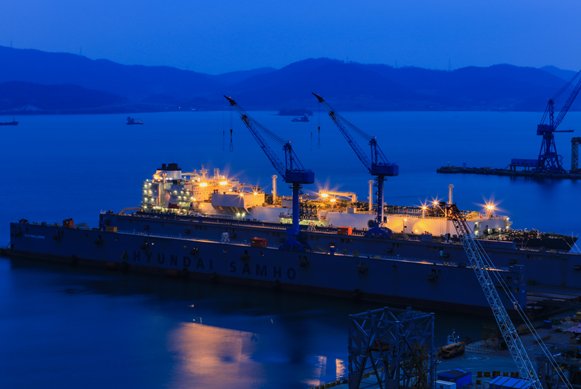
Offshore Oil 301 holds the title of the world’s largest dedicated LNG bunkering vessel, fitted with a 30,000 cubic metre storage tank capacity that enables sequential refuelling for multiple large ocean-going vessels in a single deployment. Its generous cargo volume design aligns perfectly with the high-volume fuel demand of ultra-large international ships operating out of major coastal trunk ports across the country. The vessel underwent dedicated refit works to integrate full ship-to-ship bunkering systems, deep cryogenic reliquefaction units and advanced liquid cargo control equipment, enabling continuous large-scale bonded fuel supply at coastal anchorages and port berths.
Offshore Oil 302 boasts a shallow draught, foldable mast assembly and ice-class navigation certification, allowing safe transit to Ningbo and all navigable stretches of the Yangtze River waterway. The bespoke design fills a long-standing gap in bonded LNG refuelling services for inland river shipping, delivering full coverage of both offshore and fluvial bunkering scenarios nationwide. The vessel carries twin 6,000 cubic metre C-type cargo tanks, with a peak bunkering throughput of 2,000 cubic metres per hour to streamline refuelling for river-going dual-fuel vessels. Its retractable mast structure lowers overall air draught to clear river-crossing bridges, enabling seamless direct transit between coastal port zones and inland industrial shipping hubs along the Yangtze basin.
The dual-vessel setup unlocks full-spectrum fuel supply capacity across China’s maritime transport network. Coastal mega-vessels access high-volume bunkering services from Offshore Oil 301 at major deep-water harbours, while smaller river and coastal craft obtain flexible, accessible refuelling via Offshore Oil 302 along inland water corridors. The parallel deployment of the two specialised carriers expands the geographical reach of bonded LNG supply, supporting the global shipping sector’s shift to low-carbon marine fuels as the International Maritime Agency tightens emissions control standards for international fleets.
Port infrastructure supporting bonded LNG bunkering continues to expand across the covered port cluster. Dedicated bunkering anchorage zones and onshore receiving facilities have been upgraded to match rising fuel demand from dual-fuel container ships, bulk carriers and cruise liners. Unified operational protocols for bonded LNG refuelling have been standardised across all service locations, streamlining customs clearance procedures and ship-side bunkering workflows to lift overall port operational efficiency. Further expansion of service coverage to additional regional coastal and river ports will proceed in line with the growth of domestic and international dual-fuel shipping fleets.
热门内容推荐