Special Forum on Future Food Manufacturing Held at 28th CAST Annual Conference to Advance Cross-industry Food Innovation
According to China News Service, a themed forum titled Future Food Manufacturing and New Product Development took place at the China Hall of Science and Technology on 2 July, hosted by the China Association for Science and Technology and organised by the China Society of Inspection and Testing. Over one hundred delegates from universities, research institutes, leading food manufacturers and testing bodies attended the event to exchange insights on cutting-edge food technologies and practical pathways for commercialising innovative food products.
Ren Fazheng, Member of the Chinese Academy of Engineering and President of the China Society of Inspection and Testing, and Cheng Bowen, also an academician of the Chinese Academy of Engineering and Vice President of the society, attended the forum alongside representatives from Shandong Association for Science and Technology. Xia Yang, Vice President and Secretary-General of the society, chaired all sessions throughout the day.
Cheng Bowen delivered an opening address on behalf of the organising society. He outlined that the global food sector is undergoing an irreversible structural shift from conventional manufacturing to next-generation food production frameworks, laying out three core strategic pillars for industry progress. Biological manufacturing stands as the foundational core, with breakthroughs in functional novel foods and alternative protein sources wholly reliant on synthetic biology and fermentation engineering; industrial translation bottlenecks between laboratory research and mass production facilities must be fully resolved. Data-driven intelligent systems represent an inevitable developmental trajectory, reshaping the full spectrum of product research and quality control via automated decision-making tools. Updated standardisation frameworks form a robust regulatory safeguard, as rapid technological iteration demands parallel upgrades to testing, certification and benchmark systems that underpin safe market rollout of innovative food goods.
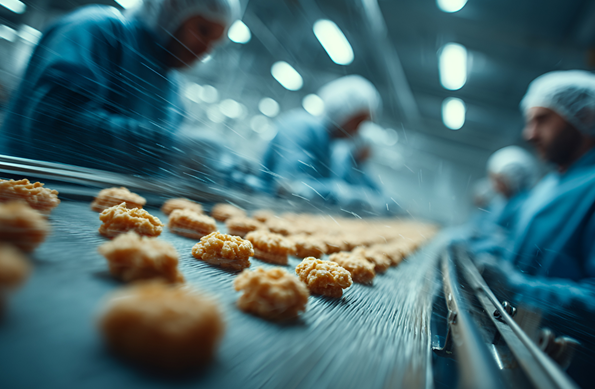
The forum adopted a hybrid agenda combining keynote presentations, thematic research reports and live industrial roundtable dialogue, integrating academic research, technological development and commercial production chains in a single collaborative platform. Morning keynote sessions centred on biomanufacturing and frontier food technologies, with four senior academics from Jiangnan University, Ocean University of China, Nanjing Normal University and Beijing Technology and Business University presenting systematic research covering functional lipid development, marine bioresource utilisation, biosynthetic functional food additives and whole-cell rapid biosensing detection, covering fundamental mechanistic analysis through to real-world industrial application prospects.
Afternoon thematic reports and entrepreneur roundtables prioritised scalable industrial transformation. Academic researchers joined technical leads from the National Dairy Technology Innovation Centre and Henan Zhongda Hengyuan to discuss high-growth product development tracks including nutritional raw materials for elderly consumers, DHA fortification in dairy goods, targeted probiotic and postbiotic development, and allulose commercial deployment, building clear linkages between laboratory technical breakthroughs and market-ready food lines.
Parallel breakout discussions ran across ten separate groups under the core theme of innovative future food production and novel food formulation, structured around five distinct research streams: intelligent precision manufacturing, eco-friendly sustainable production, functional food research and development, alternative protein synthesis, and upgraded scenario-specific ready-to-eat food lines. In-depth cross-sector exchanges yielded unified consensus among all participating delegates. Accelerated breakthroughs in core biomanufacturing technologies, widespread rollout of intelligent and low-carbon production workflows, and synchronised development of safety and standardisation systems matching innovation cycles jointly determine competitive standing within the global food manufacturing landscape.
The event aligns closely with ongoing industrial transformation trends, consolidating cross-stakeholder consensus on driving upgrades to food production via scientific and technological innovation and refining consumer food supplies through new product development. Integrated academic, institutional and corporate collaboration established at the forum delivers sustained momentum for high-quality advancement across the whole future food industry chain.
热门内容推荐