Three Gorges Project Delivers Full Range of Multi-purpose Benefits in First Half of 2026
According to China News Service, the Three Gorges Project has coordinated its operations amid shifting upstream inflow patterns and diverse water consumption demands across the Yangtze River basin throughout the first six months of 2026, with integrated functions including downstream water replenishment, power generation, inland waterway navigation and ecological regulation operating at full capacity. Pre-flood preparation work has been carried out comprehensively to sustain steady water safety along the whole Yangtze mainstream.
The reservoir has delivered consistent and reliable water supply support for downstream river reaches during dry seasons. Cumulative water release for downstream areas exceeds 20 billion cubic metres in this dry period, with an average outflow discharge of 10,200 cubic metres per second. The figure stands nearly half higher than natural flow volumes recorded for the same seasonal window, lifting river levels across middle and lower Yangtze reaches by between 0.5 and 2 metres on average. This steady flow adjustment secures stable water supplies for industrial production, agricultural irrigation and residential consumption across all downstream regions.
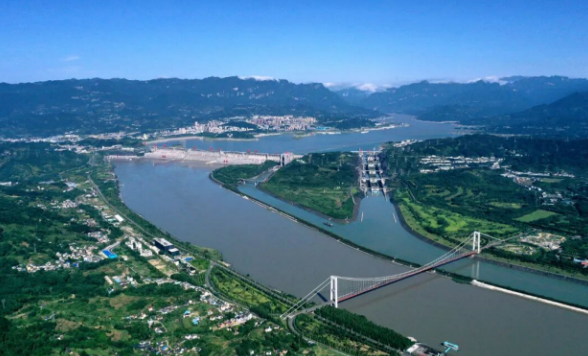
Navigation services at the water hub maintain safe and efficient operation. Vessel throughput via the Three Gorges ship locks hits 73.9875 million tonnes over the first half of the year, while passenger volumes transported by the vertical ship lift surpass 327,100 people. Smooth passage through the water hub underpins unimpeded domestic circulation networks across central and western inland regions.
Ecological conditions within the Yangtze watershed keep improving steadily. Two categories of ecological regulation trials, conducted four times in total within the reservoir, trigger peak spawning events for four major native carp species along Yidu and Shashi river stretches. Such regulated water flow manipulations sustain the restoration of biological functionality within the Yangtze aquatic ecosystem. One targeted sediment reduction operation has been completed at the reservoir tail, easing sediment accumulation and preserving the full usable storage capacity of the reservoir. Water quality monitoring across all reservoir sections maintains an overall excellent rating, with most sampling points meeting Class II surface water standards.
Pre-flood preparedness works advance at a solid pace. The reservoir completed pre-flood water level drawdown operations ahead of schedule on 7 June, freeing up 20.8 billion cubic metres of dedicated flood control storage space. This reserved capacity will buffer extreme flood surges and stabilise water regimes along the Yangtze mainstream during the main flood season ahead.
Long-term operational frameworks will continue balancing water supply allocation, navigation scheduling, ecological restoration and flood risk mitigation for the remainder of the year. Real-time monitoring of upstream runoff, downstream water demand and aquatic biological activity will inform flexible reservoir dispatch schemes to sustain multi-dimensional operational gains for the Yangtze basin.
热门内容推荐