China’s Power Market Trading Volumes Surge 24.8% In First Five Months Of 2026
Official figures released by the National Energy Administration record a cumulative traded electricity volume of 3.0573 trillion kilowatt-hours across China’s power markets over the first five months of 2026, representing a 24.8 per cent year-on-year expansion.
Separate monthly data for May puts single-month traded power volumes at 626.8 billion kilowatt-hours, with an annual growth rate of 23.6 per cent. A breakdown by transaction scope shows intra-provincial trades totalling 490.6 billion kilowatt-hours in May, up 26.9 per cent year on year, while inter-provincial and cross-regional power exchanges reached 136.2 billion kilowatt-hours, marking a 12.9 per cent annual rise.
Segmented by trading product categories, medium and long-term contracts accounted for 561.7 billion kilowatt-hours of May’s traded volume, with spot market transactions contributing a further 65.1 billion kilowatt-hours. Dedicated green power trades hit 31.1 billion kilowatt-hours for the month, recording a 6.1 per cent uplift against the equivalent period in the prior year.
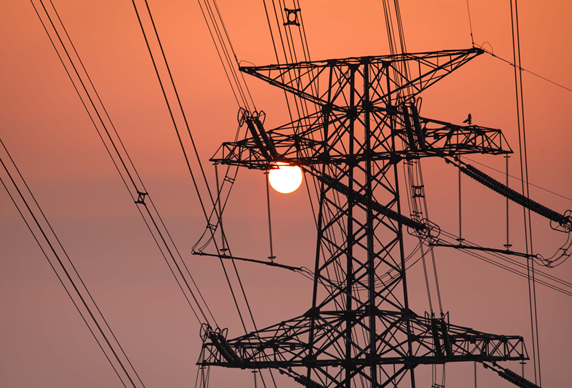
The widening gap between intra-provincial and cross-regional growth rates reflects the steady expansion of local power trading activity, supported by maturing provincial market platforms and sustained industrial electricity demand within each administrative region. Inter-regional power flows advance at a gentler pace, constrained by transmission corridor capacity limits and staggered scheduling timelines for cross-grid power exchange agreements.
Medium and long-term contracts retain the dominant share of all market transactions, forming the core framework for predictable power supply and cost planning for industrial and commercial consumers. Spot trading mechanisms deliver flexible short-term balancing capacity to offset real-time fluctuations in renewable generation output and end-user load levels across regional grids.
Green power trading volumes maintain consistent upward movement as industrial buyers formalise long-term procurement agreements for low-carbon electricity to meet environmental compliance targets. National policy frameworks for a unified national power market continue to streamline cross-provincial green power delivery, opening new channels for wind and solar output generated in resource-rich inland regions to reach high-demand coastal industrial hubs.
Market operation frameworks combining medium-long term contracts, real-time spot auctions and targeted green power trades will continue to shape electricity resource allocation across all regional grids, with incremental transmission infrastructure set to unlock greater cross-regional trading capacity in subsequent months.
热门内容推荐