Carmakers Rush Into Humanoid Robot Development Amid Shared Technology and Supply Chain Synergies
According to Securities Daily, the automotive and humanoid robot sectors are entering an unprecedented phase of integrated growth, underpinned by shared technical foundations and interconnected component supply networks. Photographs shared via social media by Tesla’s chief executive show site visits to the Optimus humanoid robot production line at the firm’s Fremont manufacturing plant, a move widely interpreted as confirmation that mass manufacturing of Optimus has commenced. Beyond Tesla, more than ten vehicle manufacturers including BYD, Xpeng, GAC Group, Changan Automobile and Chery Automobile have launched dedicated humanoid robot development programmes.
Intensified competition within the new energy vehicle segment and sustained downward pressure on vehicle manufacturing profit margins have driven industrial participants to view humanoid robotics as a fresh growth vertical with substantial long-term commercial scope. The sector remains in the early stages of viable large-scale commercial operation, however, held back by limited real-world deployment use cases and prohibitive hardware costs. Every automotive group working in the field must translate decades of vehicle production expertise into sustainable competitive advantages for robotic manufacturing, a process which will require sustained operational testing and iteration.
Leading vehicle groups roll out dedicated robotics divisions
Tesla first outlined its Optimus humanoid robot concept at an internal artificial intelligence showcase back in 2021, with development work running consistently since that unveiling. The manufacturer now stands alongside a broad cohort of automotive firms targeting the humanoid robot market across global territories.
Among domestic Chinese vehicle manufacturers, Xpeng was an early mover in this field, with its specialist robotics team developing the IRON humanoid platform. The technical framework allows shared artificial intelligence processing capabilities across passenger cars, electric vertical take-off and landing craft and humanoid robotic hardware. Internal communications circulated by Xpeng’s senior leadership confirm direct oversight of all robotics development streams, signalling strategic weight attached to the emerging business line. Internal commentary frames current industry progress as a historic inflection point, placing Xpeng’s robotic platforms on the verge of full mass production and market rollout.
GAC Group established Guangzhou Huilun Technology to deliver its humanoid robotics pipeline. The third-generation embodied intelligence platform GoMate Mini undergoes continuous refinement with a hybrid wheel-limb locomotion design, engineered primarily for automotive assembly lines, logistics handling and public service environments. Limited trial manufacturing of core hardware units is scheduled to run through 2026, with full scaled production targeted for 2027.
BYD maintains a lower public profile while steadily expanding investment across the robotics ecosystem. Recent public statements from senior operational executives confirm in-house humanoid robot development programmes, complemented by historic recruitment drives for embodied intelligence specialists and strategic equity stakes in robotics hardware developers across Shanghai and Shenzhen.
Changan Automobile and Chery Automobile have also embedded humanoid robotics within long-term industrial roadmaps. Industry-wide tracking records confirm over ten automotive OEMs have formally allocated capital and engineering teams to advance humanoid robot research and manufacturing pipelines.
The arrival of vehicle manufacturers within the robotics industry has reshaped cross-industry labour and resource distribution frameworks, cementing a collaborative operating model across technology and manufacturing specialists. Pure technology developers concentrate on artificial intelligence core systems, advancing large language models, sensory decision algorithms and embodied intelligence operating architectures. Automotive original equipment manufacturers leverage established mechanical engineering experience to deliver structural design, motion regulation and high-volume mass production workflows, taking lead responsibility for the physical hardware development and industrial scaling of robotic hardware to create mutually reinforcing industrial ecosystems.
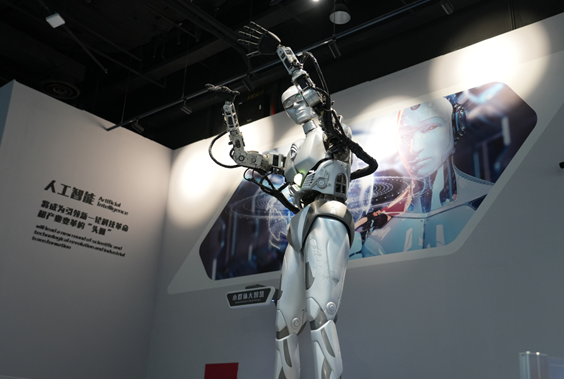
Shared technical architectures deliver cross-sector competitive advantages
Activity within humanoid robot development has shifted from exploratory trials to mainstream industrial consensus throughout 2026. Expanding market penetration of electric passenger vehicles has drawn the industry past a phase of volume-driven expansion into saturated market competition, with widespread price competition steadily compressing operating returns for vehicle manufacturers. Official data collated by the National Bureau of Statistics records the automotive industry operating profit margin at 3.2 per cent for the first quarter of 2026, sitting noticeably beneath the average profitability benchmark recorded across all industrial manufacturing segments.
Dual pressures of fierce market rivalry and iterative technological progress propel automotive firms to allocate resources to robotic development. Senior industry analysts interviewed by Securities Daily note domestic vehicle markets operate within saturated demand conditions, with price competition across electric vehicle lines squeezing vehicle production profits and pushing OEMs to build secondary revenue streams through adjacent intelligent hardware manufacturing.
Natural technical overlap between automotive engineering and robotic design creates viable pathways for vehicle makers to scale robotic hardware production. Environmental detection, route mapping, motion regulation and artificial intelligence processing all rest upon aligned underlying technical frameworks. Sensor suites, onboard control systems, target identification algorithms and path planning logic refined for passenger vehicles offer transferable technical blueprints for humanoid robot development pipelines. Senior corporate leadership from BYD has previously outlined the principle that complete vehicle intelligent control systems form the technical backbone of all embodied intelligent hardware.
For environmental perception workflows, mature multi-sensor fusion stacks built around lidar, millimetre-wave radar and optical cameras can be redeployed to support robotic obstacle avoidance and interactive scene analysis. End-to-end autonomous driving algorithms, onboard large AI models and multi-modal processing architectures align closely with the decision-making, language comprehension and motion sequencing systems required for humanoid machines. Drive-by-wire chassis components, electric propulsion hardware, braking and steering control modules and battery management logic all translate directly to robotic mechanical control and locomotion tuning.
Extended supply chain synergies further amplify cross-industry commercial gains. Humanoid robot assembly requires extensive arrays of precision components and lengthy interconnected supplier networks, domains where automotive component manufacturers hold established strengths in volume cost reduction and consistent quality oversight. Accumulated research capacity, large-scale manufacturing workflows and years of mass production yield optimisation deliver clear early-stage commercial advantages to vehicle manufacturers entering the robotics space. Academic specialists interviewed by Securities Daily confirm existing automotive assembly lines and established supplier partnerships can be repurposed directly for robotic hardware manufacture, with vehicle industry expertise in high-volume production, supply chain governance and yield improvement transferable to robot manufacturing workflows.
Persistent commercial barriers remain unresolved
Beyond supply chain reuse opportunities, vehicle OEMs hold unique real-world testing infrastructure unavailable to independent technology start-ups, enabling closed-loop development cycles spanning research, in-factory deployment, iterative hardware refinement and external commercial rollout. Multiple manufacturers run prototype validation trials within their own assembly campuses and industrial zones before releasing finished robotic platforms to third-party commercial clients, an operational framework difficult for standalone robotics developers to replicate. Industry analysts highlight the built-in testing environments of vehicle production plants and branded retail showrooms as natural data collection hubs, generating continuous physical interaction datasets to refine onboard algorithms and sustain closed-cycle product development.
Vehicle manufacturers also command research and development resource pools far beyond those accessible to small independent robotics firms, with top-tier OEMs committing annual research budgets measured in tens of billions of renminbi. Academic specialists confirm automotive groups employ specialist engineering teams covering every discrete manufacturing sub-sector, placing humanoid robot development firmly within their core operational capability scope.
Substantial industrial upside notwithstanding, humanoid robotic hardware remains some distance from delivering consistent incremental profits to automotive investors. The whole sector must establish sustainable revenue generation frameworks to unlock long-term commercial viability.
Current deployments of humanoid hardware concentrate within contained industrial settings including factory assembly, warehouse logistics and academic research laboratories. Domestic household assistance represents a widely flagged long-term market opportunity, yet robotic systems targeted at elderly care, domestic labour and child companionship remain years away from consistent revenue generation.
Hardware cost constraints present an even more substantial operational barrier. Complete humanoid robot units carry elevated retail price tags, with core precision components including high-performance articulated joints, dexterous manipulators and reduction gearboxes remaining prohibitively expensive for mass consumer market adoption. Industry research confirms industrial-grade humanoid hardware carries unit costs three to five times higher than traditional fixed industrial robotic arms, creating a significant divide between technical manufacturability and viable market sales volumes. The bulk of existing humanoid hardware units function purely as laboratory test rigs, with limited hardware deployed for continuous commercial operation within manufacturing or service environments.
Sustained hardware iteration, progressive component cost reduction and maturing commercial business frameworks will gradually expand viable deployment use cases for humanoid robotic hardware. Vehicle manufacturers are positioned to capitalise on established industrial scaling expertise to secure early market positioning, driving wider uptake of humanoid robotic platforms from limited factory pilot schemes to broad mainstream adoption across civilian and commercial environments.
热门内容推荐