EU Scraps Long-Running Low-Value Parcel Customs Exemption, Reshaping China’s Cross-Border E-Commerce Operations
The European Union formally revoked the decades-long customs duty waiver for imported consignments valued below €150 on 1 July 2026, rolling out tiered tariff charges on small consumer shipments in a phased regulatory overhaul.
Zhenping County, Nanyang City in Henan Province has evolved into a county-level hub for cross-border e-commerce exports, dispatching nearly 20,000 direct mail parcels to overseas markets each day and standing as a representative example of China’s small-package trade flows into the EU. Operators specialising in European market wholesale distribution shared feedback with International Business News on the immediate commercial impact of the new customs framework. Thin-margin direct shipment models built around low-cost daily goods can no longer deliver viable profit margins under the updated rules. Low-value merchandise priced at several or a dozen euros previously relied entirely on the duty exemption and minimal per-unit logistics fees to drive high-volume sales, yet combined fixed customs levies, clearance administrative charges and VAT now erase nearly all profit from individual low-price items. The withdrawal of the EU’s small-parcel tax relief eliminates the commercial viability of price-driven, high-turnover cross-border e-commerce models centred on cheap consumer goods.
Tightened Customs Rules Eliminate Tax Loopholes
Official announcements issued by the Council of the European Union outline a two-stage transition plan for import taxation. Full standard tariff collection will apply to all goods entering EU territory once the EU Customs Data Centre becomes fully operational in 2028. During the interim period running from 1 July 2026 to 1 July 2028, a flat temporary customs duty of €3 per individual commodity line item is imposed on direct-to-consumer shipments worth less than €150 in total.
Separate tariff charges apply to goods carrying distinct HS commodity codes within a single consignment. The EU cites a sample case of a single parcel containing one silk women’s blouse and two wool men’s shirts, which would attract a combined €6 customs duty owing to differing tariff classifications for the separate products.
The fixed €3 flat levy will be removed upon the end of the transition window in July 2028, replaced by five standard tariff brackets set at 0 per cent, 5 per cent, 8 per cent, 12 per cent and 17 per cent, with classification determined by each product’s commodity code.
EU institutional statements frame the comprehensive customs reform as a response to sustained pressures stemming from surging cross-border trade volumes, fragmented national administrative frameworks, explosive growth in online retail and shifting global geopolitical dynamics.
Academic analysis shared with International Business News outlines three core policy rationales behind the EU’s regulatory adjustment, rejecting narrow framing of the reforms as straightforward trade protectionism. The overhaul closes long-standing tax loopholes created by the low-value parcel exemption and bridges administrative gaps between cross-border trade data and customs oversight systems. It levels the competitive playing field between domestic EU retail operators and overseas e-commerce sellers by eliminating uneven tax burdens on comparable goods. The updated rules also introduce structured supervision mechanisms to manage the unprecedented volume of fragmented small shipments originating from cross-border digital trade channels.
Official trade statistics record 4.6 billion low-value e-commerce parcels entering the EU in 2024, with 91 per cent originating from China. Daily inbound consignments reached 12 million units, almost doubling the 2023 figure and more than tripling volumes logged in 2022.
The era of volume-driven growth underpinned by blanket duty exemptions has concluded, forcing the whole sector to shift competitive priorities away from low-price, asset-light bulk distribution. Operational advantages now rest on robust supply chain architecture, full regulatory compliance and refined granular operational management.
Industry Pivots From Asset-Light Shipping to Capital-Heavy Localised Fulfilment
Widespread withdrawal of low-value parcel tax exemptions across major markets triggers structural shifts to export cost structures and end-to-end operational workflows for all cross-border traders.
Logistics providers identify tangible industry-wide transformation across global delivery networks. Senior representatives from Cainiao International told International Business News that traditional direct small-parcel first-mile shipments and fragmented international express services will see steady contraction. A growing cohort of merchants adopt consolidated full-container sea freight pre-stocking paired with EU-based warehouse fulfilment for individual customer orders.
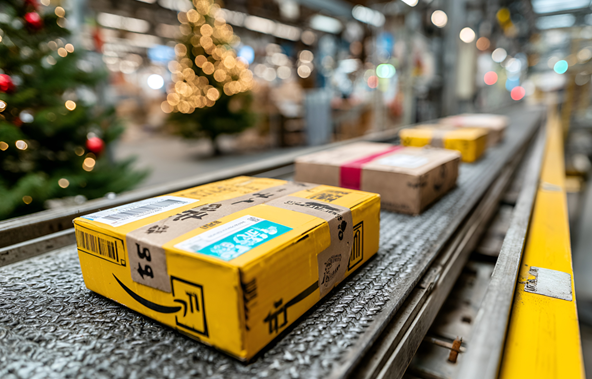
The consolidated logistics model aggregates thousands of scattered small consumer shipments into bulk ocean freight consignments delivered to dedicated storage facilities within EU territory. Retail orders placed by European buyers trigger last-mile delivery from local warehouses rather than cross-border dispatch originating in China, removing exposure to the new import levies applied to direct international parcels and forming the primary industry-wide mitigation strategy against rising tax costs.
The transition to European warehouse-based fulfilment carries substantial operational hurdles and capital commitments, marking a definitive shift from asset-light bulk listing to capital-intensive supply chain management. Pre-positioned inventory creates heightened cash flow pressure and demands sophisticated stock turnover forecasting capabilities. Multi-jurisdictional VAT registration and filing requirements across EU member states raise baseline compliance expenditure. Precise product selection frameworks become essential, as unsold inventory generates persistent storage overheads within overseas facilities.
Two distinct adaptation strategies gain traction among market participants amid the regulatory overhaul. Large county-level e-commerce platforms and leading sellers accelerate overseas warehouse deployment to leverage bulk stocking economies of scale and offset incremental tax expenses. Small and medium-sized traders reduce operational reliance on the EU single market and expand sales channels across Southeast Asia, the Middle East and Latin America to disperse geographic commercial risks.
Long-term sustainable export performance for small and medium foreign trade enterprises hinges on strengthened end-to-end supply chain competitiveness rather than short-term tax relief advantages.
热门内容推荐