China Unveils Cross-Ministerial Guidelines to Drive All-Round Innovation Across Retail Sector
According to official releases published on the Chinese government website, the Ministry of Commerce has joined forces with the National Development and Reform Commission alongside seven other central departments to issue Guidelines on Accelerating the Innovative Development of the Retail Industry, laying out systematic arrangements to upgrade the country’s retail landscape. Senior officials from the Ministry of Commerce confirm coordinated work with relevant authorities to foster policy and administrative innovation at local levels, advance upgrades to retail formats and operating models, and roll out proven successful practices nationwide to deliver sustained high-quality growth for the whole sector.
Retail forms a foundational pillar of the national economy and a core segment of consumer-facing service industries, supporting stable domestic demand and daily livelihoods for residents nationwide. Real-world operational outcomes in Xuchang, Henan Province, illustrate the vast untapped potential and resilience of China’s domestic consumer market. Foot traffic remains consistently high across all counters at Pangdonglai Times Square in Xuchang, with regular queuing systems operating across store departments.
During a special press briefing hosted by the Ministry of Commerce, local administrative figures shared full-year performance metrics for the first six months of the current year. Total retail turnover generated by Pangdonglai reached 14.5 billion yuan, marking a 24 per cent year-on-year rise. The retail operation provides stable formal employment for more than 19,000 people, while drawing over one million delegations from enterprises and public institutions across the country to study its service and operational frameworks. Driven by the benchmark business model embodied by Pangdonglai, Xuchang’s total retail sales of consumer goods have recorded growth above all other prefecture-level cities in Henan Province for 29 consecutive months. The newly released central guidelines deliver clear policy direction and institutional safeguards for retail operators pursuing innovative transformation.
Official data shared by the Director of the Circulation Development Department within the Ministry of Commerce outlines the steady expansion of China’s physical goods retail segment throughout the 14th Five-Year Plan period. National retail sales of physical goods climbed from 39.4 trillion yuan in 2021 to 44.3 trillion yuan in 2025, representing a cumulative increase of 12.5 per cent. Physical goods retail consistently accounts for roughly 90 per cent of the country’s overall consumer goods sales volume. The wider retail ecosystem provides livelihoods for over 80 million workers nationwide. Performance figures for the first five months of the year show year-on-year growth of 3.6 per cent for large-scale supermarket retail turnover and 6.8 per cent for convenience store sales. Turnover generated by large shopping centres under designated statistical thresholds expanded by more than 10 per cent over the same period last year.
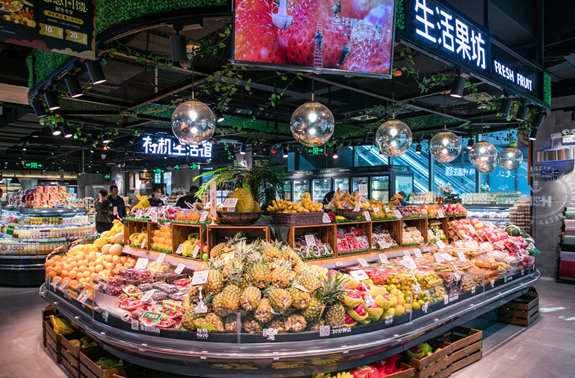
The newly published Guidelines target prominent structural bottlenecks constraining retail development with tailored actionable measures. For uneven spatial distribution of commercial facilities across urban districts, the document introduces an assessment framework to measure commercial saturation for the first time, supplying transparent market indicators to inform project approval and private investment planning. To lift overall product quality standards, regulators will tighten procurement oversight and full traceability mechanisms, enforce rigorous supplier screening, expand the development of proprietary store brands and roll out voluntary quality commitment schemes for retail operators. Enforcement campaigns will tackle counterfeit goods traded both online and offline, while market platform administrators and shopping mall lessors will incorporate product inspection pass rates and customer return ratios into formal performance evaluations for all in-store merchants. For underutilised retail premises, local authorities will implement customised renovation blueprints for individual outlets, supporting spatial restructuring, format replacement and digital intelligent upgrades. New pedestrian skybridges and underground connecting tunnels will link retail precincts with transport hubs and nearby scenic sites to boost visitor flows.
New Formats, Scenarios and Consumption Models Take Centre Stage
Retail acts as a primary testing ground for novel consumer models and immersive shopping experiences. A national pilot programme exploring innovative retail formats covers cities with a combined permanent resident population exceeding 480 million, which together generate more than half of the country’s total retail sales of consumer goods, creating fertile ground for unlocking diverse consumption potential. All fifty designated pilot cities have finalised administrative frameworks for special funding schemes and completed initial rounds of project solicitation work.
Local authorities across participating cities have rolled out distinct targeted support packages aligned with regional consumption characteristics. Some municipalities offer incentives for flagship outlets operated by leading technology brands, building integrated retail venues combining global flagship displays, national product debut events, exclusive immersive showcases and bespoke customer service offerings, enabling a strategic shift from pure commodity sales to experience and service provision. Other cities back mixed-use themed consumption precincts merging dining, art, social spaces and retail, moving commercial premises away from single-product transaction models towards fully integrated multi-purpose venues. Creative pop-up and co-branded product lines developed by youth-focused lifestyle labels receive policy backing to launch dedicated thematic retail spaces, meeting young shoppers’ demand for personalised, socialised consumption while lifting product added value and driving sales volumes.
The central Guidelines allocate substantial policy resources to support this cross-format evolution. Financial backing covers equipment renewal for offline retail venues including shopping malls, department stores and large supermarkets. The document links retail upgrades to ongoing pilot initiatives for novel consumption models and international consumer environment construction, encouraging deep integration between retail, catering, cultural entertainment, sports and tourism to build interconnected “retail plus” ecosystems. Regulators will prioritise the expansion of hybrid lifestyle retail spaces, fashion-led concept stores, exhibition-focused shopping venues, district-themed precincts and community-centred retail hubs.
Senior officials from the Ministry of Commerce’s Trade in Services Department confirm intensified guidance to help pilot cities deliver high-quality project implementation, expanding the range of premium retail supply and immersive consumption experiences to unlock differentiated and multi-layered domestic spending capacity.
Strengthening Synergy Between Goods and Service Consumption
Service consumption acts as a powerful catalyst for upgrading physical goods retail, with the two segments operating in mutually reinforcing tandem. Official statistics record a 5.4 per cent year-on-year rise in service retail turnover across the first five months of the year, 0.2 percentage points faster than growth registered in the equivalent period twelve months prior.
The Guidelines lay out concrete mechanisms to deepen integration between tangible product retail and service-based consumption. Retail operators receive encouragement to launch bespoke customisation services and door-to-door delivery solutions, while national standards including the Evaluation Criteria for Retail Service Quality and Green Shopping Mall specifications will be fully implemented across the sector.
Three core work streams will advance the expansion of service consumption to amplify spillover effects on goods retail. Authorities will scale up the supply of premium consumer services through nationwide campaigns to upgrade accessible leisure and lifestyle offerings, lifting capacity within cultural entertainment, tourist recreation and professional sports events. Integrated commercial frameworks linking trade, travel, culture, sports and wellness sectors will turn experiential service spending into sustained demand for upstream and downstream physical goods.
New growth drivers within service consumption will be cultivated by introducing targeted support policies covering passenger transport, domestic home services, live performance events and professional sports fixtures. Administrators will streamline outdated regulatory restrictions that hinder service sector expansion and document replicable local practices to foster emerging consumption trends.
Year-round national promotional campaigns including the National Service Consumption Season, Chinese Gastronomy Festival and Film and Food Linkage Events will launch diverse high-impact consumption scenarios, drawing wider audiences and invigorating demand for physical retail products through innovative service-led shopping experiences, delivering richer, more convenient consumer journeys for domestic residents.
Long-term policy objectives focus on empowering brick-and-mortar retail operators to adapt to evolving consumer preferences, with streamlined operational barriers to support bold strategic transformation. A diversified, competitive retail landscape will develop to resonate with resident demands and consolidate the vitality of offline domestic consumption channels.
Local commercial administrations will continue advancing facility renovation and mixed-format retail construction over the coming months, rolling out standardised digital transformation toolkits for small and medium retail operators. Additional cross-sector integration projects linking retail with tourism and cultural activity will secure allocated funding under the central pilot programme, while training schemes for retail staff covering customer experience management and green operation standards will be expanded nationwide.
热门内容推荐