China notches record summer grain output boosted by agricultural innovation
According to official data released by China’s National Bureau of Statistics on 10 July, the country has secured another bumper summer grain harvest in 2026, with total output hitting 301.49 billion jin, marking the first time the figure has surpassed the 300-billion-jin threshold. The annual output rises by 2 billion jin compared with the previous year, delivering solid foundations for stable grain production and sound economic operations throughout the year.
China’s summer grain planting area remains steady overall, while per-unit yield registers a moderate increase. The national average summer grain yield reaches 378.8 kilograms per mu, up 3.2 kilograms year on year. Wheat performance stands out with an average yield of 402.6 kilograms per mu, representing a year-on-year uplift of 3.4 kilograms. The steady improvement in grain productivity is underpinned by the robust growth of new quality agricultural productive forces across rural areas.
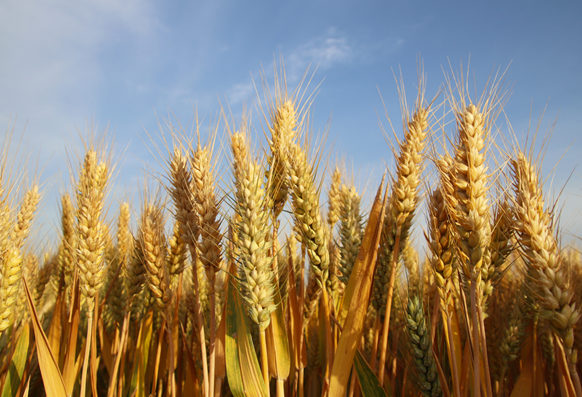
Advanced seed breeding technology has become a core driver of yield growth and risk resistance. Improved wheat varieties with strong pre-harvest sprouting resistance have been widely deployed in major grain-producing regions. High-performance strains including Kenmai 58, Yangmai 53, Yannong 999 and Zhongmai 578 effectively offset adverse impacts from erratic weather, stabilising large-scale output and upgrading grain quality. Kenmai 58 has repeatedly set new high-yield records for rice-stubble wheat in Hubei Province, with a maximum yield of 636.4 kilograms per mu.
China has built a solid domestic seed industry system to safeguard grain security. Independently-bred crop varieties occupy more than 95 per cent of the total planting area nationwide, and the national improved seed coverage rate exceeds 96 per cent, forming a reliable seed supply system for domestic grain cultivation.
Intelligent agricultural machinery and refined mechanical operation further lift full-chain production efficiency. Over 17 million sets of agricultural equipment were put into operation during this year’s summer harvesting period, including more than 800,000 combine harvesters, with over 200,000 units conducting cross-regional harvesting operations. Upgraded operating systems enable real-time crop condition sensing and automatic speed adjustment, adapting efficiently to humid and rainy harvesting conditions.
Domestic agricultural machinery manufacturing capabilities continue to strengthen, offering more than 4,000 types of products and covering over 90 per cent of domestic market demand. The comprehensive mechanisation rate of crop farming, planting and harvesting has reached 76.7 per cent. Continuous technological breakthroughs in power shifting and high-capacity harvesting equipment have kept the comprehensive mechanical harvesting loss rate within 0.8 per cent.
Digital and intelligent agricultural technologies enhance risk response capacity for grain production. Smart agricultural tools such as the intelligent mini-program Maijitong provide farmers with real-time weather forecasting, pest and disease identification, fertilisation guidance and disaster prevention solutions. Optimised algorithm models and iterative image recognition systems support precise field management, enabling data-driven farming decisions across major grain-growing areas.
This year’s summer grain production has withstood multiple challenges including persistent rainfall during sowing seasons, weak seedling growth before winter and frequent pests and diseases in later growth stages, alongside fluctuations in international fertiliser prices. The resilience of domestic grain supply system stems from continuous agricultural technological innovation and systematic industrial upgrading.
Current summer sowing work has been completed nationwide, and grain production has entered the key summer management phase. Policy arrangements under the 15th Five-Year Plan outline targets for lifting China’s comprehensive grain production capacity to around 1.45 trillion jin. Relevant agricultural authorities will advance technological innovation and achievement transformation, optimise agricultural equipment support and foster new quality agricultural productive forces, to build a more resilient, efficient and sustainable grain security guarantee system.
热门内容推荐