Humanoid Robot Firms Rush for A-share Listings as Industrial Take-Up Gathers Pace
Domestic enterprises along the humanoid robot industrial chain have accelerated their IPO preparations throughout 2026. Official disclosures published on the Shanghai Stock Exchange website on 6 July show Unitree Robotics secured registration approval for its STAR Market listing application on 2 July, poised to become the first A-share listed humanoid robot enterprise. Within the past two months, listing submissions from Shenzhen Yuejiang Technology Co., Ltd., Loong Intelligence (Shenzhen) Co., Ltd. and Hangzhou DeepSeek Robotics Co., Ltd. have each gained official acceptance in sequence.
At the 2026 Lujiazui Forum, senior officials of the China Securities Regulatory Commission laid out clear backing for hard-tech firms operating in embodied intelligence, quantum technology and bio-manufacturing to secure STAR Market admissions. The stance signals China’s capital markets will adopt forward-looking frameworks and inclusive institutional arrangements to underpin cutting-edge technological innovation.
Parallel to greater capital market openness to humanoid robotics, tangible expansion can be seen across industrial activity. Fresh statistics released by the State Taxation Administration reveal sales revenue from embodied intelligence manufacturers expanded by 22.4 per cent year-on-year in the first five months of 2026, building on the 13.9 per cent full-year growth recorded for 2025. Revenue generated by complete robot body manufacturing alone rose by 30.1 per cent over the same comparative period.
Humanoid robotics stands at a pivotal juncture, transitioning from small-scale trial deployments to widespread industrial rollout. Reporters from Securities Daily have held extensive site visits with multiple robot manufacturers and exchanged views with investment institutions and industry analysts to map out the timeline for full commercial breakout of the sector.
Shifting Buyer Demographics Reshape End-Use Landscape
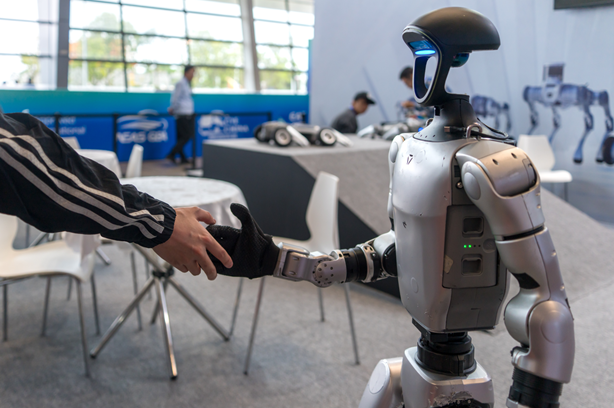
Early deployments of humanoid units were concentrated within academic institutions and science museums, with machines priced from tens of thousands to millions of yuan procured primarily for algorithm training and public demonstration. Patterns of procurement are undergoing marked shifts in 2026, according to an industry research specialist with investment sector experience.
Industry research bodies confirm industrial manufacturing operations now represent the dominant buyer cohort, spanning automotive, 3C electronics, new energy, logistics warehousing and semiconductor segments. Robots are deployed across production lines featuring complex workflows, frequent material handling, mixed batch assembly and auxiliary workshop tasks.
Data published by International Data Corporation corroborates this structural shift. While devices for entertainment performance, education and research still accounted for more than 60 per cent of global humanoid robot shipments in 2025, uptake within industrial and commercial service environments is advancing at an accelerating clip. The shift from laboratory testing to hazardous site operations, power grid inspection and mainstream manufacturing constitutes the most notable market transformation recorded this year.
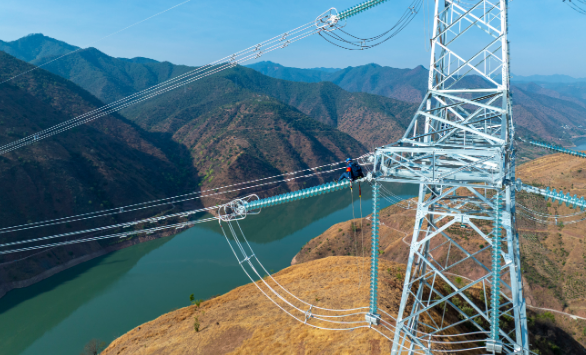
State Grid Corporation of China issued a procurement announcement in April outlining plans to acquire 8,500 embodied intelligent devices at an aggregate investment value of roughly 6.8 billion yuan. Humanoid live-line operation robots represent the highest-value category within the tender, with orders for 500 units budgeted at 2.5 billion yuan for deployment across distribution network live maintenance and ultra-high voltage infrastructure projects.
Industrial manufacturing is widely viewed as the segment set to deliver closed-loop commercial viability in the near term. Controlled factory environments operate around tangible goods rather than unpredictable human interaction, supporting higher standardisation of workflows. Industrial sites will remain the primary arena for humanoid robot commercialisation over the next three to five years, per industry analysts covering China’s industrial equities at UBS Securities.
Chief technology analysts at SPD Bank International outline a staged rollout sequence prioritising industrial applications ahead of commercial services, followed by domestic household adoption once hardware costs drop sufficiently to unlock mass consumer demand. Residential assistance functions stand as the long-term growth frontier for the technology.
Manufacturing Capacity Race Driven by Diversified Production Models
Output volumes act as a core performance metric tracking sector progress. At a press briefing for the 2026 World Artificial Intelligence Conference and High-Level Meeting on Global AI Governance on 7 July, senior representatives from the Science and Technology Department of the Ministry of Industry and Information Technology projected national full-year humanoid robot production to surpass 100,000 units in 2026. Industry benchmarks frame annual shipments of 10,000 units as the dividing line separating customised small-batch workshops from streamlined mass industrial manufacturing operations.
Multiple manufacturers have unveiled aggressive capacity roadmaps for the current calendar year. Unitree Robotics targets shipments of between 10,000 and 20,000 units for 2026. UBtech rolled out its 1,000th Walker S2 industrial humanoid robot by the close of 2025, with full-year 2026 production targets hitting the 10,000-unit mark. Agile Robotics reached the 15,000-unit milestone for its general embodied robot range on 28 June, less than three months after crossing the 10,000-unit threshold. XPeng Robotics’ first-phase Guangzhou production facility holds a designed annual capacity of 50,000 units, with monthly output set to hit 1,000 units by the end of 2026.
Domestic supply chain agility and speed underpin this industry-wide capacity expansion. Three distinct development frameworks have emerged across manufacturers: full in-house research and production across all links, independent development of core components alongside outsourced secondary parts, and platforms centred on large language models and computing infrastructure.
Established automotive OEMs including Xiaomi and XPeng have leveraged mature supply chain ecosystems to enter the humanoid robot arena, repurposing existing vehicle assembly lines for robot body production. Xiaomi’s embodied robot completed three consecutive hours of autonomous fastener fitting operations in March 2026, maintaining a task success rate of 90.2 per cent while matching a 76-second cycle time benchmark required for mass automotive line integration.
Lingyi iTech supplies core structural assemblies and surface treatment solutions for the Flash Glory humanoid unit that claimed first place at this year’s Beijing Humanoid Robot Marathon. Mass component deliveries have been dispatched from its Dongguan Hengli plant, with finished hardware deployed within the Beijing Embodied Intelligence Super Factory supporting flagship platforms including the Tiangu Ultra and Tiangu 3.0 robot series.
Prospects for scaled manufacturing have drawn heightened capital inflows. Data compiled by Qichacha records 840 financing rounds completed by 666 industrial chain firms up to 8 July 2026, with 71 per cent of deals securing funding volumes exceeding one hundred million yuan.
Fund allocation priorities have evolved alongside industrial maturity. Early-stage capital flowed broadly to innovative full-machine start-ups during the sector’s formative phase. Investors now direct greater resources toward upstream core component suppliers with robust technical barriers and predictable revenue streams. Core hardware parts deliver consistent market demand amid widespread capacity expansion, offering clearer investment returns compared with early-stage robot assembly ventures.
Institutional investors maintain steady capital injections into embodied intelligence and humanoid robotics, as coordinated maturation across multiple industrial variables shifts the sector from conceptual narrative to verifiable commercial operation. Investment teams prioritise operators with robust technical foundations, ongoing innovation in model architecture, consistent improvements in generalised task capability and systematic accumulation of high-quality training datasets.
Four Core Barriers Remain Prior to Mass Market Breakthrough
Sustained financing activity within private markets sits alongside persistent structural constraints slowing full-scale commercial rollout. The sector remains in a prolonged phase of technical iteration, dataset accumulation and capacity scaling.
Three core technical hurdles constrain current performance: physical hardware including joint modules, dexterous manipulators and sensor suites; motion control covering dynamic balance, full-body coordination and fine manipulation; and industrial engineering spanning reliability, operational safety, battery endurance and cost containment. Joint modules illustrate these pressures, requiring dozens of synchronised lightweight, high-torque drive units capable of rapid response, impact resistance and extended service lifespans; thermal drift, response lag and positional deviation undermine consistent workshop operation.
Industry consensus identifies four critical thresholds that must be crossed before broad commercial adoption becomes viable.
First lies hardware cost reduction. Full robot unit pricing is falling steadily, with market projections placing high-performance humanoid platforms between 150,000 and 200,000 yuan by 2027, edging closer to the 100,000 yuan mass commercial tipping point targeted for 2030.
Second relates to generalised artificial intelligence functionality. Affordability must be paired with versatile task execution capability, enabling seamless adaptation across varied working environments rather than single fixed assignments. Current large language models deliver task success rates of between 40 and 50 per cent under pre-defined operating constraints. Scaled commercialisation becomes feasible once success rates lift to between 60 and 70 per cent within unstructured real-world environments, alongside mature cross-device coordination and multi-task processing functionality.
Manufacturers continue advancing sensory and predictive processing capabilities within robot control systems, expanding model parameter scales from billions to 400 billion and even 800 billion parameters to embed physical rule prediction and tactile feedback functions. High-fidelity training data forms the foundation of this computational advancement, driving investment in dedicated data collection testbeds nationwide. Simulated training environments generate large volumes of authentic operational data to lower development and deployment expenditure, with real-world machine datasets recognised as a foundational asset supporting ongoing model refinement and new scenario expansion.
Third, battery endurance limits factory deployment. Existing power cells cannot reliably sustain eight-hour continuous shifts required for industrial workflows, constrained by limits on energy density and intrinsic safety profiles.
Fourth, viable investment return timelines must be secured for corporate purchasers. Sustainable procurement rests on four concurrent criteria: deep alignment with niche operational workflows, autonomous high-efficiency operation with minimal human intervention, consistent low-fault reliability, and controlled payback cycles ranging from one to three years. Resolving tangible operational pain points and delivering positive financial returns represent the primary drivers behind bulk corporate purchasing decisions.
Advancements in technical capability, falling hardware costs and sustained capital backing carry the sector past initial concept validation stages and toward mass commercial readiness. Market participants maintain measured expectations for near-term growth, with order backlog volumes, repeat purchase ratios and delivered production capacity serving as reliable metrics tracking the pace of industrial scale-up.
热门内容推荐