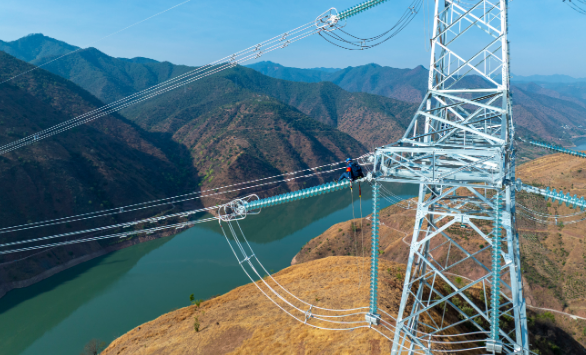
China Mobile Liaoning Deploys Full-Scale Network Restoration as Typhoon Bawi Triggers Severe Flooding Across Liaoning
Typhoon Bawi has brought extreme torrential rain to multiple regions of Liaoning, with isolated areas hit by violent downpours classified as extraordinary heavy rain. Floodwaters have inflicted varying levels of damage to communication equipment including operator rooms, optical cable routes and cellular base stations across the province. China Mobile Liaoning has activated cross-provincial flood emergency protocols without delay, co-ordinating manpower and resources across all local branches. Frontline repair teams have operated around the clock to reinstate network services, maintaining unbroken digital communication lifelines for flood relief and resident safety.
Digital Intelligence Powers Modern Flood Prevention and Communication Assurance Framework
China Mobile Liaoning has built an end-to-end smart flood response system covering the full spectrum of flood rescue operations, structured around real-time monitoring, dynamic data analysis and precision command decision-making. The platform delivers full coverage for personal consumer, household, enterprise and core network services, continuously visualising multi-dimensional operational metrics including wireless signal performance, fixed broadband access, site status and fault complaint trends via a 7×24 round-the-clock monitoring mechanism.
Meteorological datasets including radar imagery, typhoon trajectory projections, real-time rainfall readings, wind speed and wind direction are fully integrated into dedicated monitoring systems that track communication infrastructure along major river courses and key county-level jurisdictions. End-to-end visualisation of transmission networks, access lines and environmental monitoring hardware enables sub-second collection of critical indicators such as base station outages and hazard alerts, delivering precise data input for provincial flood control command centres. The intelligent operational architecture has lifted command scheduling efficiency by 54 per cent and cut full emergency response lead times by 65 per cent, upgrading overall network resilience and automated incident handling capacity.
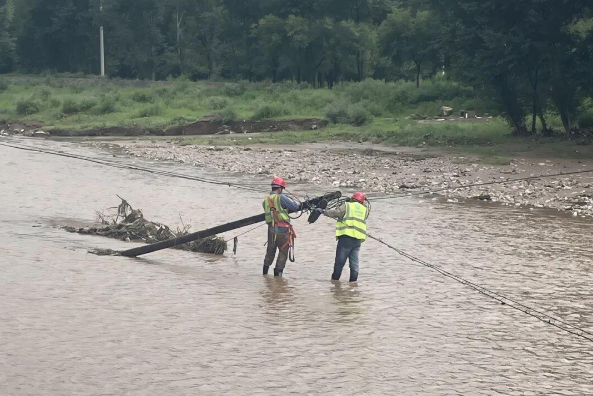
Provincial Repair Crews Conduct Round-the-Clock Restoration Operations Across All Affected Cities
In Shenyang, extensive standing floodwater submerged rural roadways within Liujianfang Town, Liaozhong District, flooding multiple operator rooms and placing local base stations under critical operational threat. Local emergency response plans were activated immediately, with repair crews dispatched to flooded sites at speed. Staff wearing full protective gear waded through waist-deep floodwater to drain waterlogged equipment spaces, isolating power supplies for safety, conducting systematic line inspections and completing full hardware maintenance. Rotating shift teams maintain constant surveillance of base station performance to eliminate hidden risks from damp equipment and water ingress, securing consistent voice and data connectivity for local residents through the flood period.
In Tieling, many residents have relocated to designated mass evacuation venues under official flood safety arrangements. Mobile engineering teams arrived at these shelters overnight to deploy portable micro base stations branded Emergency Hub, alongside capacity upgrades to indoor signal distribution hardware within venue buildings. Following overnight configuration and commissioning, full 4G and 5G signal coverage is available across all evacuation zones, supporting stable communication for residents contacting family members and relaying emergency relief information.
Flash floods triggered by intense rainfall in Chaoyang have swollen river channels, washed out road surfaces and severed multiple backbone optical cable routes. The regional flood control headquarters received immediate damage reports, with tier-one emergency restoration protocols activated simultaneously. Technicians fitted with protective kit entered fast-flowing river channels to clear floating debris, pinpoint cable breakpoints and carry out uninterrupted fibre splicing and cable laying shifts lasting 24 hours per cycle, rapidly reinstating core communication corridors vital for local disaster response co-ordination.
Short-duration heavy rain paired with reservoir water release sent water levels surging along the Xiaoling River in Jinzhou, dislodging anchor foundations for cross-river optical cables at South Bridge and tilting transmission poles. This cable segment carries core inter-city data traffic linking urban and county-wide networks across the prefecture; full failure would trigger widespread regional communication blackouts. Field teams implemented a two-pronged restoration strategy. One team operated industrial unmanned aerial vehicles to suspend temporary support ropes across the river, anchoring main trunk cables to bridge structures to prevent washaway while removing sharp pole protrusions that risked cable abrasion. A parallel crew laid a 144-core spare optical cable under persistent rainfall, with back-office network monitoring teams tracking link stability in real time to establish redundant transmission pathways. Synchronised parallel operations delivered complete resolution of the critical network hazard within tight timelines.
In Fuxin, field technicians waded through floodwater to reach fault locations for fibre splicing, while reinforcing vulnerable pole lines and overhead cables along the route to clear all recorded faults and mitigate latent structural risks, sustaining stable daily communication services for township residents. Multiple repair squads were deployed across fault zones in Anshan, carrying out waterlogged line inspections, pumping floodwater from equipment premises and installing temporary power generators. Rotating 24-hour monitoring shifts track all network performance indicators, with dedicated staff providing user updates to minimise fault resolution lead times and accelerate full regional service recovery.
Teams in Liaoyang completed comprehensive pre-emptive inspections of all urban and rural base stations and operator rooms ahead of peak flooding periods. Staff cleared accumulated water and debris surrounding equipment sites, stacked flood defence sandbags in designated storage zones and reinforced room waterproofing installations to pre-empt equipment short-circuits caused by rainwater infiltration.
As of 09:00 on 14 July, China Mobile Liaoning has mobilised 1,325 frontline technical staff, deployed 518 emergency support vehicles and 582 portable power generators, and positioned 28 high-throughput satellite portable base stations alongside 22 satellite communication handsets across flood-affected zones. A total of 87.32 million flood prevention public warning SMS alerts have been distributed to mobile subscribers province-wide to reinforce community flood safety awareness and sustain robust digital communication defences through the disaster cycle.
National communications industry operational records show that integrated air-ground emergency communication systems combining satellite portable stations, drone cable deployment and automated monitoring platforms are widely adopted across flood-prone regions nationwide. Ongoing upgrades to intelligent monitoring infrastructure and pre-positioned emergency hardware reserves will further streamline network recovery workflows during extreme weather events in subsequent flood seasons.
热门内容推荐