China's New-Type Energy Storage Installed Capacity Surpasses 100GW, Leading Global Market
China’s new-type energy storage sector has achieved a milestone achievement, with its total installed capacity exceeding 100 gigawatts (GW) by the end of 2025, accounting for more than half of the global market share for the first time, according to the "2026 White Paper on Energy Storage Industry Research" released on March 31.
The white paper, a key industry report, shows that the installed capacity of new-type energy storage in China made up over two-thirds of the country’s total power energy storage scale by the end of last year. Compared with the end of the 13th Five-Year Plan period (2016-2020), this figure has surged more than 40 times, with its global market share reaching 51.9% – a historic first that cements China’s leading position in the global new-type energy storage sector.
In terms of technical structure, lithium-ion batteries remain the dominant technology, accounting for over 96% of the total installed capacity. However, as several 100-megawatt-level long-duration energy storage projects have been put into operation one after another, the technical structure has gradually shown a diversified trend. Cutting-edge new-type energy storage technologies such as solid-state batteries and hydrogen energy storage are developing at an accelerated pace, providing strong support for the future new-type power system’s demand for multi-time-scale and high-safety energy storage.
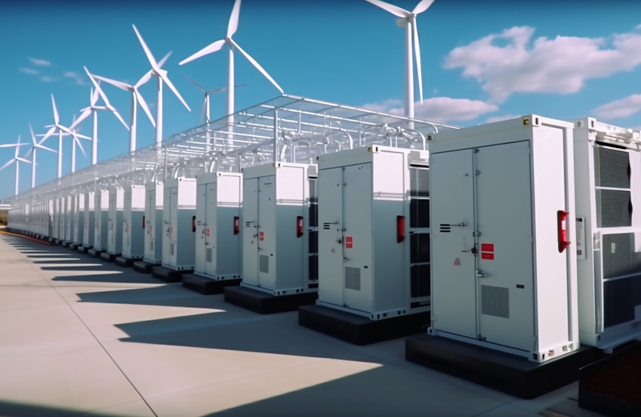
Regionally, since the start of the 14th Five-Year Plan period (2021-2025), new-type energy storage projects have been increasingly concentrated in areas rich in wind and solar resources, such as Northwest and North China. Inner Mongolia and Xinjiang have emerged as the regions with the fastest growth in installed capacity, driven by their abundant renewable energy endowments.
Chen Haisheng, Chairman of the China Energy Storage Alliance (CNESA), noted that China, the United States and Europe remain the three largest regional markets for energy storage globally. He added that China has maintained the world’s largest new installed capacity of new-type energy storage for four consecutive years, demonstrating its strong industrial vitality. “With the rapid rise of the energy storage market in regions such as the Middle East and Latin America, the global energy storage market is gradually expanding to a wider range,” Chen said.
During the 15th Five-Year Plan period (2026-2030), new-type energy storage is expected to become the main carrier for adding flexible regulation capacity to the power system. While the industry is developing rapidly, it still faces certain challenges, including the need to improve market mechanisms and project management standards, as well as to enhance the maturity of some energy storage technologies.
A relevant person in charge of the Department of Energy Conservation and Technology Equipment under the National Energy Administration stated that efforts will be made to accelerate the improvement of the new-type energy storage market mechanism. “We will encourage local governments to explore auxiliary service varieties in light of local conditions, gradually expand the scale of new-type energy storage participating in auxiliary services, and improve the capacity pricing mechanism for new-type energy storage,” the person in charge said. He added that a reliable capacity compensation mechanism will be established in an orderly manner to guide the rational development of the new-type energy storage industry.