AI Transforms China’s Manufacturing Sector: In-depth Integration Gains Momentum in Zhejiang
HANGZHOU, April 10 – As the global wave of artificial intelligence (AI) sweeps across industries, manufacturing has emerged as a new competitive frontier. The inclusion of "forging a new form of intelligent economy" in China’s 2026 Government Work Report, for the first time, has outlined a key direction for the practical application of AI in the years ahead, according to official sources.
Recent interviews conducted in Zhejiang, a major manufacturing province in eastern China, have revealed that AI is moving from laboratories to production lines, deeply integrating into research and development, manufacturing, and enterprise management, and driving profound changes in traditional manufacturing. This two-way integration between AI and manufacturing is accelerating at an unprecedented pace.
In workshops across multiple Zhejiang-based enterprises, AI integration is evolving from single-point pilots to full-process penetration, restructuring the value creation logic of key links such as R&D, production, operation and services, while achieving multiple goals including efficiency improvement, cost reduction, quality optimization and scenario expansion.
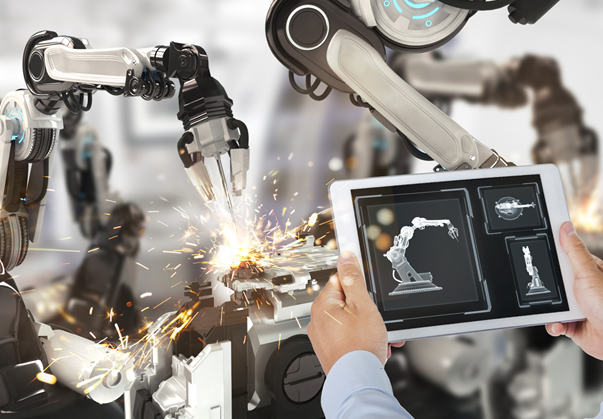
At Hangzhou Zhongce Rubber’s high-performance radial tire intelligent factory, dozens of Automated Guided Vehicles (AGVs) shuttle precisely along designated routes, with robotic arms completing tire vulcanization processes with micron-level accuracy. Jiang Zhiqiang, General Manager of Chaoyang Company under Zhongce Rubber Group, stated that the AI-enabled workshop can roll out one tire every 3.1 seconds continuously, boosting production efficiency by 300% and reducing the product defect rate to 0.5%.
Zhejiang Ruiying Sensing Technology Co., Ltd. has optimized resource allocation through its self-developed full-process digital management platform, increasing response speed in material procurement, inventory management and logistics distribution by over 50%. Shi Xiaohu, Head of Ruiying’s IT Department, noted that AI empowerment of the business chain is accelerating the construction of a modern management system with transparent business processes, controllable production and measurable operating results.
AI is also reshaping the connection between consumption and production. Qisheng Technology Co., Ltd. in Jiaxing, Zhejiang, has developed a sleep intervention algorithm model and uses its intelligent bed products as a screening carrier to provide consumers with sleep quality monitoring. Tang Guohai, Chairman of Qisheng Technology, said AI empowerment is transforming manufacturing enterprises from product providers to solution providers.
A report from the International Data Corporation (IDC) shows that the penetration rate of intelligent agents in China’s industrial enterprises has risen from 9.6% in 2024 to 47.5% in 2025. The Ministry of Industry and Information Technology (MIIT) has clearly set a goal to promote 500 typical "AI + Manufacturing" application scenarios by 2027, marking a key leap from "single-point pilots" to "industry-wide popularization" of AI applications in China’s manufacturing sector.
Despite rapid progress in integration, entrepreneurs and experts interviewed noted challenges in AI deployment, including model security, data barriers, application costs and talent shortages. You Huanjie, R&D Manager of Ruiying Technology, said some enterprises have "AI anxiety" and regard AI as a "panacea" for industrial problems, noting that existing large models have limitations in understanding physical rules and spatial reasoning, which may lead to instructional errors in complex industrial chains.
Data barriers and computing costs also hinder large-scale AI application. Ji Yaohua, Chairman of Hangzhou Chicheng Digital Technology Co., Ltd., admitted that weak data foundations and limited data sharing – due to core confidentiality and intellectual property concerns – restrict the development of industrial AI models. Shi Xiaohu added that building a self-owned computing server would cost 12 million yuan just for graphics cards, while using public cloud services brings new issues of data security and network latency.
To address these challenges, eight central departments including MIIT, the Cyberspace Administration of China and the National Development and Reform Commission recently issued the Implementation Opinions on the "AI + Manufacturing" Special Action to accelerate AI integration in manufacturing. Enterprises and experts have called for systematic reforms in strategic planning, ecological construction, talent training and governance to maintain China’s global leading edge in AI-enabled manufacturing.
Cao Hui, Deputy General Manager of Qisheng Technology, suggested deepening industry-education integration to cultivate interdisciplinary talents who understand both manufacturing processes and AI technology. Xu Guanjv, Chairman of Transfar Group, emphasized the need to establish a training and certification system for "industrial AI architects" to scale up the supply of compound talents.
In Zhejiang’s manufacturing hubs, AI is no longer an option but a necessity, driving the sector toward higher quality and smarter development. The ongoing integration efforts not only reflect China’s commitment to technological innovation but also lay a solid foundation for sustained industrial competitiveness.