Deep Integration of Advanced Manufacturing and Modern Services Gains Momentum in China
The in-depth integration of China’s advanced manufacturing and modern services (hereinafter referred to as "integration of the two industries") is accelerating. It is learned that relevant departments will improve the supporting policy system, promote the extension of producer services towards specialization and the high end of the value chain in different fields, and deepen pilot projects for the integration, laying a solid foundation for high-quality economic development.
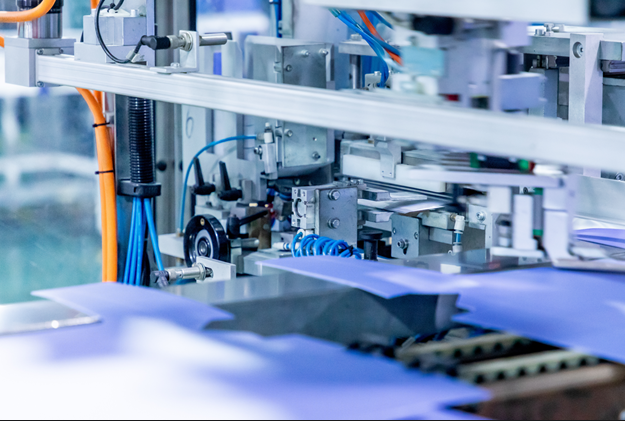
At Zoomlion Intelligent Industry City’s Earthmoving Machinery Park in Changsha, Hunan Province, the noise and crowding of traditional heavy industry workshops have been replaced by the collaborative operation of intelligent equipment. According to China Economic Net, by integrating 11 information systems and in-depth integration of artificial intelligence and other technologies, Zoomlion has realized efficient shared mixed-flow production of more than 100 types of excavators.
An excavator rolls off the production line every 6 minutes on average, with the steel plate utilization rate exceeding 90% and the work-in-progress inventory of structural parts reduced by 70%. "Through the integration of digital technology and business management, Zoomlion has achieved full-life-cycle digital integrated R&D of products, standardized and flexible intelligent production, and an agile and efficient digital supply chain," said Luo Yameng, Brand Director of Zoomlion.
China boasts a complete range of manufacturing industries and diverse service formats, providing broad space for the transformation from production-oriented manufacturing to service-oriented manufacturing and the reverse extension of services to manufacturing. To accelerate the integration, the National Development and Reform Commission has organized two batches of national pilot projects in recent years, and many regions have formulated local action plans based on their industrial characteristics.
Data shows that during the 14th Five-Year Plan period, the added value of China’s producer services increased from 27.57 trillion yuan in 2020 to 42.18 trillion yuan in 2025, with rapid growth in information transmission, software, information technology services and finance.
The in-depth integration has not only improved efficiency but also spawned new formats and models. In Guangdong, the new service-oriented manufacturing model of "receiving orders through platforms, decomposing processes and collaborating among multiple factories" has made manufacturing more flexible. In Jiangsu, Suzhou Industrial Park has built an "Artificial Intelligence +" innovation and entrepreneurship ecosystem, supporting AI OPC (One-Person Company) startups.
"In the past, services supplemented what manufacturing needed; now, manufacturing and services jointly define products and create value," said Pang Chaoran, Researcher at the Research Institute of the Ministry of Commerce. He noted that the integration is shifting from production-link integration to full-life-cycle integration, and from single-enterprise integration to platform-ecosystem integration.
Pang also pointed out that the integration still faces deep-seated challenges, including insufficient high-end service supply and inadequate institutional coordination. "The difficulty lies in identifying application scenarios to give full play to the role of integration," said Wei Qijia, Researcher at the National Information Center of the National Development and Reform Commission.
Policies at both central and local levels are being improved. Relevant departments will focus on technological empowerment and promote the development of high-value-added services. Recently, Guangdong Province issued an action plan, aiming to build more than 50 producer service clusters by the end of the year, further boosting the in-depth integration of the two industries.