China Accelerates Infrastructure Investment in 15th Five-Year Plan’s First Year
BEIJING, April 20 — As the first year of the 15th Five-Year Plan (2026-2030) unfolds, China has witnessed intensive construction of major projects across the country, with infrastructure investment maintaining a steady acceleration to boost economic vitality and improve people’s livelihoods.
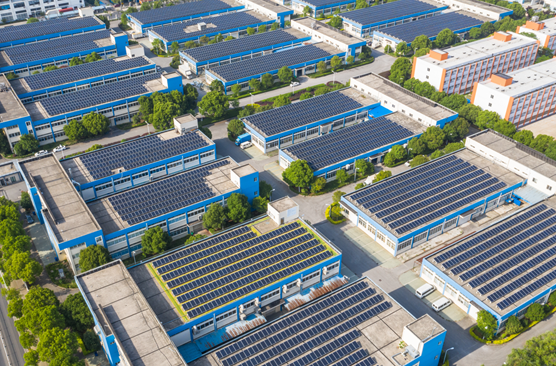
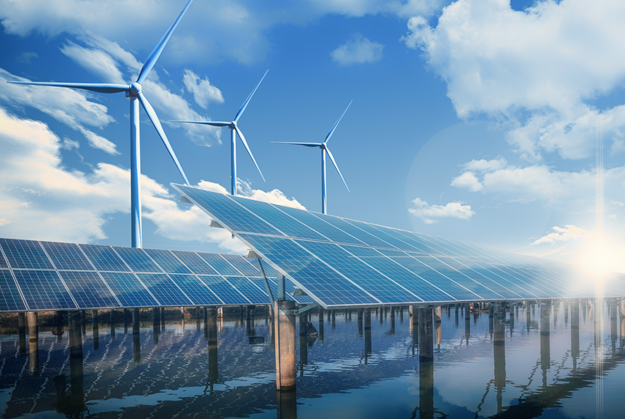
In Shandong Province, the second phase of the country’s largest wind-solar-storage project under brine pond conditions, with a 250-megawatt wind power capacity, has been successfully connected to the grid, delivering green energy to thousands of households. In Hainan Province, the first batch of units at Hainan Qiyuan Offshore Wind Farm has been grid-connected, capable of generating 1.5 billion kilowatt-hours annually. In Sichuan Province, projects such as Maoniushan Wind Power and Zhala Mountain Photovoltaic are advancing steadily, strongly supporting the construction of the Yalong River Basin integrated hydro-wind-solar base — part of China’s efforts to build the world’s largest renewable energy system.
Expanding effective investment is a key means to stabilize growth, enhance momentum, benefit people’s livelihoods and ensure security. According to data from the National Bureau of Statistics (NBS), fixed asset investment (excluding rural households) across the country reached 10.2708 trillion yuan in the first quarter, a year-on-year increase of 1.7%, reversing the 3.8% decline in the whole of last year. Among this, infrastructure investment rose by 8.9% year-on-year, 8.3 percentage points faster than the full-year growth rate of last year, showing a clear recovery momentum.
“Since the beginning of this year, all regions and departments have thoroughly explored and released the potential of effective investment,” Mao Shengyong, Deputy Director of the NBS, stated at a press conference held by the State Council Information Office on the 16th. “We have issued the list of key construction projects and the central budget investment plan for the advance and first batches, made good use of funds such as ultra-long-term special treasury bonds and local government special bonds, and improved the mechanism for private enterprises to participate in major project construction, taking multiple measures to turn investment from negative to positive.”
Wang Changlin, Deputy Director of the National Development and Reform Commission (NDRC), noted at another press conference on the 17th that the accelerated construction of major projects has become an important force driving investment to stabilize. “In the first quarter, investment in projects with a total planned investment of over 100 million yuan increased by 4.5%, and investment growth in key areas such as railways and energy accelerated, driving infrastructure investment up by 8.9%,” he said.
Investment focuses not only on “investing in things” to improve hardware support but also on “investing in people” to make up for weaknesses in people’s livelihoods. In Guiyang, Guizhou Province, the local power supply department invested 4.94 million yuan in the construction and commissioning of the 10-kilovolt Liliang Line, enhancing the power supply guarantee capacity of Xiaomeng Industrial Park. “Our production orders have doubled this year, and the fully electronic control production line operates 24 hours a day. Reliable power supply gives us more confidence to maintain full production,” said a relevant person in charge of a bus enterprise in the park.
Looking ahead, Mao Shengyong emphasized that China’s fixed asset investment has broad space and great potential, with more efforts to be focused on optimizing investment structure and improving investment efficiency. Wang Changlin added that the NDRC will focus on “AI+” infrastructure, urban renewal, national water network and new energy system, and push for the basic issuance of 755 billion yuan of central budget investment and 1 trillion yuan of ultra-long-term special treasury bonds by the end of June, while accelerating the expansion and quality improvement of the infrastructure REITs market to stimulate private investment vitality.