China’s EV Charging Infrastructure Surges to 21.5 Million Units by March 2026, NEA Data Shows
Beijing, April 27 — China’s electric vehicle (EV) charging infrastructure reached 21.481 million units as of end-March 2026, representing a 46.9% year-on-year increase, the National Energy Administration (NEA) announced at a regular press briefing. The milestone underscores the rapid expansion of the world’s largest EV charging network, supporting the country’s green mobility transition. Xinhua News Agency reported the announcement on April 27.
The total charging infrastructure comprises two main segments: public and private. Public charging facilities stood at 4.863 million units, with a total rated capacity of 234 million kilowatts. Private charging installations amounted to 16.618 million units, with an approved power capacity of 147 million kilovolt-amperes. The data highlights the dominant role of private charging, which accounts for over 77% of the total network, reflecting strong household adoption of EVs.
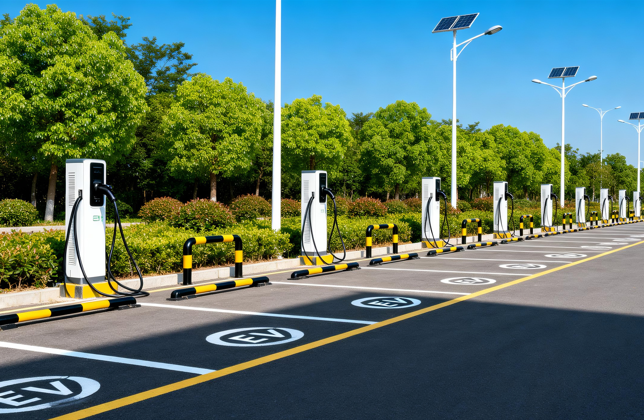
Liu Mingyang, Deputy Director of the Electric Power Department at the NEA, noted that the government has been scaling up infrastructure investment to meet booming demand. “We are accelerating the construction of high-power charging stations and optimizing the layout along highways and in urban areas,” Liu said. The NEA forecasts a significant rise in charging demand during the upcoming May Day holiday, and has collaborated with the Ministry of Transport to identify high-demand service areas and ensure adequate service capacity.
The robust growth in charging infrastructure aligns with China’s “Three-Year Doubling Plan” for EV charging services, launched in 2025. The plan targets 28 million charging units by the end of 2027, with an expected investment of over 200 billion yuan. This expansion aims to address range anxiety and support the projected growth of China’s EV fleet, which is set to exceed 80 million units by 2030.
Industry analysts attribute the rapid infrastructure growth to supportive policies, technological advancements, and strong market demand. The NEA has introduced subsidies for public charging stations and streamlined approval procedures for private installations. Meanwhile, Chinese companies have developed high-efficiency charging technologies, with public stations now averaging 48 kilowatts per unit, up from 40 kilowatts in 2024.
The expanding charging network is also laying the groundwork for vehicle-to-grid (V2G) integration. The NEA has launched V2G pilots in nine cities, exploring how EV batteries can store excess grid power and supply electricity during peak demandThe State Council of the People's Republic of China. “V2G will enhance grid stability and create new value for EV owners,” Liu added.
China’s progress in EV charging infrastructure has global implications. The country now has more charging points than the rest of the world combined, providing a model for other nations seeking to accelerate EV adoption. As the NEA continues to prioritize infrastructure development, China is well-positioned to maintain its leadership in the global EV transition, driving sustainable growth in the automotive and energy sectors.