2026 Beijing Auto Show Highlights Intelligent Driving Progress, Paving Way for Commercialization
The 2026 Beijing International Auto Show has focused on presenting the latest achievements in the global automotive industry’s electrification, intelligence and connectivity, with intelligent driving emerging as the most watched technical track. The event has demonstrated China’s comprehensive capabilities in intelligent driving, covering technological R&D, industrial chain support and commercial implementation, marking a new stage of in-depth intelligent upgrading in the sector.
China Economic Net reports that in December 2025, the Ministry of Industry and Information Technology officially announced the first batch of access permits for Level 3 (L3) conditional autonomous driving models. One pure electric sedan each from BAIC Arcfox and Changan Deepal were selected, launching road pilots in designated areas of Beijing and Chongqing respectively. 2026 is widely recognized by the industry as the "first year of L3 autonomous driving development", with intelligent driving evolving from a single technological competition to comprehensive development involving policy systems, safety standards and ecological coordination.
Domestic brands including Xpeng, Voyah and Changan have launched mass-produced models with L3 conditional autonomous driving capabilities, while international brands such as BMW, Mercedes-Benz and Audi have released intelligent assisted driving systems tailored to the Chinese market based on local road conditions and technical solutions. Zhang Yongwei, Chairman of the China Automobile Association’s Automobile Industry Research Institute, noted at the 2nd Autonomous Driving Industry Development Forum that China’s autonomous driving technology is becoming increasingly mature, with the overall cost of assisted driving dropping by 40% to 60% compared with two years ago.
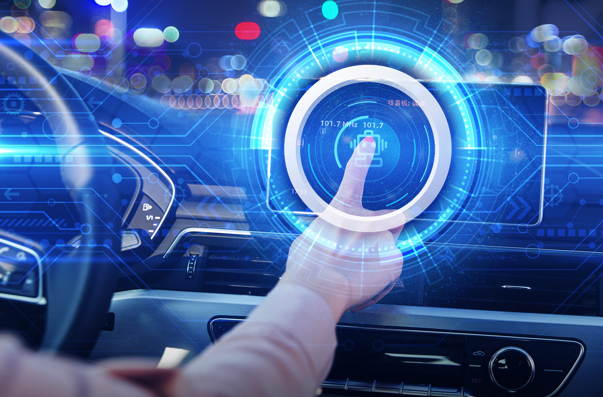
"AI + automobile" has become an important entry point for AI to move from technology to commerce. Qianli Technology recently announced in-depth cooperation with Jiyue Xingchen to build a "native intelligent driving base model". Zhao Ming, Co-Chairman of Qianli Technology, stated that the two parties have broken the traditional model of "large language model + post-training", cooperating closely throughout the entire model training cycle to create a native intelligent driving base model for complex tasks in the physical world.
Geely Automobile Group launched Eva Cab, China’s first natively developed Robotaxi prototype, at the auto show. Built on Qianli Technology’s integrated Robotaxi solution, the prototype integrates L4-level technical architecture and super intelligent agent technology, boasting strong physical AI capabilities. Deng Zhidong, Professor at Tsinghua University, commented that future automakers will essentially be artificial intelligence enterprises with hardware platform manufacturing advantages, adding that automobiles will transform from safe transportation tools to AI mobile agents with intelligent value-added services.
A major feature of this year’s Beijing Auto Show is the large-scale "integrated vehicle and component exhibition" for the first time. Intelligent driving component suppliers including Huawei, iFlytek, SenseTime Jueying and Horizon showcased their products alongside vehicle manufacturers, highlighting the trend of collaborative innovation. For instance, SenseTime Jueying is advancing the mass production of its generative intelligent driving R-UniAD 2.0 solution with Dongfeng Motor, while also cooperating with leading domestic automakers to develop the next-generation in-vehicle operating system.
People’s Network reports that from January to February this year, the penetration rate of new passenger vehicles equipped with L2-level combined driving assistance functions reached 69.15%, an increase of 10 percentage points year-on-year. Liu Fawang, Deputy Director of the Equipment Industry Development Center of the Ministry of Industry and Information Technology, emphasized that while China’s intelligent connected automobile industry has broad prospects, safety risks must not be ignored, including functional safety, network security and data security challenges brought by technological integration.
Third-party technology suppliers such as Huawei and Momenta (Beijing Chusudu Technology Co., Ltd.) have provided "Chinese solutions" for the global intelligent driving industry, attracting in-depth cooperation with well-known automotive brands from Germany, the United States, Japan and South Korea. This not only promotes Chinese intelligent driving technology to go global, but also enhances China’s voice in the global automotive industry value chain.