2026 Guangfu Temple Fair Concludes, Attracting 4.8 Million Visitors
The 7-day 2026 Guangfu Temple Fair came to an end in Guangzhou on the 9th, with more than 100 cultural activities drawing over 4.8 million participants and driving the revenue of Guangzhou’s Beijing Road business district to exceed 300 million yuan.
This year marks the 2240th anniversary of Guangzhou’s founding and the 1800th anniversary of its current name. The temple fair served as an open platform for the integration of Guangfu culture, featuring innovative transformations in cultural performances, the perseverance of craftsmanship in intangible cultural heritage (ICH) markets, the continuation of nostalgia in streets and ancestral halls, the inheritance of cultural context in campuses, and vibrant consumption amid local delicacies and trendy business districts.
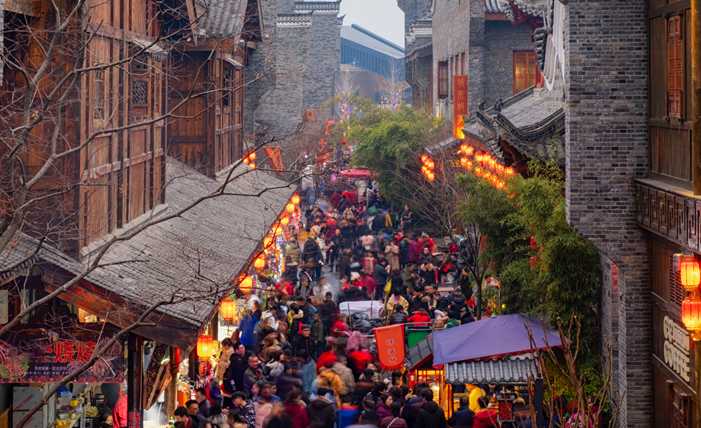
A highlight of the fair has always been its ICH showcase. This year, the ICH parade in Yangji Village of Meihuacun Sub-district was held as scheduled, with a series of performances including eight-tone music, dragon and lion dances to pray for blessings, God of Wealth blessings and Tai Chi displays.
The event also attracted a group of about 70 international tourism celebrities participating in the "Spend Spring Festival in Guangzhou, Enjoy Flowers in the Flower City – 2026 Happy Journey of International Tourism Celebrities in the Flower City", who chose Yangji as their first stop in Guangzhou. These foreign visitors joined the ICH parade to form a distinctive formation, presenting a picture of transnational exchanges of Guangfu culture.
The temple fair featured comprehensive links across the city. At the main venue in the Beijing Road cultural core area, an ICH market was set up, gathering dozens of crafts such as Guangzhou embroidery, Guangzhou clocks and rice-paper painting. In the northern section of Beijing Road, traditional crafts like sugar blowing and crocheting were integrated with contemporary aesthetics to create a youth cultural hub with animation, social and consumption functions. The southern section focused on "ICH + handcraft + public welfare", gathering special stalls such as shadow puppetry, Xiangyun yarn and hand embroidery, and launching art therapy activities in conjunction with public welfare organizations.
Meanwhile, "Alley Temple Fairs" were held simultaneously in multiple sub-districts of Yuexiu District, where various activities including lantern riddles, ICH handcrafts and charity sales integrated traditional culture into daily life. In Yaotai Village and Wangshengtang Village of Kuangquan Sub-district, ancestral hall banquets brought together villagers from all directions, with hundreds of tables set up in the two villages. Villagers chatted about their hometown feelings while enjoying traditional dishes such as the "Three Treasures of Yaotai", cooked by the villagers themselves to restore the flavor of Guangfu family banquets and strengthen family ties and cultural identity.
As the fair coincided with the start of the new school term, students participated in special campus temple fair activities, promoting the integration of Guangfu culture into campuses and enabling students to grow through inheritance and innovation.
It was noted that the Guangfu Temple Fair has a 16-year history and is characterized by diversified activity planning. This year, the fair integrated AI technology and robots with folk performances, and it will continue to deepen the link between tradition and technology in the future to inject new vitality into ancient folk customs.