China’s Cultural and Tourism Market Booms with New Growth Drivers in Spring
As spring arrives and all things revive, China’s cultural and tourism market is witnessing a warm upsurge, with people flocking to enjoy flower viewing, outdoor activities and rural getaways, and the potential of cultural and tourism consumption being continuously released.
This year’s Government Work Report has put forward a number of requirements and clarified the development direction for the cultural and tourism industry, including unlocking consumption potential in fields such as culture, tourism, sports and health care, and promoting the high-quality development of cultural and tourism with enriched integrated formats of culture, tourism, sports and commerce.
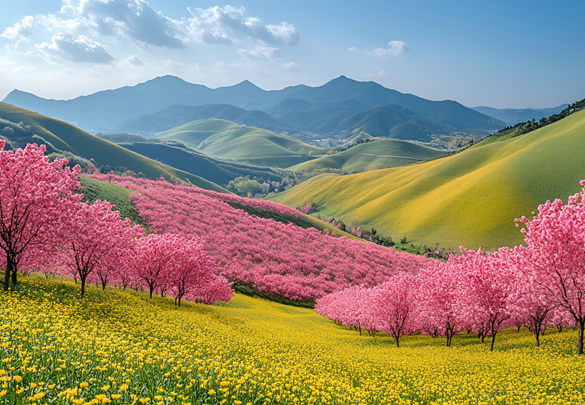
Rural tourism has become a prominent highlight, with the downward trend of travel destinations reflecting changes in people’s travel patterns. Across the country, the integration of agriculture, culture and tourism has brought new vitality to many rural areas. Chongqing’s Liming Ancient Village attracts visitors with golden rape flower fields and ancient houses, while Beijing’s suburban homestays offer experiences such as medicinal herb identification and strawberry picking. Fujian’s Fuding promotes tea-tourism integration, and Zhejiang’s Yucun Village draws tourists with new formats like rural music festivals and pastoral camping, turning farmland into parks and farmhouses into guest rooms.
The integration of sports and tourism is also emerging as a new growth driver. With the upcoming 2026 Jiangsu Super League and the popularity of Sichuan Super League, the model of “traveling with events” has become increasingly popular. Sports events have driven tourism in many cities, with Zhangjiakou’s Chongli Ski Resort, Shanghai’s F1 races and Harbin’s Asian Winter Games attracting large numbers of visitors. Local efforts to promote sports events in scenic spots and blocks have boosted consumption in shopping, catering and accommodation.
Silver hair tourism has become a new blue ocean in the cultural and tourism market. On March 8, China Railway Shenyang Bureau launched its first silver hair special train of the year, carrying over 800 tourists on a 15-day trip. By the end of 2025, the number of active, healthy elderly travelers with high travel frequency and consumption is estimated to exceed 100 million. These senior tourists now pursue quality experiences, focusing on health, culture, social interaction and immersion in local life rather than just sightseeing.
The booming cultural and tourism market is a reflection of China’s consumption upgrading. Policy support and continuous optimization of products and services are further unlocking the potential of the sector, supporting economic recovery and improving people’s quality of life.