Immersive Cultural Tourism Booms as Authentic Experiences Reshape China’s Travel Market
China’s cultural and tourism sector is undergoing a notable shift as immersive experience travel gains widespread popularity among consumers. Traditional sightseeing tours are gradually giving way to in-depth, interactive travel modes, with more visitors choosing to travel to specific cities for unique cultural experiences. Destinations including Jingdezhen, Kaifeng and Xi’an have become trending travel spots, drawing crowds eager to engage with local heritage rather than merely view scenic landscapes.
Experience-driven consumption has become a key driver revitalising the domestic tourism market. Modern travellers prioritise emotional resonance and participatory interaction, turning “visiting a place” into “living in a place”. Scenic spots across the country are upgrading operational models, shifting from one-sided performances to interactive gameplay that integrates tourists into local storylines and cultural scenarios.
Many popular tourist sites have launched diverse interactive programmes. Kaifeng’s Wansui Mountain Wuxia City allows visitors to wear ancient costumes, complete mission-based challenges such as escorting goods and solving puzzles, and earn exclusive in-site rewards. In Zhoucheng of Dali, tourists can experience traditional Bai people’s tie-dyeing, with hands-on courses ranging from short-term beginner sessions to long-term research and study programmes, creating exclusive travel memories through handmade cultural works. Immersive performing arts productions have further enriched market offerings, blurring the boundary between stage and audience and enabling multi-dimensional cultural interaction.
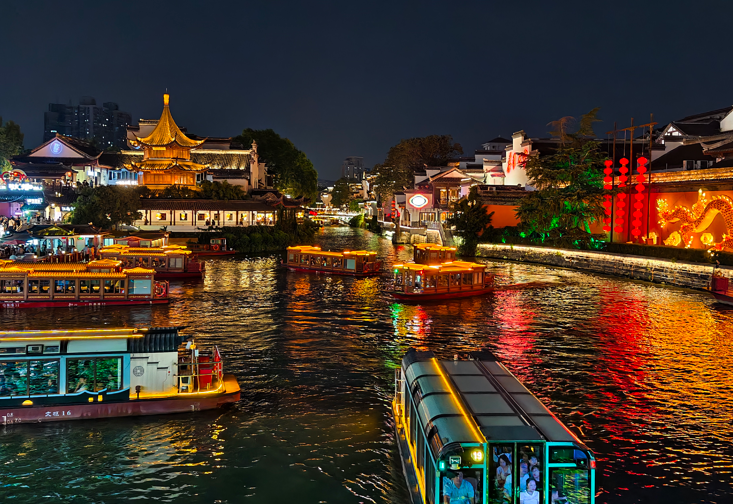
Despite the booming market momentum, the immersive tourism industry faces prominent homogenisation challenges. Many scenic spots adopt identical operational templates, featuring similar landmark signs, internet-famous photography services and standard cultural and creative souvenirs. Highly unified snack streets and commercial layouts dilute local cultural characteristics, making cross-city travel lack distinctive local flavours. Blind replication of popular gameplay and over-commercialisation weaken the unique cultural connotations that define immersive tourism.
Advanced digital technologies including virtual reality and digital light projection have enriched cultural presentation methods, enabling the restoration of vanished historical scenes. Yet excessive reliance on technology has triggered new industry pitfalls. Some projects overemphasise technological display while ignoring in-depth cultural exploration, resulting in superficial experiences and insufficient local characteristics. Standardised modular designs make immersive programmes lack authentic cultural bonds, failing to sustain long-term market appeal.
Industry practitioners and researchers highlight localisation and scenario-based innovation as the core solutions for high-quality development. Successful cases demonstrate that deeply rooted cultural scenarios deliver sustainable vitality. Handicraft experience programmes in Jingdezhen inherit millennia-old ceramic culture, while Zhao Du Banquet in Handan reproduces ancient Zhao State banquet etiquette and allusions through integrated catering and performance design.
The future development of cultural tourism lies in transforming from traffic-oriented thinking to refined operational thinking. New experience scenarios can be explored in urban blocks, industrial ruins and rural spaces to create authentic life-oriented travel experiences. Tourism operators are optimising business models by lowering entry thresholds to expand passenger flow and extending consumption chains covering catering, accommodation, cultural creation and night economy. Such diversified industrial layouts reduce reliance on ticket income and consolidate the sustainable development momentum of the experience-based tourism economy.