Heilongjiang Boosts Food Security with Agricultural New Productivity
A new soybean variety developed by an agricultural research institute in Heilongjiang was sold for 31.55 million yuan for its production and operation rights last year, it was revealed at the open group activity of Heilongjiang Delegation during the Fourth Session of the 14th National People’s Congress on 7 March. The deal is a vivid example of how the province is empowering its grain production base through scientific and technological innovation.
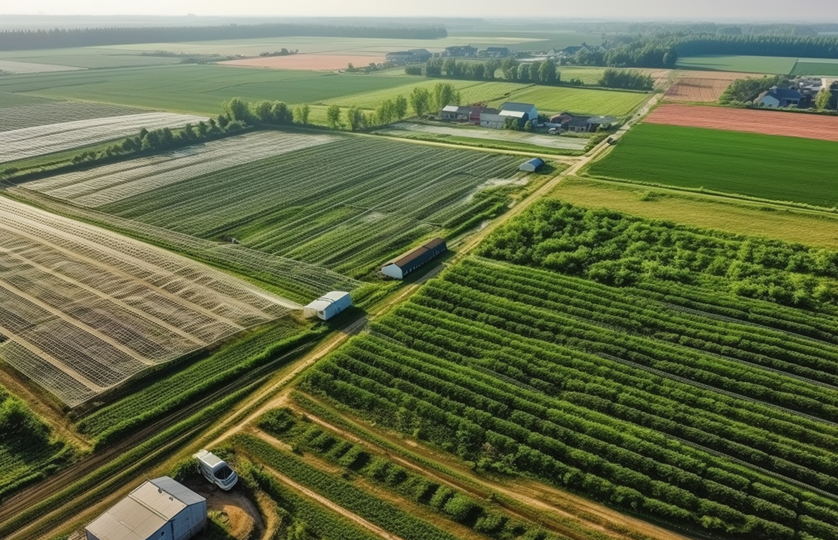
Deputies of the Heilongjiang Delegation focused their discussions on strengthening the "ballast stone" of national food security and fostering agricultural new productivity. The Government Work Report stressed unremitting efforts to ensure grain production, and Heilongjiang achieved its 22nd consecutive bumper harvest in 2025, ranking first in China in grain output for 16 consecutive years.
Emphasis was placed on the value of scientific research personnel alongside high-quality seeds. Through an efficient incentive mechanism for the transformation of scientific research achievements, more researchers have left laboratories to work in fields, establishing scientific and technological service demonstration fields across 13 cities and prefectures in the province and launching a number of fine varieties and technical equipment.
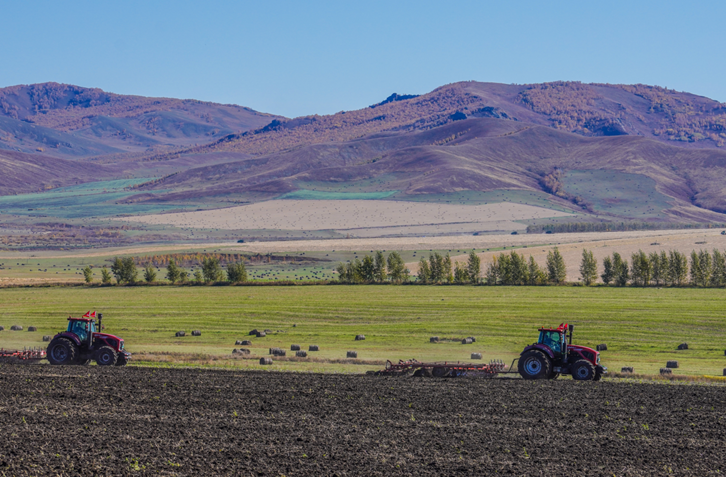
Agricultural new productivity emerged as a key topic during the discussions, with many deputies mentioning new agricultural technologies and equipment such as bio-breeding, intelligent agricultural machinery and water-saving irrigation. An agricultural large model developed by a university, hailed as the "intelligent brain" of the black soil, provides farmers with full-process intelligent guidance from seed selection and fertilisation to harvesting. The university will accelerate original agricultural innovation and tackle key core technologies, turning scientific and technological innovation into an "increase" in food security.
The value of agricultural new productivity lies not only in output, but also in the industrial chain. A rural official shared her experience of returning to her hometown to start a business over the past decade, witnessing the transformation from "selling rice" to "selling scenery" on the black soil. Drones and meteorological cloud platforms have been popularised in the village, and the scale of organic cultivation of slab rice has expanded from 50 mu to 1,800 mu.
Through the integrated development of "order-based planting + research and study practice + characteristic folk customs", the village received nearly 100,000 tourists in 2025. Technological means have reduced labor intensity, while industrial integration has increased agricultural added value, effectively improving villagers’ incomes.
As the first year of the 15th Five-Year Plan, Heilongjiang, a major agricultural province, is exploring ways to further enhance its comprehensive grain production capacity. A city secretary noted that the region will focus on three goals—per unit yield improvement, seed cultivation and quality upgrading—using biotechnology and artificial intelligence to extend the industrial chain and focus on intensive processing of agricultural products to achieve quality and efficiency improvement.
Heilongjiang has made it clear that it will further implement a new 10-million-ton grain increase plan, striving to reach a comprehensive grain production capacity of 200 billion jin by 2030. Through systematic measures—from strengthening black soil protection and upgrading agricultural machinery to giving play to the leading role of agricultural reclamation and building modern large-scale agriculture—the province is safeguarding its black soil granary and working to put more high-quality "Longjiang grain" into the "Chinese rice bowl" to contribute to national food security.