China’s Spring Ploughing: Cutting Costs to Secure Grain Supply
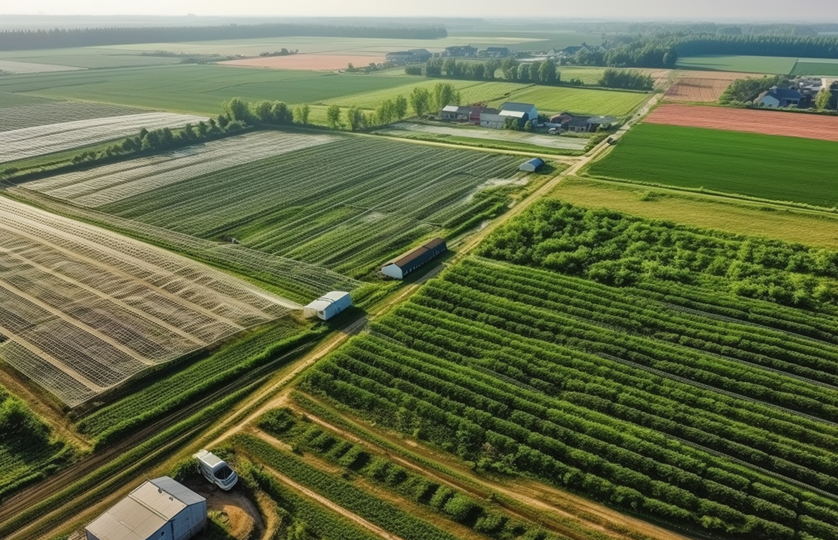
As the Spring Equinox passes and Qingming Festival approaches, China is in the crucial period of spring ploughing and seedling cultivation. Faced with cost pressures brought by geopolitical conflicts, the country is striving to ensure stable spring ploughing, increase grain output and income, while exploring ways to reduce grain production costs, according to China Economic Net.
High grain production costs have long been a structural challenge for China, mainly driven by three pressures: labor, land and agricultural materials. Small-scale household farming is identified as the root cause, as it fails to spread fixed costs through large-scale procurement, mechanized operations and professional management, relying heavily on manual labor in many links. Land rents remain high for moderate-scale land management, and the costs of agricultural materials such as seeds, fertilizers, pesticides and fuels have shown a rigid upward trend, exacerbated by fluctuations in the international energy market and the recent escalation of the Middle East situation.
To address labor cost issues, China has promoted mechanization, with the comprehensive mechanization rate of crop ploughing, sowing and harvesting reaching 76.7%, according to the Ministry of Agriculture and Rural Affairs. Zhang Xingwang, vice-minister of the ministry, noted that full mechanization has been basically achieved for major grain crops, effectively solving the dilemma of “being unable to hire workers or afford labor costs”.

However, structural contradictions in agricultural mechanization persist: mechanization is high in plain areas but low in hilly and mountainous regions, and high for major grain crops but low for cash crops like tea, fruits and vegetables, where picking still relies on manual labor. “Mechanization does not mean the elimination of labor costs, but a shift in cost structure,” said Li Ming, an agricultural expert from the Chinese Academy of Agricultural Sciences. He added that high-quality talents are still in short supply in high-standard farmland construction, digital management and post-harvest processing, with labor costs transforming from “manual labor-oriented” to “skill-oriented”.
To ease the pressure of agricultural material costs, precision farming technologies such as intelligent agricultural machinery, soil testing and formulated fertilization, water-fertilizer integration and drone plant protection are widely adopted to reduce the use of seeds, pesticides and fertilizers. Meanwhile, China is promoting the recycling of agricultural wastes such as livestock manure and crop straw, popularizing efficient fertilization modes like “organic fertilizer + formulated fertilizer” to reduce chemical fertilizer use, which serves both as an expedient measure and a long-term strategy for sustainable agriculture.
Large-scale operation is another key to cutting costs from the source. China is accelerating the cultivation of new agricultural operators including family farms, farmer cooperatives and leading enterprises. These entities reduce costs through unified procurement and operations, and act as pioneers in promoting new technologies and models, benefiting small farmers through socialized services and forming a virtuous cycle.
Amid volatile global grain supply chains, China’s efforts to transform traditional agriculture into modern agriculture through mechanization, green farming and large-scale operation have stabilized the foundation of grain production. These practical measures not only help cope with cost pressures, but also pave the way for the modernization of agriculture with Chinese characteristics.