Natural Fiber Upgrade Boosts Rural Revitalization in China
To implement the 2026 Central No.1 Document in depth, regions across China have focused on improving the quality and efficiency of natural fiber agricultural products, targeting key links such as quality inspection, process improvement and high-value-added material processing. With the professional support of fiber quality monitoring institutions, precise service models have been built to address industrial pain points, increase farmers’ income and inject solid momentum into rural revitalization.
In Qinghai Province, notarial inspection has become a key driver of industrial prosperity. Tseren Lhamo, a herdsman from Yeniugou Township in Qilian County, often shares her experience: “Cashmere fiber grading is a great initiative that helps build a high-quality brand for Haibei yak cashmere.” Previously, herdsmen paid little attention to distinguishing yak age and color during cashmere collection, nor did they properly maintain storage conditions. Lacking quality evidence during price negotiations, this rare yak cashmere failed to fetch a fair price.
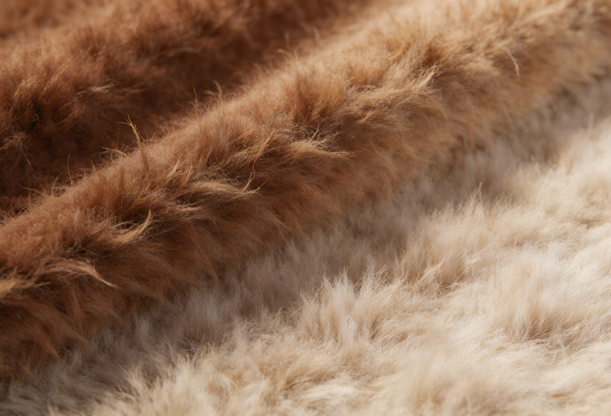
Now, fiber monitoring institutions and enterprises have jointly launched notarial inspection for yak cashmere, providing large-scale quality testing services to grade fiber quality and realize pricing based on quality. Approved by the State Administration for Market Regulation and the Ministry of Finance and organized by the China Fiber Quality Monitoring Center (CFQMC) last year, yak cashmere, down and fresh silkworm cocoons were included in the national notarial inspection scope, with the first notarial inspection for yak cashmere to be carried out this year. The CFQMC has also promoted a survey on the quality resources of Qinghai yak hair (cashmere), analyzing phased characteristics and influencing factors of the industry, exploring market flexibility and assisting local governments in formulating quality improvement suggestions for characteristic industries.
In Xinjiang Uygur Autonomous Region, technical services have promoted the integrated innovation of intangible cultural heritage (ICH) craftsmanship. The Adelis silk weaving and dyeing technique in Hotan, a national ICH, is a treasure of the Silk Road civilization and a model of Uygur traditional textile craftsmanship, whose unique warp-tying and dyeing process reflects the historical process of exchanges and integration among multiple ethnic groups. Centered on Jiya Township, the Adelis silk industrial chain, supported by traditional family workshops, cooperatives and enterprises, has boosted local employment and cultural tourism.
To solve bottlenecks such as extensive craftsmanship, unstable quality, weak design and lack of standards, the project team of the Xinjiang Uygur Autonomous Region Fiber Quality Monitoring Center has carried out systematic technological research covering the entire industrial chain. By sorting out core processes and identifying key quality control points, they have built a standardized process with controllable key nodes, realizing parameterization, standardization and reproducibility from raw material grading to finished product testing. Over the past three years, sales have surged, employment has expanded and incomes of craftsmen have increased, forming a sound pattern that supports cultural protection, industrial development and farmers’ income increase.
In Guangdong Province, cross-industry technological empowerment has explored a new path for high added value. With nearly 10,000 mu of agarwood trees planted around Luhe County, advanced technology for efficiently separating essential oils from agarwood has been accumulated, but a single production and sales channel has limited benefits. The Dezhou Fiber Inspection Institute in Shandong Province helped coordinate local textile enterprises, developing functional fiber products using new technologies such as fiber microcapsule technology. This integration of agarwood planting and functional textile industry has made new products popular among foreign customers, creating a new path for high added value through cross-industry empowerment.
As bulk agricultural products and basic raw materials for the textile industry, natural fiber quality is vital to the vital interests of farmers and textile enterprises. Fiber quality monitoring institutions, undertaking the important responsibility of serving both farmers and enterprises, are accelerating the construction of a penetrating service model, playing a supportive role in promoting comprehensive rural revitalization.