Yidu’s Ecological Transformation: From Clear Waters to Global Caviar Tables
YI DU, April 10, 2026 – At the confluence of the Yangtze and Qingjiang rivers, the water shimmers with emerald clarity, and black-headed gulls glide overhead. Beneath the surface, rare fish species such as the Chinese sucker and Rock carp dart playfully, reviving the timeless scene of “fish gliding through shallow water.” On the shore, modern production lines hum with activity, locking in the natural umami of sturgeon caviar in sterile, low-temperature environments. Qingjiang Bay Tourism Resort’s “Sturgeon Mystery” interactive experience and specialty sturgeon banquets draw a steady stream of visitors…
In Yidu, Hubei, a path of ecological restoration and industrial upgrading has unfolded between green mountains and clear waters, embodying the philosophy that “lucid waters and lush mountains are invaluable assets” and delivering a high-quality ecological blueprint from local fishing traditions to global dining tables.
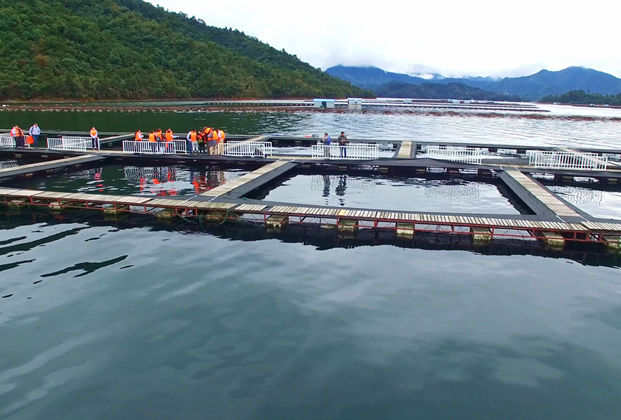
On April 7, Phase II of Yidu’s Qingjiang Sturgeon Valley launched 442 outdoor aquaculture ponds, establishing a hybrid model of “outdoor breeding + indoor roe incubation,” marking a new stage in the region’s sustainable development.
Ecological Revival: From Grade V Water to a Thriving Aquatic Ecosystem
In the 1990s, cage aquaculture boomed along the Qingjiang River. Yidu’s sturgeon production once accounted for 30% of the national total, with dense fish farms dotting the water and becoming a lifeline for local fishermen. However, this intensive, extensive model took a toll on the ecosystem. Feed residues and fish excrement polluted the river, and by 2015, some sections deteriorated to Grade V water quality—the lowest level—threatening the region’s ecological health.
To protect the Yangtze River, Yidu launched a decisive “cage removal campaign” in 2016. All aquaculture facilities along the Yangtze, Qingjiang, and Yuanyang rivers were dismantled. Three rivers, 22 reservoirs, and two lakes were designated as no-fishing zones, while 25 reservoirs and rural “key ponds” became limited-fishing areas.
“For over a decade, my family’s livelihood depended on fishing. But watching the water turn murky, we knew change was necessary,” recalled Liao Binyuan, a retired fisherman from Qinglinsi Village. Instead of leaving the river, he transformed his traditional residence into a homestay. “Now, we welcome visitors with our clean ecology. Business is booming, and working at home brings stability and joy,” he said, reflecting the improved livelihoods brought by ecological restoration.
Systematic ecological restoration has been key. In July 2025, 260,000 rare fry, including Chinese suckers and Rock carp, were released into the Gaobazhou Reservoir, boosting biodiversity. Drones and infrared surveillance now patrol key waters, providing round-the-clock monitoring. Since 2020, over 22 million fry have been stocked, reviving the “underwater forest” ecosystem.
The results are striking. The spawning volume of the “four major domestic fish” in the Yangtze section of Yidu surged from less than 200 million eggs in 2011 to approximately 31 billion eggs in 2025—a nearly 155-fold increase. Water quality in the Qingjiang River has stabilized at Grade II or above, restoring the iconic scene of clear waters and abundant fish life.
Industrial Transformation: From Traditional Fishermen to a Global “Sturgeon Capital”
Liu Zhongxing, a former fisherman who now manages a sturgeon farm, embodies Yidu’s industrial transformation. “Previously, we relied on experience. Now, we use ultrasound to determine sturgeon gender and automated systems to monitor water temperature, quality, and oxygen levels. Extensive farming has evolved into precise management, significantly improving efficiency and quality,” he explained.
At Qingjiang Sturgeon Valley’s sterile low-temperature workshop, each batch of caviar undergoes over 10 processing steps—from roe extraction to canning—within a strict 15-minute window to preserve its natural freshness. “Every process meets stringent pharmaceutical-grade cleanliness standards, ensuring world-class quality,” said Yang Peiqiong, the company’s production supervisor.
Today, Yidu’s caviar production accounts for 30% of the global market. Over 10,000 cans are shipped daily to over 20 countries and regions, including Europe, the Middle East, and the United States, becoming a prized “black gold” on international tables.
Green technology underpins the model. The “air-push recirculating ecological pond technology” draws clean water from the Qingjiang River to simulate natural habitats. (Aquaculture) wastewater is purified to Grade II standards before being released, saving 95% water and 99% land compared to traditional methods. Meanwhile, the newly completed global caviar processing center has increased production capacity fivefold.
Shared Prosperity: From a Single Fish to a Thriving Industrial Cluster
Yidu has built a complete sturgeon industry chain covering breeding, processing, cold-chain logistics, and cultural tourism. As of 2025, there are 28 fishery entities, including 7 specialized in sturgeon breeding and processing. In 2025, the city’s aquatic output reached 7,850 tons, up 4.9% year-on-year, with the fishery industry’s total output value exceeding 1.4 billion yuan. With the completion of the Sturgeon Valley expansion, Yidu’s annual caviar production is expected to reach 600 tons, further solidifying its global leadership.
The integration of primary, secondary, and tertiary industries has diversified the sector. In Gaobazhou Town, over 30 farm-stay restaurants serve signature sturgeon feasts, blending local flavors with rural charm. Yidu Grand Hotel’s “Sturgeon Caviar” dish, priced at 68 yuan, was named one of Yichang’s Top 10 Famous Dishes. The Xunlongwan Cultural Tourism Complex, integrating aquaculture tours, science popularization, and catering, has become a new landmark. Future plans include a sturgeon industry museum and a caviar experience center to enhance industrial value.
Through a “company + farmer” model, Qingjiang Sturgeon Valley provides fry, feed, and technical guidance to retired fishermen, with guaranteed purchase prices to support their transition. The facility now offers over 70 permanent jobs and 200 seasonal positions, boosting annual incomes for local farmers by more than 40,000 yuan. “Farming was once unpredictable. Now, working with the company ensures stable income and a brighter future,” Liu added.
The Jingyangyu Fine Sturgeon Pond Project, a national pilot for rural comprehensive reform, involves a total investment of 400 million yuan. Upon completion, it is expected to generate over 800,000 yuan in annual collective village income and create more jobs, benefiting local communities.
Today, Yidu stands as a vivid testament to harmonious ecological and economic development. The clear waters of the Yangtze and Qingjiang rivers not only sustain rare fish species but also nurture the happiness and prosperity of local residents.