China’s Rural E-commerce Flourishes: Bridging Fields and Markets with Logistics, Supply Chain Innovation
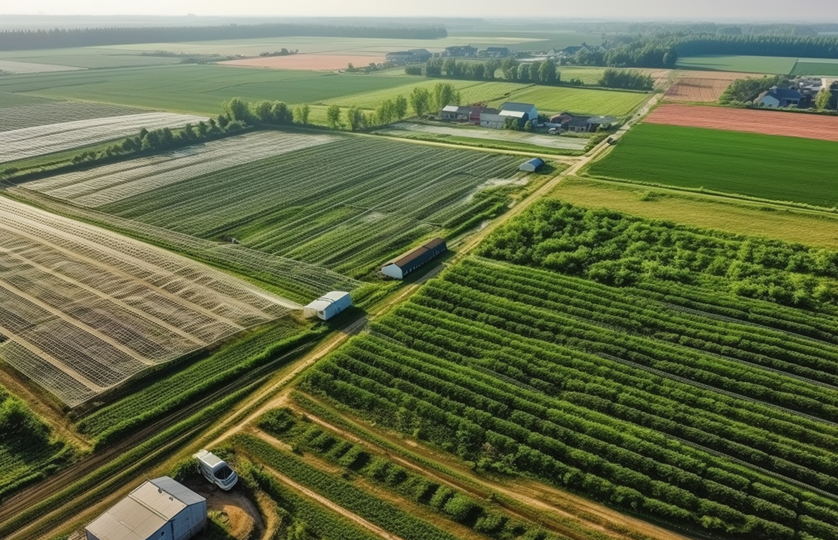
At dawn, pickers gently place fresh blueberries into crates at a plantation beside Yunnan’s Fuxian Lake, while the rustle of tape sealing boxes echoes at a nearby village collection point. Picked and shipped on the same day, these plateau-grown berries can reach consumers in Jiangsu, Zhejiang and Shanghai within 72 hours, bringing a sweet taste of the countryside to their fruit plates. Such "field express" services have become a daily sight in more and more rural areas across China.
Securities Daily reports that China’s rural online retail sales exceeded 3 trillion yuan for the first time in 2025, a year-on-year increase of 6.7%. E-commerce has evolved beyond a mere sales channel, deeply integrating into rural revitalization and industrial upgrading, and emerging as a key engine for boosting employment and increasing farmers’ income.
Recently, six ministries including the Ministry of Commerce jointly issued a guideline, proposing to implement a high-quality rural e-commerce development project, expand application scenarios, promote direct e-commerce procurement and customized production models, and enhance the industrialization level of rural e-commerce. It also calls for advancing the "Internet + agricultural products going out of villages and into cities" project, supporting e-commerce enterprises to sink their supply chains and develop characteristic live broadcasts such as "village broadcasts" and "field broadcasts".

To address the challenges of getting agricultural products produced, transported and sold well, intensive investigations across various regions have revealed key solutions, starting with strengthening the logistics network to smooth the "last mile" for agricultural products to enter cities. Yunnan, with its mountainous terrain, has long struggled to transport its high-quality specialties. However, a dense courier network is now spreading across the mountains.
Zhang Shigui, person in charge of J&T Express Kunming Transfer Center, told Securities Daily that after the venue upgrade in 2025, the center’s daily outbound processing capacity increased from 600,000 to over 1 million items, shortening the average delivery time from Yunnan to the whole country by 2 to 3 hours. "In 2025, J&T handled 120 million agricultural product parcels in Yunnan, helping farmers save more than 24 million yuan in logistics costs," he added.
Logistics improvements have been particularly evident at blueberry bases in Chengjiang, Yuxi. Zhu Peng, J&T’s Yuxi regional manager, noted that during the peak season, Yunnan ships 15,000 blueberry orders daily, with dynamic adjustments to transportation frequency ensuring consumers receive their packages within three days. "We used to worry about rotting berries during delivery, but now they are picked and shipped the same day, which gives us peace of mind," said Xi Yufen, a picker.
Beyond logistics, supply chain innovation is opening new paths. E-commerce platforms are sinking to promote direct origin procurement and customized production, breaking the traditional multi-level distribution model. Chen Liteng, a digital life analyst at the NetEase E-commerce Research Center, told Securities Daily that multi-link circulation causes 30% loss of fresh agricultural products, harming farmers’ income and raising consumer costs.
Major platforms are addressing this. Dingdong Maicai’s "ancient toon tree" project connects scattered farmers in Yunnan with consumers in East China, delivering toon in 48 hours. JD plans to build 1 million mu of "JD Bases" with over 100 agricultural industrial belts, while Hema has established "Hema Villages" in Jiangxi, guiding farmers to grow according to orders.
Village and field live broadcasts are also thriving, with mobile phones becoming new farming tools. Douyin E-commerce’s White Paper on Agricultural Product Consumption shows it sold 10.2 billion agricultural parcels between September 2024 and September 2025. Hong Yong, associate researcher at the Ministry of Commerce Research Institute, said these new formats let farmers face national consumers directly, breaking geographical barriers.
From dense logistics networks to innovative supply chains and booming live broadcasts, China’s rural e-commerce is building a new channel from fields to tables, injecting lasting vitality into rural revitalization and connecting the countryside with the broader market.