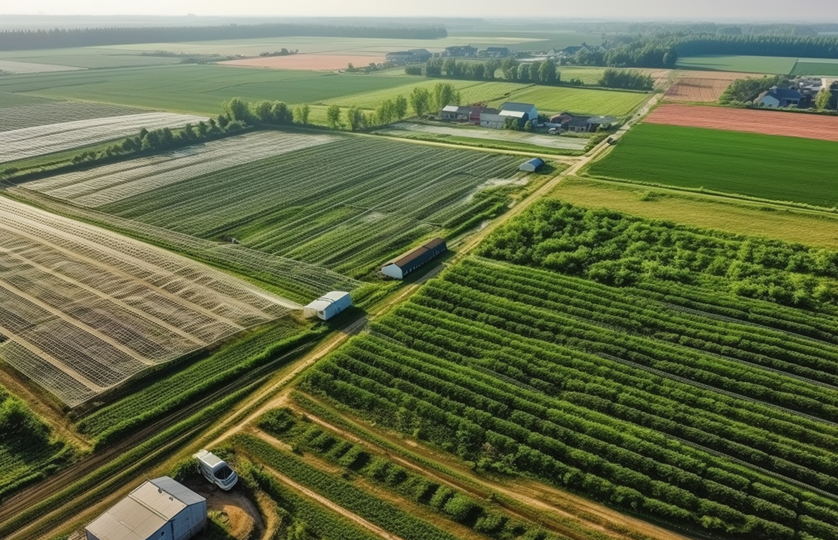
China’s Soybean Breeding Breaks Through with AI and Gene Technology, Securing Food Security
A single soybean carries profound significance for China, as it not only ensures the people’s "oil bottles" on the dining table but also underpins the stability of the animal husbandry sector. Wu Cunxiang, chief scientist of the National Soybean Industry Technology System, noted that China currently faces a high degree of external dependence on soybeans and multiple challenges in the industry.
Guangming Net reports that China’s soybean import volume reached 97.09 million tons in 2024, with its external dependence remaining above 80% for a long time, which poses a threat to the sustainable development of the soybean industry and food security. To address this, the 17th Northern Soybean Breeding Cooperation Network Conference, hosted by Liaoning Academy of Agricultural Sciences, kicked off in Shenyang on April 12, 2026.

More than 150 top experts, interdisciplinary technology leaders and seed industry giants gathered at the conference, which served not only as a review of past breeding achievements but also as a rallying call to pursue productivity through technology and momentum through digital intelligence. Faced with high import dependence, large yield gaps and short industrial chains, China is striving to grasp the "Chinese core" of soybeans and activate new vitality in the seed industry.
AI is empowering soybean breeding with a "super brain" and "sharp eyes". Yang Fan from Yazhou Bay National Laboratory introduced the "Fengdeng Model" and its supporting AI agent ecosystem, which aims to break the efficiency bottleneck of traditional crop breeding and realize a paradigm shift from "empirical breeding" to "intelligent design breeding".
Professor Chen Qingshan’s team from Northeast Agricultural University developed an "intelligent seed testing machine 1500S" in cooperation with Chengdu Hanchen Guangyi, which can process 1,500 soybean plants without damage in 8 hours, 30 times more efficient than manual work. The team also released the world’s first full-growth-cycle 3D point cloud dataset for soybeans, enabling 1:1 digital reconstruction of soybean plants.
Scientists are also making breakthroughs in gene editing to boost soybean yield. Qin Chao, associate researcher at the Chinese Academy of Agricultural Sciences, identified "invisible switches" such as PH13 and CIA1 that control soybean plant height, enhancing lodging resistance and increasing yield. The soybean variety "Dongsheng 89" developed by Professor Liu Baohui’s team achieved an actual yield of 386.35 kg per mu.
People’s Daily notes that "Zhonghuang 6106", a herbicide-tolerant soybean with independent intellectual property rights developed by Researcher Qiu Lijuan, has obtained a national agricultural genetically modified organism safety certificate and has completed field evaluations in Uruguay. Hong Huilong, PhD from the Chinese Academy of Agricultural Sciences, revealed that 41,000 soybean germplasm resources in the national bank have completed genotyping.
Intelligent equipment and cross-border cooperation are also accelerating the application of breeding technologies. Wintexag displayed its Dynamic Disc seeder, while Qingdao Plantek integrated Beidou navigation into breeding machinery. Sinochem Seed Group has built a commercial breeding system, compressing the breeding cycle of northeast soybeans to 68 days per generation. These efforts are driving a profound transformation in China’s soybean industry, moving closer to securing food security with independent soybean varieties.